Nehru Vs Modi: From VIP culture to the convenience of the common man, how India changed!
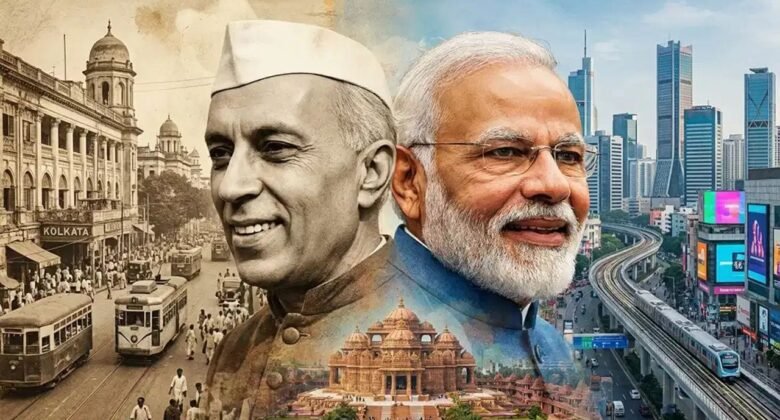
Prime Minister Narendra Modi is close to the historic milestone of surpassing Jawaharlal Nehru as India’s longest serving democratically elected Prime Minister. During this period, a major change has been seen in the socio-economic landscape of the country. The journey from the early to mid-20th century to the digital ecosystem of modern India highlights the tremendous changes in everyday lifestyle. Things which were considered ‘ultra-luxury’ (very expensive luxury) only for the rich and special people during the Nehru era, have become a basic need and a common part of life for crores of common citizens under the current government.
Democratization of transit and air travel
Even after independence, for many decades, India was struggling with a severe lack of transportation infrastructure between states. During the tenure of India’s first Prime Minister, commercial air travel was limited to government officials and aristocrats, while the railway network ran on old and slow steam and early diesel technology. Today, that gap has closed. Budget airlines and modern regional airports have made air travel accessible to the masses, making air travel a common option for the new middle class. At the ground level, dilapidated highways have now been replaced by a network of high-speed expressways. Along with this, there has been a fundamental change in the speed and comfort of domestic travel with the rapid introduction of fast and semi-high-speed trains like Vande Bharat Express.
From Telegram to Smartphone Revolution
There has been an even bigger change in the methods of communication. In the mid-20th century, getting a landline telephone connection required waiting on a government list for years, and For important communications in remote areas, one had to rely on old and limited-word telegrams. Decades later, the situation has changed from scarcity to abundant availability. Smartphones have become ubiquitous in today’s Indian market, further boosted by the cheapest mobile data plans in the world. Devices with far greater computing power than those used in early space programs are now available to ordinary people in both cities and villages, breaking down old barriers to communication.
Cashless Economy and Digital Ecosystem
Perhaps the biggest change from the old economic system to today’s is seen in financial transactions. For many decades, banking was an entirely physical and time-consuming task, relying heavily on cash, hand-written ledgers and government paperwork, keeping a large section of the population away from it. On the contrary, today’s India is at the forefront of the global financial technology revolution. Instant online payment through the country’s Unified Payments Interface (UPI) has changed everyday transactions. From big retail malls to roadside vegetable sellers, cashless transactions have now become common. It has given way to old luxury with an easy and accessible digital infrastructure.
Big change in National Aspirant
This big change in India in terms of development shows the comprehensive change in the thinking of the country. In the initial period after independence, there was more emphasis on managing shortages and setting up capital-intensive industries, which inadvertently kept consumer technology out of the reach of the common people. However, today’s The governance model is making privileged access available to the common people using large-scale digital public infrastructure and rapid physical construction. As India moves towards this important stage of leadership, the transformation of high-end technology and transport into everyday infrastructure has become a concrete measure of the country’s new quality of life.