
Editorial: Air Pollution — India’s capital chokes
There is a sense of déjà vu in the images of toxic haze enveloping Delhi the day after Diwali celebrations, resembling post-apocalyptic scenes. The response, too, follows a familiar pattern, with politicians resorting to a blame game over deadly pollution. The national capital virtually gasped for breath as the Air Quality Index (AQI) stood at 370, almost . The Supreme Court’s guidelines regarding certified green crackers and specific timings were more often breached than followed. Adding to the problem was stubble burning by farmers in the neighbouring States of Punjab and Haryana. As a result, air pollution levels went through the roof. The data revealed that the PM2.5 (particulate matter measuring 2.5 micrometre) concentration shot up to about 66.2 times the WHO’s recommended guideline of 15 micrograms per cubic metre. Not surprisingly, political parties blamed each other for the situation. The Congress and the AAP accused the BJP government of failing to control pollution despite making lofty claims. They also alleged that it had resorted to data manipulation by shutting down air quality monitoring stations. On the other hand, BJP leader and Delhi Labour Minister Kapil Mishra alleged that there was a conspiracy in AAP-governed Punjab to set stubble on fire in the State before Diwali. It was claimed that over 1,200 were reported in Punjab on Diwali day. It must be pointed out that farm fires are not the only culprits. Transport emissions, road and construction dust, industrial pollution, waste burning and secondary pollutants also foul the air.
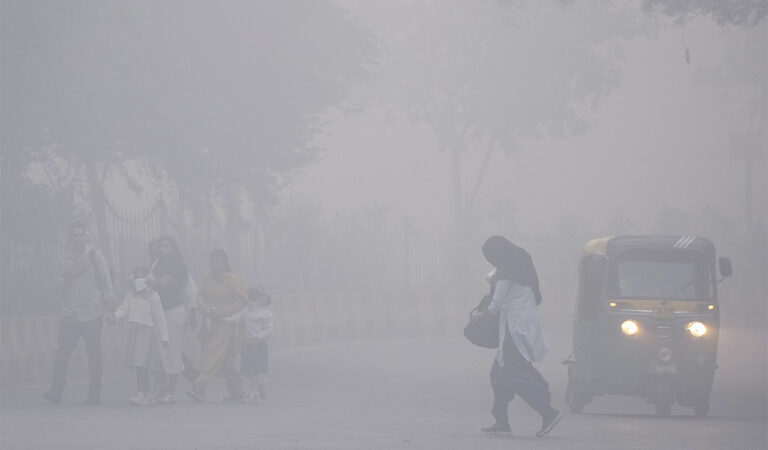
The Supreme Court identified vehicular emissions as a contributing factor, flagging bumper-to-bumper traffic in Delhi. It sought immediate, medium- and long-term measures, noting that the AQI was nearing 400, an alarming level, which can cause serious damage to health. Enough research data shows a direct link between strokes, autoimmune disorders and neurological problems. Fine particulate matter, particularly PM2.5, can penetrate deep into the lungs and, in some cases, enter the bloodstream. This can trigger inflammation and oxidative stress, affecting not only the lungs but also the heart and blood vessels. Over time, exposure can worsen existing respiratory illnesses, compromise lung function and increase the risk of cardiovascular complications. Across the country, an estimated 1.6 million people die due to air pollution every year. introduced in the past have been unsuccessful. Successive governments have announced action plans, restricted vehicles, halted construction and issued advisories, only for Delhi to find itself back in an emergency. The AAP, which built its political appeal around clean governance, too must answer for its years in office. The city needs an accountable programme, not competing claims over blame. That means reliable public transport, stricter controls on vehicle and industrial emissions, effective dust management, cleaner fuels, proper waste disposal and coordination across the National Capital Region (NCR). Farmers need affordable alternatives to burning, not annual lectures.