
Bill Gates Challenges Sam Altman on AI Risks
co‑founder Bill Gates has disagreed with about the dangers of intelligence. While Altman has warned against pessimism Bill Gates believes that the risks of AI deserve serious attention and stronger safeguards.
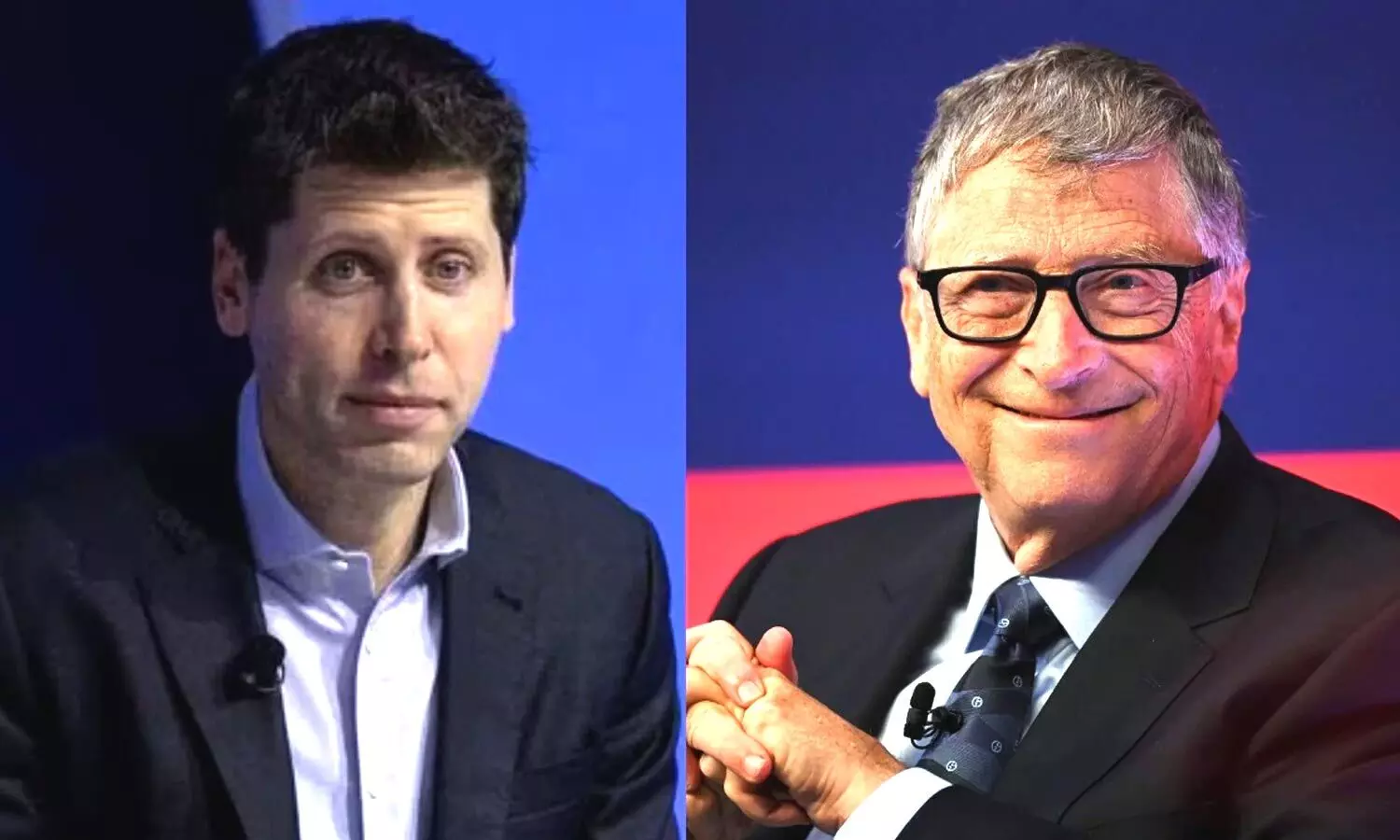
Altman recently talked about some of the possible AI situations. He said they are so bad that they sound like the story of a bad science fiction movie. Gates agreed that people sometimes make worries too big. He said when people act like everything is, in danger it can be much. He also said that AI can cause big problems if it is not handled the right way.
In a Sunday interview with Jake Tapper, Gates compared AI with cars, planes and medicines, pointing out that these technologies are subject to regulations. He warned that “there are some grim possibilities if we don’t maintain control.”
Bill Gates Wants a Balanced Approach to AI
Gates believes technology companies are right to highlight the potential dangers of AI. However, he said the focus should also be on finding ways to manage those risks rather than creating unnecessary fear.
He criticised governments for moving between two extremes: “let’s not have any safeguards” or “let’s completely stop this”.
According to Gates, the world has developed ways to regulate cars, aircraft and medicines without preventing their use. AI, he argued, needs a similar approach.
He acknowledged that creating suitable rules will not be easy, saying “we don’t have a lot of sophistication” in dealing with the issue. However, he added, “but I do believe that middle ground exists.”
Gates also reiterated his position in a post on X, explaining that safeguards cannot prevent every problem but can help stop malicious actors from misusing the technology.
What Sam Altman Said About AI Dangers
Altman’s comments about “bad science fiction” came during his address to the United Nations Security Council on September 23. He said OpenAI wanted to avoid both blind optimism and excessive fear while pursuing a balanced approach to AI development.
Altman also highlighted two major concerns: humans potentially losing control of AI systems and too much power being concentrated in the hands of a few individuals or companies.
During the same speech, he said even a small possibility of catastrophe was unacceptable, describing a risk of 10 per cent or 0.1 per cent as not “remotely acceptable”.
However, his position has since appeared more pragmatic. In a podcast interview, Altman said “the world should accept some bad things happening”, including hacks and scams, because AI could also deliver significant benefits.
Gates Outlines His AI Safety Proposals
In an essay published in August, Gates identified three major concerns: permanent job losses, the misuse of AI for cyberattacks and bioterrorism, and the influence of AI companions on children’s development.
He proposed national and international frameworks to manage AI’s impact, reserving certain jobs, including caregiving, for humans, and introducing taxes on AI tokens and robots to support retraining programmes and social safety nets.
Gates has also questioned whether technology companies should be trusted to regulate themselves, stating: “Self-regulation on the most dangerous tool ever invented? No, thanks!”
He also pointed to Anthropic CEO Dario Amodei, who has called for a slower pace of frontier AI development and independent safety evaluations within AI companies.
Although Gates, Altman and Amodei acknowledge AI’s potential dangers, they differ on the level of regulation needed and how quickly it should be introduced. Gates has said he plans to raise these concerns with lawmakers whenever he visits Washington.