
Vaishnaw Defends iPhone PLI Scheme, Says It Generated 12 Lakh Jobs and Rs 3.25 Lakh Crore in Taxes
Union Electronics and IT Minister Ashwini Vaishnaw has stood by his defense on the mobile phone manufacturing Production Linked Incentive (PLI) scheme to deal with the criticism that the government is spending money on electronics manufacturing.
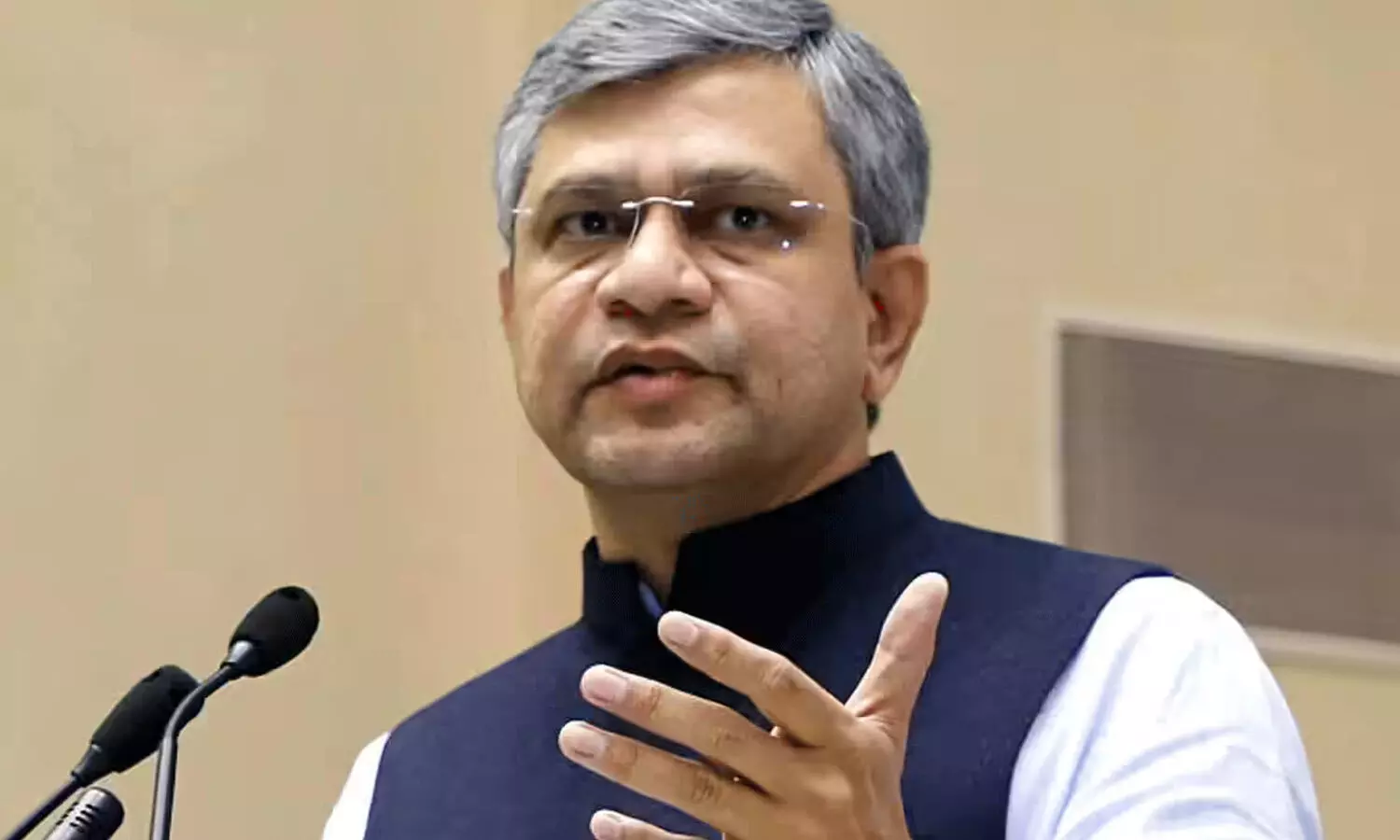
On October 27, Vaishnaw posted the data on social media, saying that the government has disbursed Rs 19,000 crore of mobile manufacturing incentives, while it has collected Rs 25,000 crore of direct taxes and Rs 3 lakh crore as Goods and Services Tax (GST). He also said that the electronics manufacturing industry has a gross employment of 25 lakh with 12 lakh in the mobile manufacturing industry.
The minister’s answer follows a Bloomberg report that had recently raised doubts over the economic benefits that India’s rising iPhone manufacturing offers to the country and called for government subsidies to be scrapped. Vaishnaw brushed aside the criticism with a comment “Cope harder!!”.
What the Bloomberg report said about India’s iPhone manufacturing
Opinion columnist Andy Mukherjee’s Bloomberg video report cast doubt on India’s value-added electronics manufacturing and how it benefits from assembling iPhones.
The report noted that there were some positive developments in domestic manufacturing. Indian factories have shifted from buying pre-assembled motherboards to buying bare circuit boards and assembling the electronics parts locally. Mukherjee estimated that this change has made India’s mobile trade surplus $2.1 billion in a year.
The country too has emerged as a significant player in Apple’s global supply chain, with about 1 in every 4 iPhones being made there.
However the report pointed out that India still relies on imports for components such as memory, processors, display panels, camera lenses, batteries and others. It said that the price of importing components was not decreased sufficiently to match the incomes of the exported mobile phone products.
Mukherjee also pointed out that the cost of manufacturing might undermine the economic justification for subsidies, especially if the extra wages earned in factories are not sufficient to compensate for the subsidies. These challenges might be compounded by the increasing cost of memory in the world, which is partially being fuelled by the growing market for AI applications.
India’s semiconductor aspirations stir up discussion
The report also took a critical look at India’s ambitions to become a leader in advanced semiconductors by arguing that despite significant subsidies, India had yet to make significant strides in advanced fabrication, except for in testing and packaging.
Mukherjee proposed that India tap into its expertise in the field of engineering and design and invest in labour intensive businesses like footwear and garments, which could provide employment in huge numbers.
The argument is similar to what was raised by the former Reserve Bank of India governor Raghuram Rajan in September 2026. Rajan also wondered why India should spend billions to produce semiconductors in the country when it would be tough to make the units 100 per cent self-reliant as the production would require imported machinery, materials, and other inputs.
Zoho founder Sridhar Vembu had criticized his comments, stating that it was essential to build India’s semiconductor industry instead of getting it completely from abroad.
The arguments in both debates focus on the price of developing home production, the dangers of relying on foreign supply chains, and the benefits of public spending.
A comparison of how the PLI scheme has grown electronics manufacturing.
The Centre has been claiming that PLI scheme is supporting the manufacturing ecosystem of India by providing financial incentives on the back of production growth.
According to the government data presented in Parliament, the PLI scheme for electronics manufacturing has already attracted Rs 12,390 crore of cumulative investments and has created a production of Rs 8.44 lakh crore till June 2025. The exports of mobile phones under the scheme stood at Rs 4.65 lakh crore.
The company has continued its expansion into India as it spreads its business beyond China, under the China-Plus-One policy, with manufacturing partners.
In February 2026, Vaishnaw had also asserted that India had become the second largest manufacturer of mobile phones in the world with smartphones becoming the country’s largest export category. In 2025, exports are valued at $30 billion.
The government’s new statistics are intended to prove that the benefits of the PLI scheme go beyond just manufacturing to tax revenues and employment. But doubts remain as to how much the domestic value addition is and whether the economic benefit is worth the public expenditure.