
The Missing Link in India’s Lost & Found Ecosystem
One of the most technologically advanced digital public infrastructures has been developed in India. Money transfers through UPI, storing of crucial documentation in a digital form, and identity verification have become a reality. However, there is one simple issue which still depends a lot on chance—retrieval of lost items.
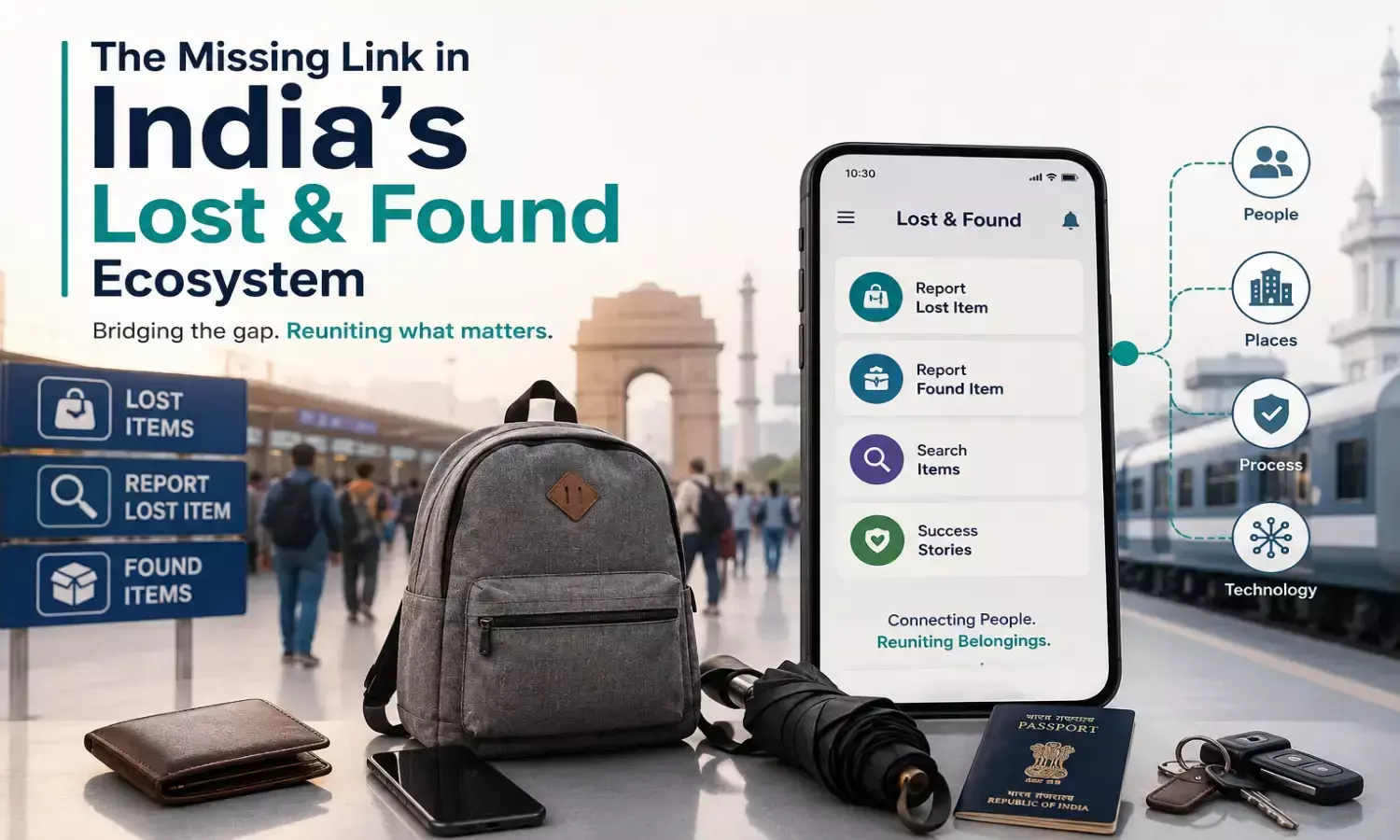
Every day, someone forgets his laptop at airport security checks, his wallet in the café, his keys in the restaurant, his headphones in the metro, or his shopping bag in the mall. Though such events take place all around the country daily, the system that could help people retrieve their lost belongings is poorly organized and disconnected.
Surprisingly enough, the major difficulty is not dishonesty.
It is friction.
Most people really want to help.
During the past year, as part of its research on people’s behavior when finding lost property, Owners ID ran over 150 social experiments in various public places. And one conclusion is always the same: when a piece of found property seems valuable, people tend to make an additional effort to be helpful. They try to find the person to whom it belongs, inquire with others whether they lost anything, and even wait for some time, expecting somebody to return.
Humanity is not absent.
Infrastructures are.
And there is another aspect to this type of behavior that is frequently overlooked.
Indeed, a lot of people, including me personally, have been passing by a lost wallet, a set of AirPods, or a mobile phone charger, wanting to help but failing to do anything about it. Not because they did not care, but simply because it was complicated to do something. Should they take the thing? Where to look for a lost-and-found desk?
However, sometimes the obstacles are higher than the noble intention.
Despite being motivated to help, the process is disjointed in itself. There are separate lost-and-found counters at the airports. The metro system works according to a different approach. Each shopping mall, hotel, restaurant, office building, educational establishment and residential community functions individually. The lost items are managed by each individual entity, but the ecosystem that would connect them does not exist.
This means that the search for a lost item is largely dependent not on how it was found, but on how it got into the right lost-and-found counter, and whether the owner thought to go there.
There is another characteristic of human behavior that is hardly ever mentioned.
Imagine you forget your phone on a table in a café and come back ten minutes later, only to find someone holding it. Even though you realize that they might just want to return your phone, there is a fleeting suspicion—aren’t they stealing my phone?
Now, consider being the one with that lost phone.
You know exactly what it looks like. You wonder if the finder will misconstrue your intentions before even having a chance to communicate them. The simple fact that it may be socially awkward is enough reason for most people to simply leave the item as-is.
These tiny psychological factors can make all the difference in the world.
We shouldn’t replace human compassion with technology. We should facilitate human compassion through technology.
A contemporary lost-and-found system would lower the effort necessary to help while keeping the privacy of everyone involved intact. Rather than have the finder figure out where the lost-and-found department is, technology would allow for an instant, private connection.
Digital identity is the key.
A basic QR code added to any possession could enable anyone with a smart phone to reach out to the owner instantly without exposing their contact numbers or any other personal information. There would be no need to download a separate application, share your phone number, or even take responsibility for the security of your lost property.
The owner can specify their preferences for getting reached out to, while the person finding the article can just quickly scan and walk away from there knowing that they did the right thing.
It does not seek to replace the current system of lost and found departments. Airports, subway stations, as well as companies, will continue to have processes of handling lost property. But this can serve as an additional mechanism providing a consistent digital level for handling this issue regardless of the location.
With the digital transformation going ahead in the country, this might be one of those issues that can get transformed the next time around. Similar to how UPI standardized payment process across banks in India, there may be an opportunity for developing a recovery infrastructure for all spaces public or private.
Making helping easy can make more people do it.
And that may be the real missing link.
Jesintha Louis, Founder, Owners ID, said, “From our social experiments, we realized that there was one thing that was quite encouraging: People really wanted to help out. It was not a problem of being dishonest but rather of friction. If we could get rid of all of the hassle associated with helping out someone who had lost something, we could create a recovery process that was easiest to follow.