
How Morbi’s Ceramic Industry Is Shaping India’s Manufacturing Future
India’s manufacturing aspirations are now coming under the spotlight with regard to the global value chain, value addition and export competitiveness. But, the ceramic and porcelain tile industry has quietly made India a strong player in the international arena without featuring in these discussions, other than in terms of export earnings.
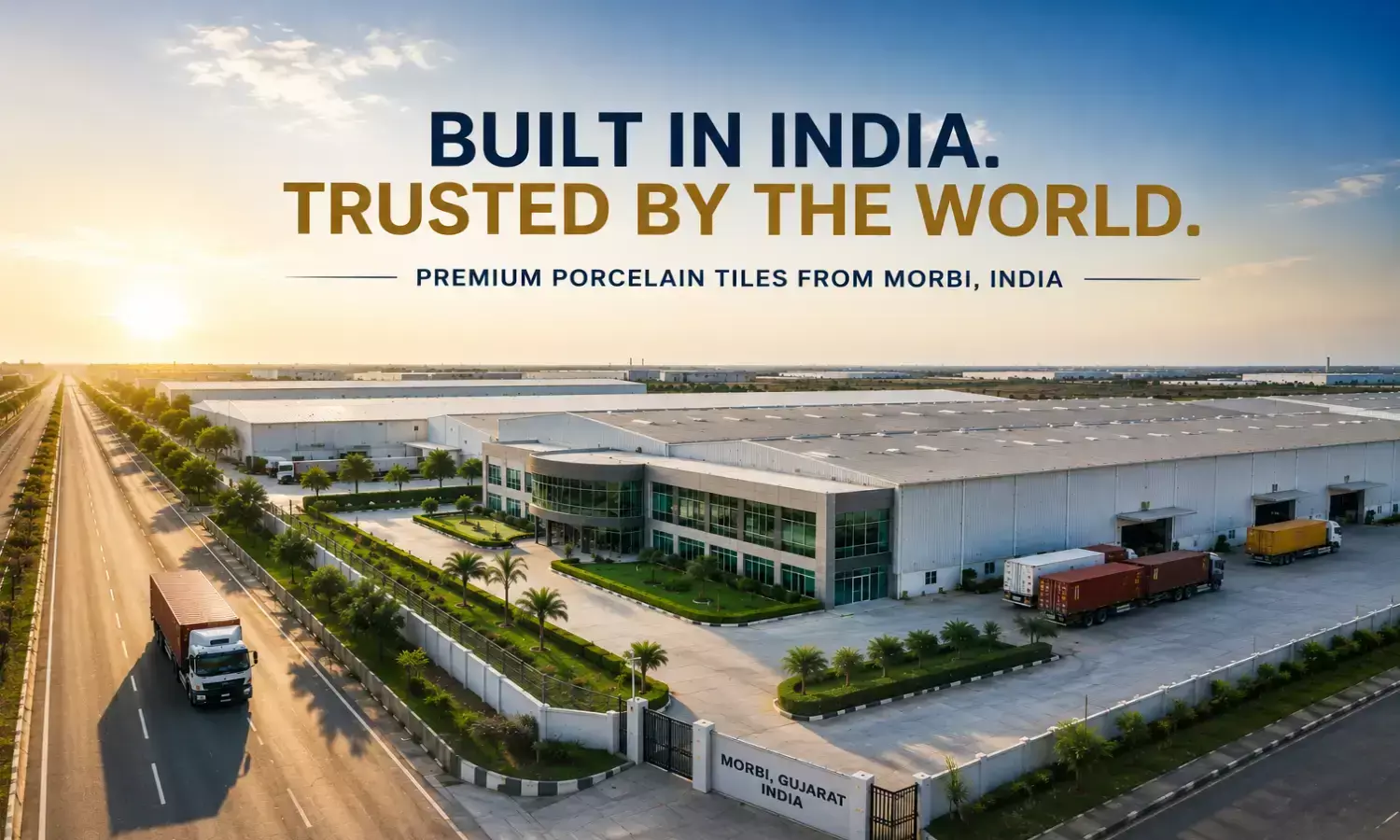
The growth is the essence of Morbi in Gujarat. In the last 20 years, the city has become one of the world’s biggest ceramic clusters, which shows how regional industrial ecosystems can turn into world-class production centres with the help of entrepreneurship, technology and ongoing investments.
It’s more than the tale of tiles. It provides a glimpse into the potential of industrial clusters and specialised clusters for industrial and export targets in India.
A National Significance Regional Cluster
Today there are an estimated 1000-1200 ceramic manufacturing units in Morbi, which further makes it the 2nd biggest cluster of ceramic tile manufacturing in the world. These factories contribute to almost 70 per cent of the Indian ceramic industry and around 90 per cent of the export of ceramic products to other countries.
These figures represent an integrated industrial system. The factories are connected to machinery suppliers, raw material processors, packaging makers, logistics firms, testing labs and export agencies; competition and cooperation is a combination that works well for businesses.
This ecosystem has played a key role in creating Morbi as one of the most successful cluster-led manufacturing growth stories in India.
Focusing on moving beyond cost based manufacturing.
The last ten years have seen a significant change in the demand for ceramic and porcelain products worldwide.
- International buyers are more concerned about production consistency, design capability, quality assurance, certifications and reliability in the long term than about price.
- The evolving market has created a push for Indian manufacturers to adopt technologies such as automation, digital printing, advanced kiln systems, precision quality control, and product innovation.
- This makes for a gradual movement from the volume-based approach of manufacturing to one that offers value addition, which also represents the overall trend in manufacturing in India.
How to be resilient in a changing global environment
Growth hasn’t been smooth sailing for the industry.
The manufacturers have faced many challenges in recent years including freight cost increases, inflation, raw material price fluctuations, and energy market volatility. In addition, natural gas is still a major fuel used for ceramic manufacturing, which has also been affected by the ups and downs of international geopolitical events, thereby affecting operating costs throughout the industry.
Instead, many manufacturers concentrated on ways to be more efficient in their operations, to use energy more efficiently, to streamline their supply chains, and to invest in newer production technologies to grow.
They’re able to adapt—and that’s a crucial element in maintaining confidence among international buyers, who place growing emphasis on reliability as well as manufacturing capability.
The industry is changing due to technology. Technological advancements are transforming the industry.
The advent of technology has been one of the key factors in the evolution of the Indian porcelain tile industry.
The surfaces produced by modern production facilities are increasingly based on porcelain surfaces and increasingly automated, digitized and precisely pressed, so that they meet international specifications.
Meanwhile, producers are looking for investment in water recycling systems, energy-efficient processes and production optimisation to boost operational efficiency and environmental performance.
These investments by the companies are gradually shifting the mindset of the Indian ceramic manufacturing industry from scale-based investments to innovation-based investments.
The rise of a new generation of manufacturers. The coming of a new generation of manufacturers.
The changes in manufacturers’ priorities in the region also tell the story of Morbi.
Companies are trying to expand its production capacity through investment in product development, modern surface designs, international certification and better market penetration.
One of them is the Italian Storico Ceramica of Morbi, which produces 57600 square metres of porcelain tile per day. The company serves residential, commercial, hospitality and infrastructure markets and is part of the industry’s evolution towards premium porcelain collections and globally aligned product development.
Storico is not an exception as these companies reflect how manufacturers from the region are meeting evolving global demands, yet are grounded in India’s manufacturing landscape.
Whereas manufacturing products, building trust. Whereas manufacturing products, building trust.
The discourse of Indian manufacturing too is shifting with competition from abroad.
In many sectors, long-term competitiveness will rely as much on consistency of production as on the capacity to produce product, or on innovation, technical skills and the ability to establish long-term cooperation with international buyers.
This transformation is starting to take place in the ceramic sector. Manufacturers are focusing on quality assurance, design capability and sustainable manufacturing to further boost India’s presence in international markets.
Looking Ahead
Morbi’s story reflects the potential of regional industrial ecosystems to uplift the national economy manufacturing capacity and export growth.
Clusters, such as Morbi, will continue to play a vital role in India’s export economy as the government is working towards boosting the country’s industrial competitiveness.
The ongoing investments being made by manufacturers, including the likes of Storico Ceramica, in production capacity, technology and product development indicate that the next step in the growth story of the manufacturing industry will not just be about scale, but resilience, innovation and confidence in the market.
Morbi’s journey is, in a sense, the Indian manufacturing journey – a gradual transformation from volume to value, from local to international relationships, from short to long-term brand associations.