
Reorganisation of districts: A new face of Telangana
By Chitikena Kiran Kumar
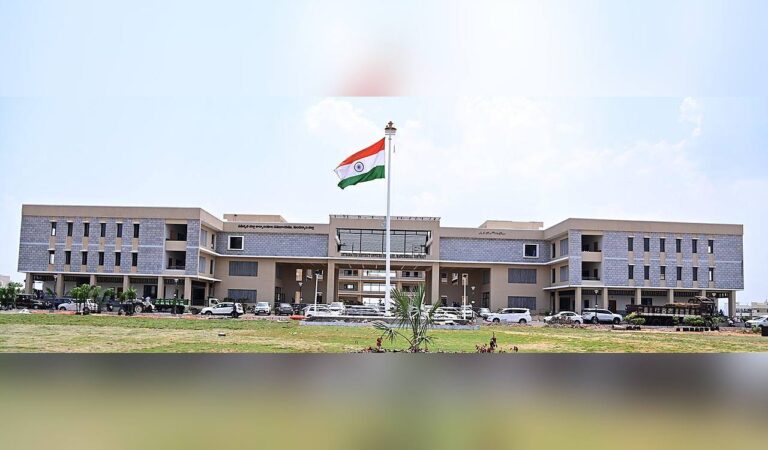
The reorganisation of districts in Telangana in 2016, when the number of districts increased from the original 10 to 31, followed by the creation of two more districts, brought the State to its present total of 33 districts. This historic transformation cannot be viewed merely as a change in administrative boundaries. It was associated with several aspirations, including regional identity, easier access to government officials and greater recognition of local history and culture.
For people living in rural areas, who once had to travel long distances to reach their district headquarters, the establishment of new administrative offices closer to their homes offered a new sense of convenience and hope. It marked a significant phase in which the concept of a district became more closely connected with people’s lives, regional pride and aspirations for development.
Closer to the people
A district is not merely a collection of government offices. Its language, dialect, crops, occupations, festivals, historical memories and people’s struggles together shape its distinct social identity. From the forests of Adilabad to the natural wealth of the Bhadradri region, from the textile skills of Sircilla to the modern lifestyle of Hyderabad, Telangana represents a remarkable diversity of ways of life.
When these regions receive clearer administrative recognition, new opportunities emerge to understand and appreciate their individual characteristics. The broader significance of becomes evident when it is viewed in the context of people’s hopes and expectations.
After Telangana emerged as a separate State, the idea of bringing to the people received considerable attention. When the State was formed on June 2, 2014, the 10 inherited districts continued to form the principal administrative divisions. Discussions about creating smaller districts gained importance in view of the vast geographical areas, population growth, expansion of towns, rural requirements and the need to implement development programmes effectively.
The objectives included making government services more accessible, enabling decisions based on local needs and identifying the problems of relatively backward regions. The aspiration to bring administration closer to the people took a definite shape in 2016.
On October 11, 2016, coinciding with the festival of Dasara, the then Telangana Rashtra Samithi government implemented the district reorganisation. The ten districts were reorganised into 31, resulting in the creation of 21 new districts. Revenue divisions and mandals were also reorganised as part of this process.
Although the administrative announcement became visible on a particular day, it followed discussions about different regions, suggestions from public representatives, local aspirations and assessments of geographical convenience. The arrival of a district headquarters brings fresh expectations among local people. For those expectations to be fulfilled, however, the quality of public services must improve along with the establishment of offices.
The original list of 31 districts included Adilabad, Bhadradri Kothagudem, Hyderabad, Jagtial, Jangaon, Jayashankar Bhupalpally, Jogulamba Gadwal, Kamareddy, Karimnagar, Khammam, Kumuram Bheem Asifabad, Mahabubabad, Mahabubnagar, Mancherial, Medak, Medchal–Malkajgiri, Nagarkurnool, Nalgonda, Nizamabad, Nirmal, Peddapalli, Rajanna Sircilla, Rangareddy, Sangareddy, Siddipet, Suryapet, Vikarabad, Wanaparthy, Warangal Urban, Warangal Rural and Yadadri Bhuvanagiri. Each name represents the history, lived experiences and geographical characteristics of a particular region. The formation of new districts provided these regions with greater visibility and recognition across the State.
Administrative diversity
In 2018, the formation of districts increased the total number of districts in Telangana to 33. The present administrative map comprises Adilabad, Bhadradri Kothagudem, Hanumakonda, Hyderabad, Jagtial, Jangaon, Jayashankar Bhupalpally, Jogulamba Gadwal, Kamareddy, Karimnagar, Khammam, Kumuram Bheem Asifabad, Mahabubabad, Mahabubnagar, Mancherial, Medak, Medchal–Malkajgiri, Mulugu, Nagarkurnool, Nalgonda, Narayanpet, Nirmal, Nizamabad, Peddapalli, Rajanna Sircilla, Rangareddy, Sangareddy, Siddipet, Suryapet, Vikarabad, Wanaparthy, Warangal and Yadadri Bhuvanagiri. This list reflects the administrative diversity of Telangana. Just as the names of the districts are diverse, the lifestyles and experiences of the people living in them are equally varied.
To understand district reorganisation, it is also necessary to examine Telangana’s geographical features. The forests, tribal communities and agricultural regions of northern Telangana possess their own distinctive characteristics. The Godavari basin supports diverse activities, including agriculture, mining, forestry and livelihoods associated with water resources. The plateau regions of southern Telangana present another picture, shaped by irrigation requirements, rain-fed farming and traditional rural occupations.
Meanwhile, urbanisation, industries, education, healthcare and information technology have expanded rapidly around Hyderabad. Recognising these varying needs, rather than approaching every region through a single administrative framework, was an important consideration behind the reorganisation.
Advantages
The establishment of new districts increased the importance of . It created opportunities for making collectorates, revenue offices, police administration, educational and medical departments, and other government services more accessible locally. Reduced travel distances became one advantage, while closer interaction between the public and the administrative machinery offered another.
However, the mere proximity of a district headquarters cannot guarantee the resolution of every public problem. The availability of staff, speed of processing applications, transparency, dissemination of information to rural communities and reduction of delays in government services determine the actual effectiveness of administration. A system that comes closer to people’s doorsteps must also listen carefully to their voices.
Agricultural life in rural Telangana is closely associated with numerous requirements. Irrigation, crop marketing, land records, loans, seeds, fertilisers and losses caused by natural calamities all demand timely administrative attention. District reorganisation created opportunities for agricultural departments and related offices to respond more effectively to local requirements.
At the same time, it is important to recognise that soil conditions, water availability, cropping patterns and the economic circumstances of farmers differ from one district to another. A policy suited to one region may not produce the same results elsewhere. Only when plans are designed after understanding local conditions can a district administration bring meaningful changes to farmers’ lives.
Districts also play an important role in education and healthcare. Students from remote areas may still need to travel long distances for higher education, while rural families often have to approach larger towns for emergency medical treatment. These difficulties do not disappear automatically when a new district is created. Quality schooling, the availability of teachers, doctors and medicines in hospitals, diagnostic facilities, transport and rural healthcare services must function in coordination.
If district reorganisation is intended to bring administration closer to people, that accessibility should be felt inside a student’s classroom and beside a patient’s hospital bed. Development is not measured by the number of government buildings, but by the quality of services reaching the public.
Industrially developing regions and towns dependent on traditional occupations have also gained opportunities to articulate their requirements more clearly through the new administrative framework. In Rajanna Sircilla, industries are closely connected with the livelihoods of thousands of families. Industrial activities and mineral resources have particular significance in Peddapalli and Mancherial.
Agriculture, forest surroundings and life along the Godavari basin are important features of Khammam and Bhadradri Kothagudem. Agriculture, water resources and the rural economy remain central to Nalgonda and Suryapet. If every district identifies its economic strengths and expands , local young people can find greater scope to build their futures in their own regions.
Regional self-respect
The name of a district is not merely a collection of letters on a government map; it can also represent regional self-respect. Names such as Kumuram Bheem, Jayashankar, Yadadri and Bhadradri evoke history, movements, spirituality and regional memories. Through district names, locally celebrated personalities, places and traditions gain wider recognition. However, naming a district alone is not enough to preserve its heritage. The history behind these names must be introduced in schools, local libraries strengthened, historical monuments protected, and regional art forms encouraged. A district can pass on its distinct identity to future generations only when it respects and preserves its past.
From a literary perspective, every region of Telangana represents a distinctive world of stories. The experiences of tribal communities in the northern regions, folk traditions along the Godavari, the hardships of migration in Palamuru, the labour of Sircilla’s workers and the multilingual culture of Hyderabad offer writers a vast creative landscape. The formation of creates opportunities for local writers, poets and artists to document their regions’ problems, achievements and linguistic characteristics more systematically.
District-level literary gatherings, book exhibitions, folk-art programmes and publications on local history can help this administrative transformation contribute to cultural development as well. A region’s true character reaches future generations when the experiences of its land and people are preserved in words.
Although Telangana’s 33 districts differ from one another, they are connected by the State’s language, struggles, festivals, work culture and traditions of mutual cooperation. Bathukamma, Bonalu, the Sammakka–Saralamma Jatara, village fairs, local temples, mosques, churches and Buddhist and historical remains reflect the social life of different regions. The responsibility of administration is to respect this diversity while ensuring equal opportunities for people from all sections of society.
The development of one district should not be treated merely as a competition with another, but as a contribution to the overall progress of the state. Regional identity and the unity of Telangana can grow stronger when every region’s distinctive character receives due respect.
Several other Indian States have also reorganised their districts in response to administrative requirements. Uttar Pradesh, Madhya Pradesh, Rajasthan and Andhra Pradesh, among others, have taken decisions on creating new districts at different times. Population, geographical area, transport facilities and local aspirations vary from State to State. Therefore, a model adopted in one State cannot always be implemented in another without modification.
Nevertheless, bringing administration closer to the people, improving the implementation of development programmes and creating opportunities for relatively backward regions remain important objectives everywhere. Telangana’s experience should also be examined within this broader perspective.
Addressing challenges
As we look back on the 10-year journey, recognising the progress achieved is as important as identifying the challenges that remain. Continued attention is required to infrastructure, suitable accommodation for government offices, staff recruitment, roads, transport, drinking water, education, healthcare and employment in the new districts.
Travelling from villages to district headquarters should become easier. Information about government schemes should reach people in a language they understand. Even as digital services expand, direct assistance must remain available to those who lack access to technology. The hopes raised by district formation will acquire their full meaning only when the benefits become visible in people’s everyday lives.
The decade of district reorganisation need not be confined to remembering a political or administrative development. It is also an opportunity to reassess public needs, administrative efficiency, regional identity and development priorities. To what extent have the aspirations behind the demand for new districts been fulfilled? How accessible have government offices become? Have employment opportunities increased for local youth? Have agricultural services, education and healthcare improved? Are local history, arts and literature receiving adequate encouragement?
Seeking answers to these questions through people’s experiences can provide a clearer understanding of the districts’ journey. The enthusiasm surrounding anniversary celebrations should translate into improvements in people’s living standards.
The 33 districts established across Telangana are not merely divisions on an administrative map. They are addresses for the hopes, labour, culture and future aspirations of millions of people. Every district has its own history, its own challenges and its own determination to progress. Ensuring equal opportunities for development while respecting these regional characteristics is a responsibility shared not only by governments but also by every section of society.
Writers must preserve local life through their words; educators must expand knowledge; public representatives must listen to people’s voices; and officials must deliver services more efficiently. District names alone cannot change history, but an administration that understands people’s needs can help shape a better future. May the journey of Telangana’s new districts continue towards fulfilling the aspirations of its people.
(The author is a poet, writer and columnist)