
Editorial: Cosmos to human brain—let there be light
What is the common thread that connects the discoveries in the two seemingly unrelated fields that have won the this year? Light! In fact, it is the common thread running through the extraordinary that were awarded the coveted prizes in the Physiology (Medicine) and Physics categories. In medicine, light is used as a remote control to switch on specific neurons to understand how the brain works. In physics, it acts as a signal that reveals the presence of otherwise invisible neutrinos, the subatomic particles with no electric charge and almost no mass. They pass through matter almost without a trace. Every second, 65 billion neutrinos from the Sun pass through our bodies, but we do not even notice. Both the breakthroughs that have won the Nobel Prize involve unlocking invisible worlds simply by learning how to harness the glow of light. American psychiatrist and neurologist Karl Deisseroth and his German colleagues Peter Hegemann and Georg Nagel have been awarded this year’s Nobel Prize in Medicine for their work in the field of optogenetics, a technique that lets scientists control specific cells using light. They have developed a way to use light to control specific nerve cells in the brain, allowing researchers to study and influence how they shape memories, feelings and behaviour. The scientists laid a foundation for a new era in neuroscience by revealing how to switch on and off neural circuits behind “specific behaviours relevant for and psychiatric disorders”.
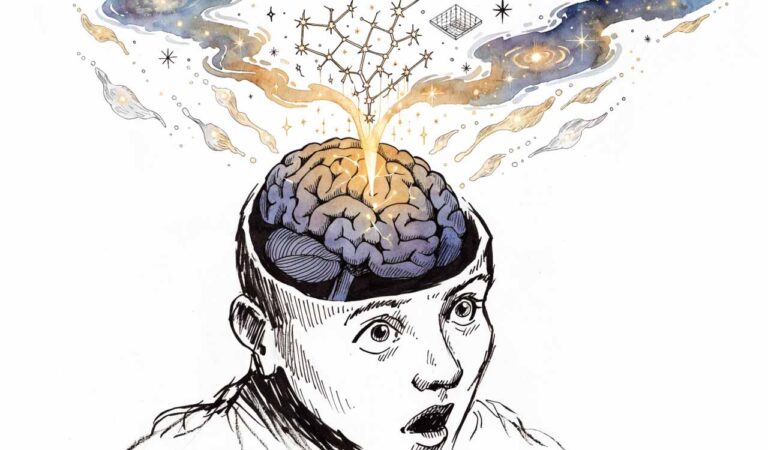
This method will have potential applications in the treatment of conditions like visual impairment and . Conditions such as Parkinson’s and epilepsy have also been understood better as a result of this new research pathway. The advent of optogenetics has made possible at a level that scientists could only dream of at one time. Francis Halzen of the University of Wisconsin-Madison, who won this year’s Nobel Prize in Physics, has worked on an area that virtually transformed how humanity explores the . The Belgian-born Physicist was awarded the coveted prize for his pioneering work on an observatory that detects particles from space, shedding light on the . He led the development of IceCube at the South Pole, which uses a cubic kilometre of Antarctic ice fitted with light sensors to detect the elusive particles called neutrinos. These carry information about violent, high-energy processes in the cosmos. Neutrinos are practically cosmic ghosts. Because they glide through stars and galaxies completely uninterrupted, they carry pristine, unaltered messages from the most violent events in the universe—like exploding supernovas or giant black holes. To spot these sneaky ghosts, Francis Halzen helped transform a solid cubic kilometre of crystal-clear ice into a gigantic trap. Today, an international collaboration of roughly 450 physicists, engineers, and computer scientists from nearly 60 institutions continues to operate and expand this monumental facility.