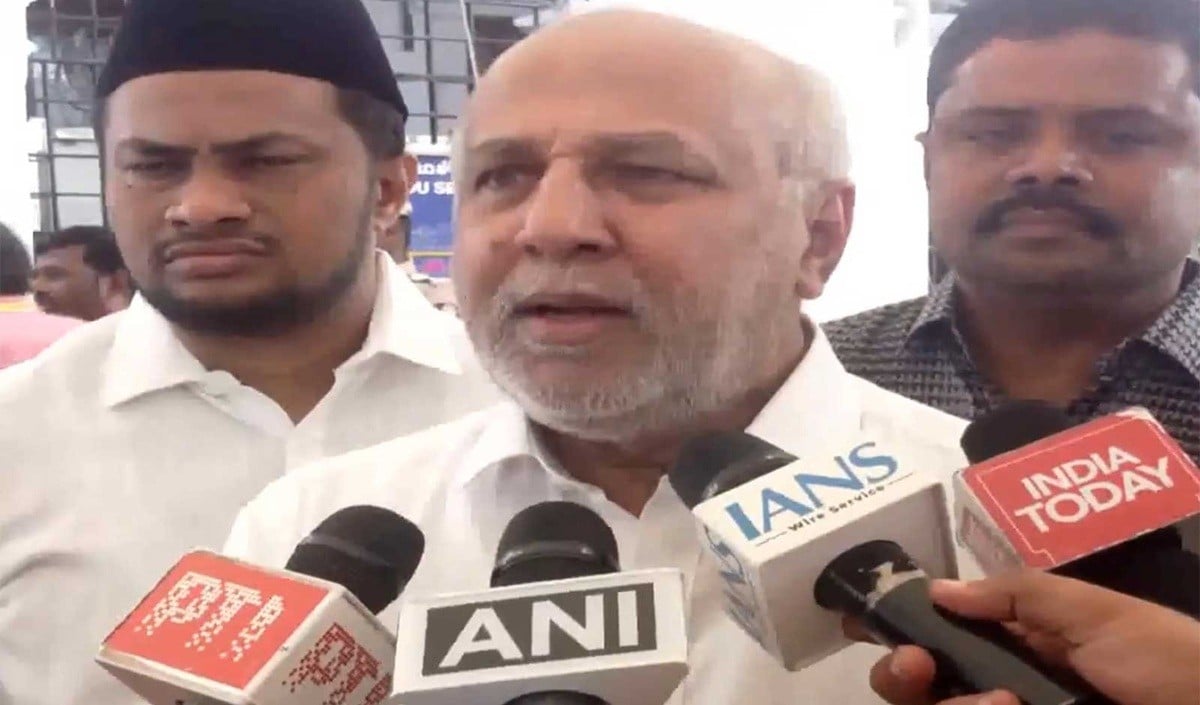
Rauf Hakeem’s big appeal on India-Sri Lanka fishermen dispute, give priority to ‘humanitarian aspect’
Sri Lankan Muslim Congress leader and MP Rauf Hakeem, who is currently on a goodwill visit to India, on Friday pitched for a balanced approach to resolve the long-standing fishing dispute between India and Sri Lanka. Emphasizing on prioritizing the “humanitarian and livelihood aspects” of fishing communities, Hakeem called for joint working between the Government of Tamil Nadu, the Government of India and the Sri Lankan authorities. He acknowledged that despite repeated efforts to resolve the issue, it remains a persistent cause of tension. A key problem in diplomatic efforts is the continued use of 'bottom trawling', which is strictly prohibited under Sri Lankan law. While the legal aspects associated with restricted fishing practices cannot be ignored, Hakeem believes the main focus should be on the welfare of fishermen in Tamil Nadu and the Jaffna peninsula of Sri Lanka.
He said that I am on a goodwill tour of Tamil Nadu. Upon coming here, many media persons have been asking me about the garbage problem and the contentious fishing issues between our two countries. This is a problem that keeps cropping up again and again despite many attempts by both sides to resolve it peacefully. I don't have much to say about this, except that it should be seen from a humanitarian perspective and as a livelihood issue for fishermen on both sides. To move towards a peaceful solution, the Sri Lankan leader proposed that all parties concerned come together to seriously consider sustainable options.
“Unfortunately, the risks associated with the use of restricted fishing methods known as ‘bottom trawling’—which are prohibited under Sri Lankan law—have always been a subject of debate. If these issues are to be resolved, the Central Government, the Government of Tamil Nadu and the Sri Lankan Government will need to seriously sit together and find solutions, which may include measures such as facilitating deep sea fishing and possibly joint fishing arrangements.