
Elon Musk aims to launch Starlink mobile service; US carrier stocks already feeling the impact
Elon Musk seeks to revolutionize the US telecommunications market. After launching the Starlink satellite connectivity service, SpaceX aims to go further and transform Starlink into a full-fledged mobile service, similar to Jio and Airtel in India. SpaceX’s plans may have already impacted the three major US carriers: T-Mobile, Verizon, and AT&T.
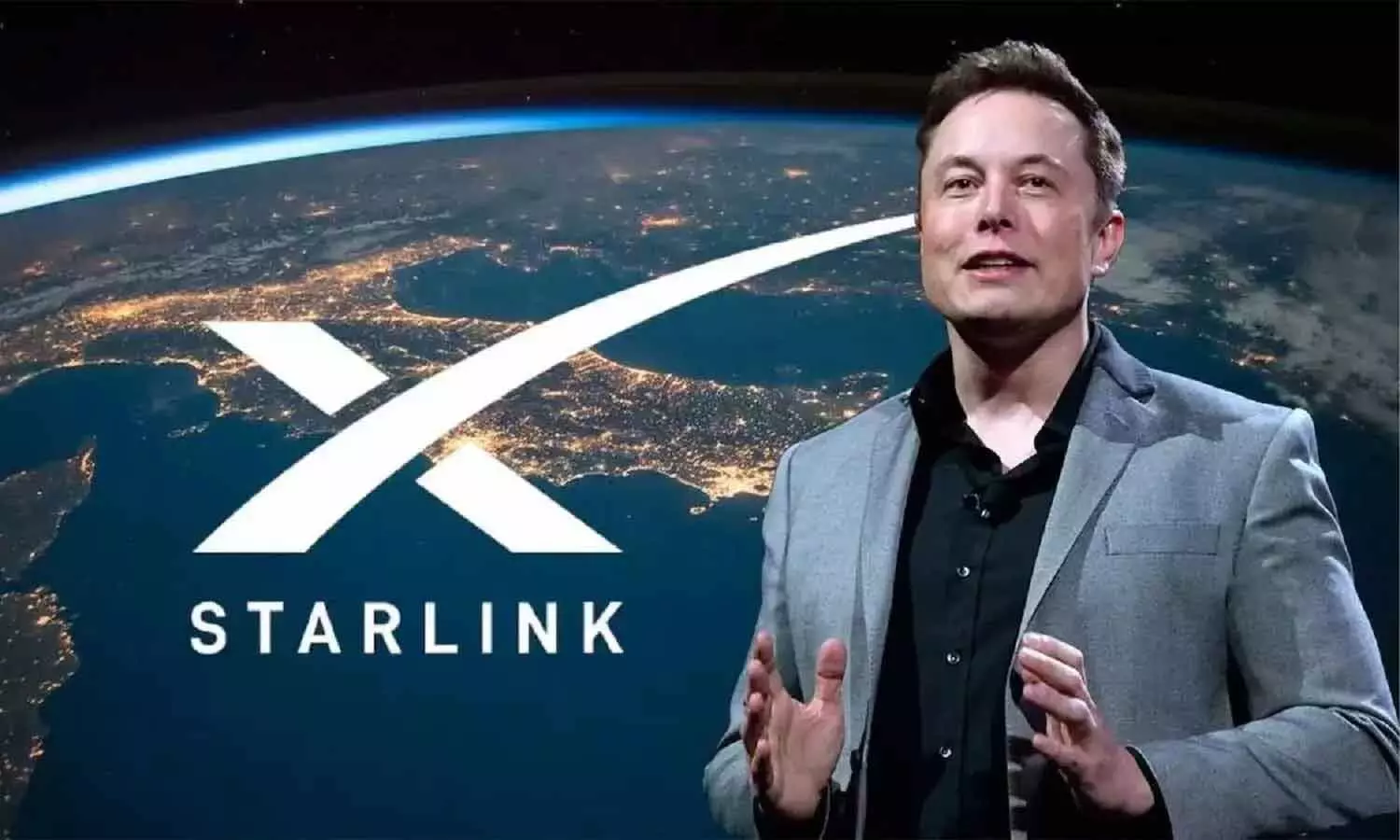
During earnings call on Tuesday, SpaceX President Gwynne Shotwell announced the company’s plans. “We certainly intend to develop the terrestrial component,” Shotwell stated. “This way, we will have not only the capacity of the satellites themselves but also ground infrastructure—essentially the necessary hardware and systems—to create a true mobile service, just as intended.”
This would allow Starlink to move beyond its current role of providing direct-to-device connectivity in areas lacking cellular coverage and, over time, compete more directly with Verizon, AT&T, and T-Mobile—the three carriers dominating the US market. Shares of Verizon, AT&T, and T-Mobile fell between 2.2% and 4% following her remarks.
SpaceX targets the $600 billion US market
Currently, Starlink primarily acts as a satellite backup for phone carriers, using satellites as space-based cell towers to connect compatible phones when terrestrial service is unavailable, including in remote areas and emergency situations. To transform Starlink into a full-fledged cellular service, SpaceX plans to utilise 65 MHz of wireless spectrum licenses acquired from EchoStar last year for $19.6 billion, thereby securing the frequencies needed to expand into mobile services.
According to Gwynne Shotwell, Starlink aims to capture a share of the U.S. cellular market, which is valued at $600 billion. “Roughly speaking, they [the three major carriers] generate $600 billion annually. I anticipate we can capture a significant number of their customers,” she stated. “Our service will be superior. We will eliminate coverage gaps by leveraging orbiting satellites. It will perform better during natural disasters.”
Shotwell did not disclose the capital investment required for the proposed network but noted that the company had “great new ideas” to execute the plan cost-effectively. She pointed out that SpaceX could use its own transceiver equipment—or base stations—and suggested that “a base station—a cellular base station—could be installed on the same mount that holds the Starlink broadband antenna.” This would allow the company to deploy “these small femtocells across the country” as needed, rather than making massive upfront investments in low-band spectrum.
SpaceX expects Starlink Mobile to be fully operational before the end of next year. It is worth noting that SpaceX currently partners with T-Mobile to provide direct connectivity to mobile devices outside traditional cellular coverage areas, thereby complementing—rather than competing with—the carrier’s network.
However, reports indicate that building a nationwide mobile phone business would require years of investment and execution. The three major U.S. carriers have invested hundreds of billions of dollars over three decades in acquiring spectrum, building and upgrading networks, and acquiring and retaining subscribers. SpaceX’s plans to venture into the mobile phone sector emerge weeks after the company went public. Currently, the company is valued at $1.5 trillion, although it initially reached a peak of over $1.77 trillion.