
World shares are mixed after tech giants decline on Wall St
Bangkok: Shares were mixed Thursday in Europe and Asia and South Korea’s Kospi dropped more than 4 per cent following declines for some Big Tech giants, including memory chipmaker SK Hynix.
Oil prices held steady, with Brent crude trading near $79 a barrel. Uncertainty about the direction of the US war with Iran is still overhanging markets despite hopes for a reopening of the Strait of Hormuz. The future for the S&P 500 was up 0.1 per cent, while that for the Dow Jones Industrial Average gained 0.2 per cent.
Markets will get an update on Friday on US jobs with the monthly employment report for July, and analysts say investors appear to be bracing for its potential impact. “Asia’s chip selloff looks like a combination of profit-taking and risk reduction ahead of Friday’s nonfarm payroll report,” Stephen Innes of SPI Asset Management said in a commentary.
Strong corporate profits and expectations for more growth ahead generally have been steering US stocks higher. But Asian benchmarks have been hit by bouts of selling of computer chipmakers and other companies related to the boom in artificial intelligence. SK Hynix plunged 10.4 per cent after dropping 30 per cent ahead of the open in Seoul, while its larger rival Samsung Electronics lost 6.3 per cent in the latest rout for shares linked to the AI boom.
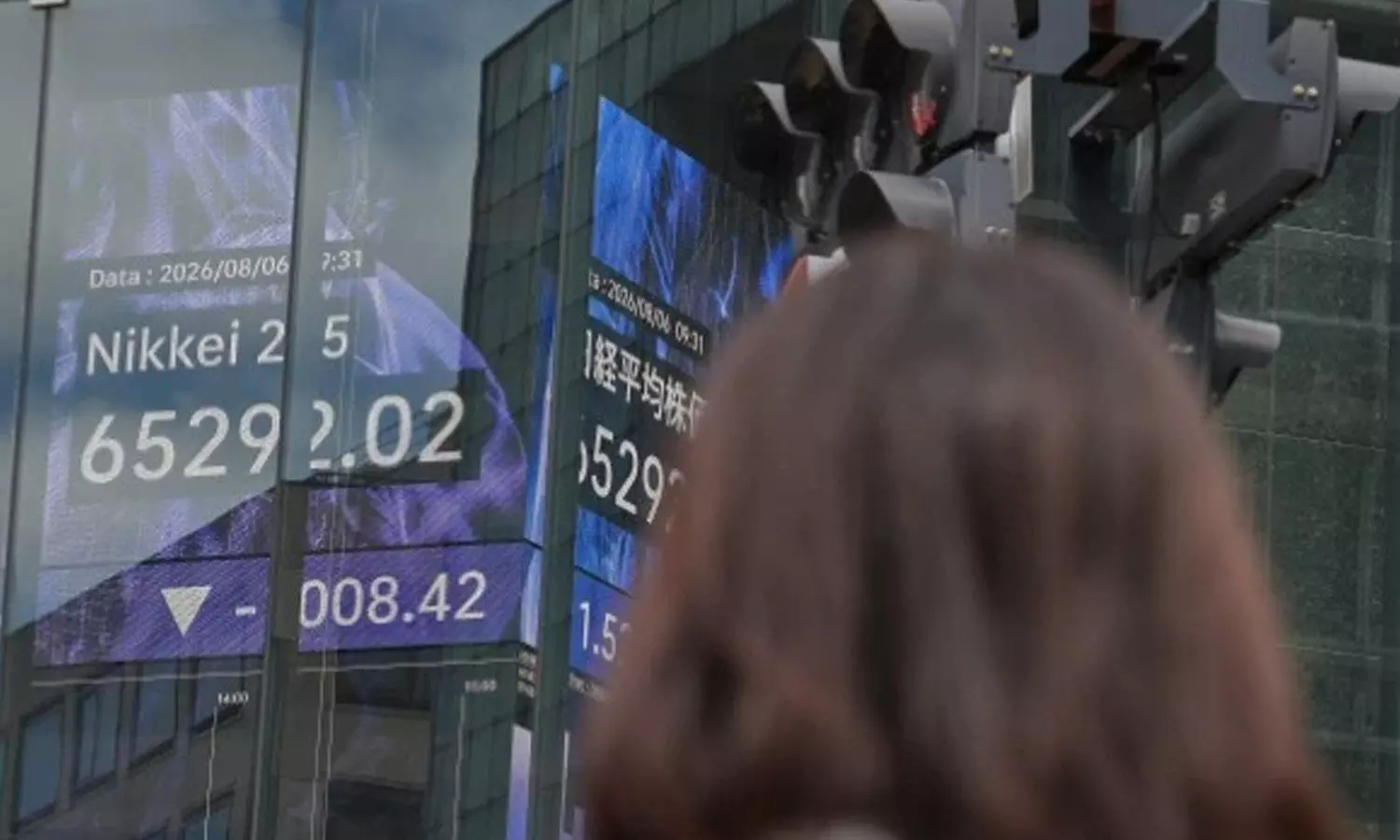
The Kospi lost 4.6 per cent to 6,296.38. In early European trading, Germany’s DAX was unchanged at 26,126.08, while the CAC 40 in Paris surged 0.7 per cent to 8,730.85. Britain’s FTSE 100 edged 0.2 per cent higher, to 10,913.07. Japan’s Nikkei 225 lost 0.9 per cent to 65,683.26.
In Hong Kong, the Hang Seng declined 1.7 per cent to 25,470.93, while the Shanghai Composite index climbed 0.6 per cent to 3,900.35. Australia’s S&P/ASX 200 gained 0.5 per cent to 9,271.60. US President Donald Trump said a deal to reopen the Strait of Hormuz was coming soon. But there have been many stops and starts during the five-month-old conflict that has stifled the global supply of oil and rattled energy markets. The price of Brent crude, the international standard, rose 0.3 per cent to $79.70 a barrel. Oil prices have been swinging for months and were as high as $102 per barrel at one point during the conflict, jolting already stubbornly high inflation. Higher oil prices pushed gasoline prices higher and increased shipping costs for a wide range of products. US benchmark crude oil was unchanged at $75.21 a barrel. On Wednesday, the S&P 500 slipped 0.2 per cent from an all-time high to close at 7,723.55. The Dow industrials rose 0.5 per cent to 54,349.12. The Nasdaq composite lost 0.8 per cent to 26,363.44.
Among big technology companies losing ground, Google’s parent company, Alphabet, fell 4 per cent, and Microsoft lost 1.1 per cent. Overall, the market has been rising as companies head into the closing stretch of their latest round of earnings reports with sharp overall gains. Three-quarters of the companies within the S&P 500 have reported results so far, and Wall Street expects profit growth of 50 per cent when they are all finished. The Walt Disney Co rose 3.6 per cent after easily beating Wall Street’s profit forecasts, helped by a $1 billion box office haul from “Toy Story 5” and theme park revenue. Booking Holdings jumped 6.6 per cent after reporting that strong travel demand drove profit and revenue growth during its most recent quarter.