
Welcome Starlink, but must follow law: Reliance responds to Elon Musk
Reliance Industries has spoken about the discussion regarding Starlink’s entry into India. The company says it has no objection to competition in the satellite communications sector. It also stresses that every operator, including Starlink and Jio must follow Indian laws and regulatory requirements.
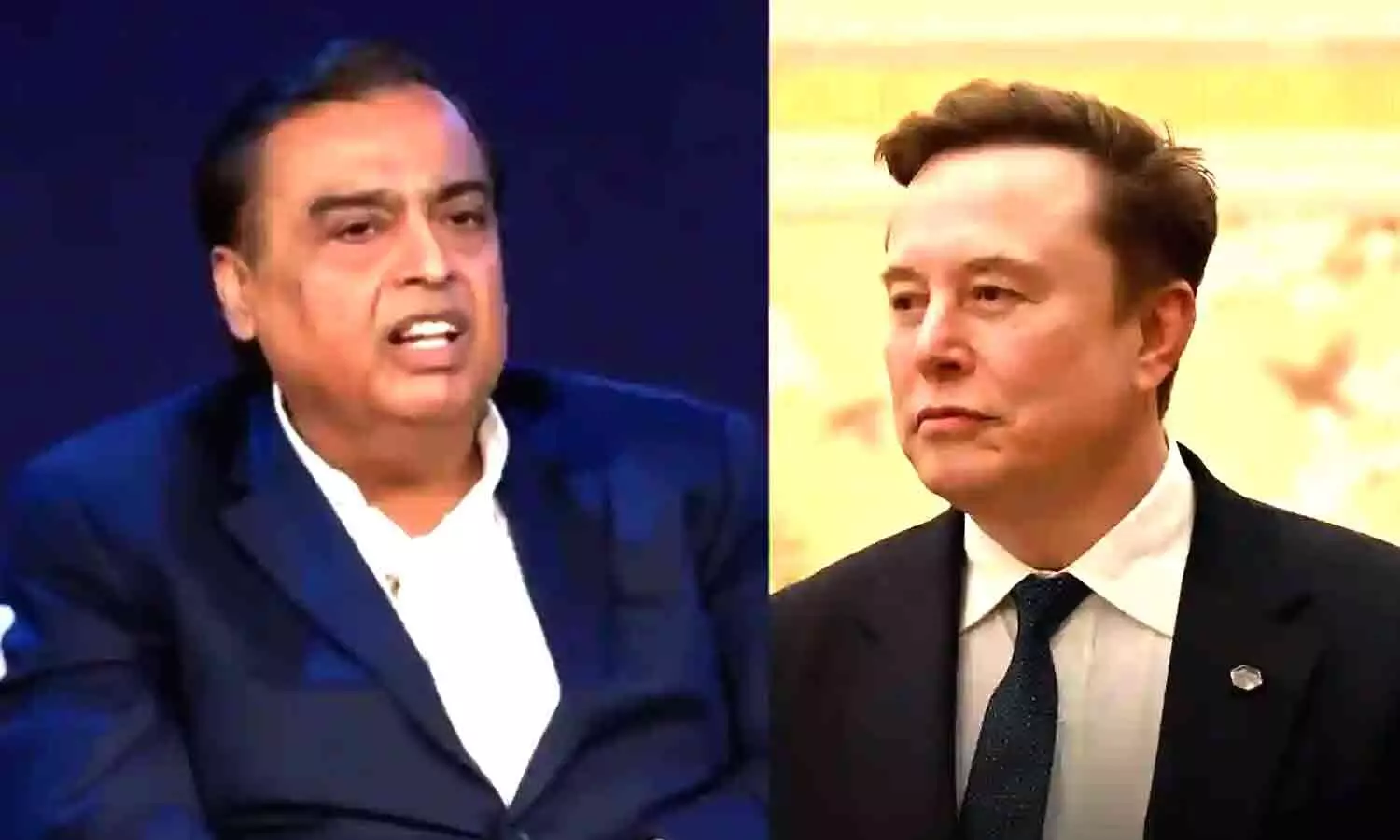
In a statement posted on X, Reliance said, “We welcome competition in satellite communications, including Starlink. Every player, Jio included, must serve the people of India and abide by the laws and policies of the land.”
Reliance did not directly name in its statement. However the statement clearly addressed SpaceX CEO Elon Musk’s comments about Starlink’s regulatory hurdles in India. Reliance said, “In light of remarks about Reliance and the Indian market we wish to place the facts on record ” and then explained Reliance’s position on the matter. Starlink’s regulatory challenges in India remain a point, for both Reliance and SpaceX CEO Elon Musk.
Musk had previously claimed that “some rich people” in India were trying to stop Starlink from coming into the market. He then directly criticized Mukesh Ambani, the head of Reliance Industries. Asked, “Is Ambani the real leader of India?” Rahul Gandhi, a leader from the Congress party and the opposition leader also got involved in the conversation, on X. He wrote, “Welcome to India, Elon.”
Jio also awaiting approvals
Reliance also pointed out that Jio’s satellite internet plans have gone through the same regulatory process. The company said it supports “investment and innovation, homegrown or international, that improve the lives of the people.”
At the same time, Reliance stressed that companies entering the sector must comply with the country’s legal and regulatory framework. “As the Government of India has stated, it applies the same process to every applicant, Indian or foreign,” it said.
The comments came shortly after Bharti Airtel Chairman Sunil Bharti Mittal also criticised Musk’s claims. Speaking at the Bloomberg New Economy Forum, Mittal said Airtel had applied for a satellite internet licence well before Starlink. “I am significantly ahead of him in the queue. I applied five years back,” he said. Airtel is also a backer of the Eutelsat OneWeb satellite project.
India’s Ministry of Communications has previously rejected suggestions that the approval process favours Indian companies. The ministry said Starlink, Eutelsat OneWeb and Jio Satellite Communications were at broadly similar stages, with security clearances and spectrum allocation still required before commercial services could begin.
Starlink VP Lauren Dreyer has said the company is prepared to begin operations once the necessary approvals are granted. “For the past five years, Starlink has been working closely with Indian regulators,” she said. “We’ve established the operations here in India, to be ready to serve India.”
Meanwhile, Jio is planning a satellite network of around 1,600 low-Earth-orbit satellites along with 23 ground stations. Satellite internet services could help connect remote and sparsely populated areas where traditional cellular infrastructure is difficult to deploy.