
Supreme Court’s Protest Order Is No Blanket Licence
The Supreme Court, in a special sitting today, directed the police to permit peaceful protests where Section 163 was not in force, follow the procedure prescribed by law while detaining protesters, and remove barricades unless they were “absolutely warranted.”
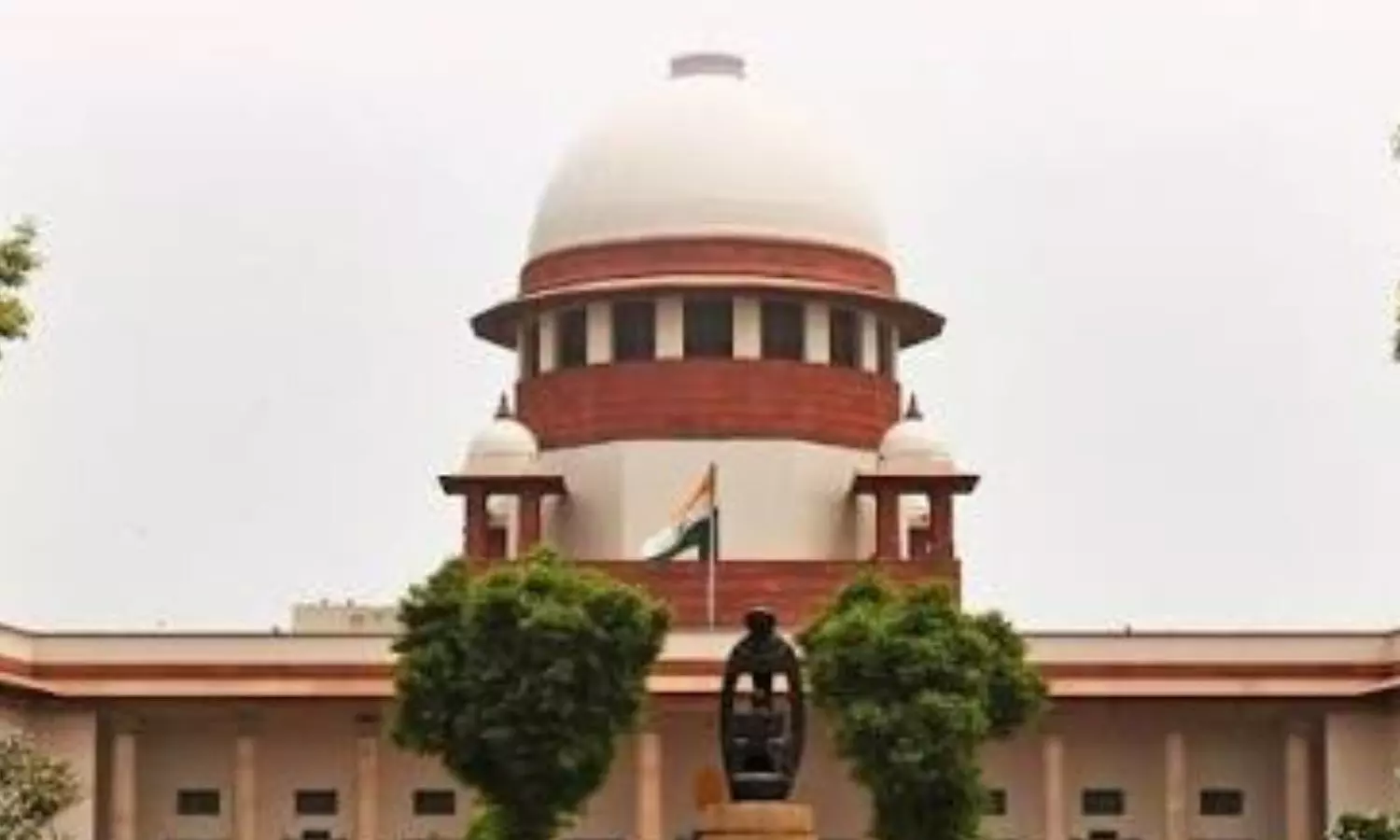
“We have been informed that a notice under Section 163 has been imposed in and around the Supreme Court. We direct the authorities to take down the restriction so that there is no apprehension of access to justice with regard to ingress and egress to the Supreme Court or any other court,” a bench of Justices Joymalya Bagchi and V. Mohana said.
The bench said the free movement of people should be normalised, subject to necessary regulation in a public order situation, amid the protest call by the Cockroach Janta Party (CJP).
It also directed the Centre to ensure that there was no “complete prohibition” on the movement of metro trains and trains coming to Delhi. However, it clarified that the police could take necessary decisions to maintain law and order, depending on the ground situation from time to time.
Whatever the directions of the apex court, the ground reality is that political parties are gearing up for more street protests in the days to come. They are likely to accuse the authorities of contempt of court whenever restrictions are imposed. What they may conveniently overlook, however, is that the Supreme Court has not granted blanket permission to stage protests whenever and wherever one chooses. There are procedures to be followed by both protesters and law enforcement agencies. Where required, permission must be obtained in accordance with the rules.
Yet, opposition leaders, including MPs, repeatedly argue that protesting is their democratic and Constitutional right and that they do not need permission. This questionable reasoning can lead to confrontation between protesters and the authorities.
Some newly emerged protest groups, such as the CJP, as well as MPs and Congress chief ministers, have described the present situation as an undeclared Emergency, or even something worse. Most of them were not even born when the Emergency was imposed by then Prime Minister Indira Gandhi. BJP leaders argue that they should first understand what that period meant, when people were allegedly picked up and imprisoned without proper notice, and even their families were not informed about the jails in which they were held.
Now only preventive detentions are taking place, and cases are filed if policemen on duty are attacked or if someone indulges in violence like stone pelting.
Although the police detained thousands of protesters on Saturday, most were released by the evening, barring the three CJP leaders. In the case of the CJP leaders, the action was described as preventive arrest rather than detention, necessitating their production before a magistrate.
The BJP argues that the courts should also lay down guidelines on incidents such as Rahul Gandhi’s alleged entry into Akashvani Bhavan, where he reportedly staged a sit-in for eight hours. Can such protests be permitted inside sensitive government premises? What if anti-social elements resort to similar actions, creating a law-and-order problem and threatening the security of such establishments?
Another question concerns the language used against constitutional authorities. Political leaders and protesters have used terms such as “coward”, “bully” and “traitor” against the Prime Minister and constitutional functionaries, including the Chief Election Commissioner. While criticism of public officials is an essential part of democracy, where should the line be drawn between legitimate political dissent and language that undermines public discourse?
The right to protest is fundamental to a democracy, but it does not place anyone above the law. Equally, the authorities cannot use law-and-order concerns as an excuse to suppress peaceful dissent. The challenge is to ensure that both protesters and the police respect the law, constitutional freedoms and the rights of others. The Supreme Court’s directions should be understood in that spirit—not as a licence for unrestricted protests, but as a reminder that democratic rights and public order must coexist.