
Researchers identify new flowering plant species in Assam’s Manas National Park
Guwahati: A new flowering plant species has been discovered in Assam’s Manas National Park, Chief Minister Himanta Biswa Sarma said on Monday.
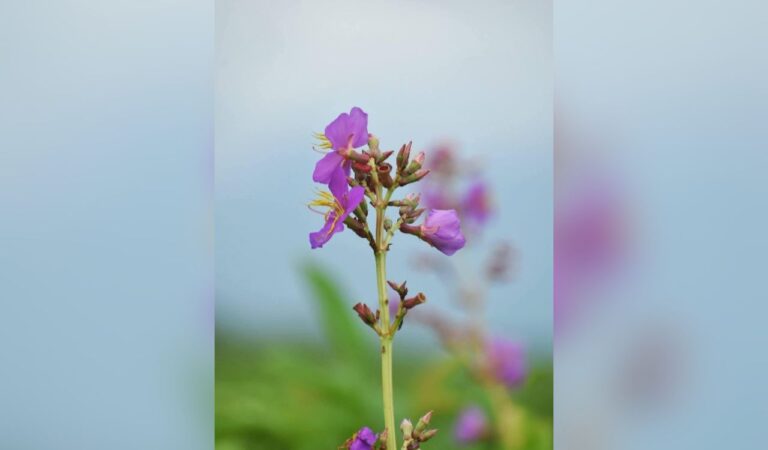
He said the discovery of new plant and animal species in the state in recent times bore testimony to the government’s priority for nature conservation.
“This is Osbeckia assamensis, a new flowering plant species discovered in Assam’s Manas National Park,” Sarma said in a social media post, attaching a photograph of the plant.
“If you follow my handle, you would have observed how frequently I share news of new plant, flower and animal species being discovered in our state,” he said.
The government, as an extension of society, had always prioritised nature conservation, and these findings were “a testament to the consistent work being done in this field”, the Chief Minister said.
“Assam’s natural heritage has received another remarkable boost with the scientific identification of a new flowering plant species in Manas National Park,” State Environment and Forest Minister Jayanta Mallabaruah said.
“Named Osbeckia assamensis, the newly described species adds to the documented floral diversity of one of the state’s most important natural landscapes and highlights the scientific discoveries that continue to emerge from its grasslands,” he said in a social media post.
He said researchers Barnali Das and Namita Nath described the species in a study published in the botanical journal Phytotaxa on October 22.
Their findings followed extensive field surveys conducted between 2021 and 2025, during which the plant was recorded in scattered populations across the grasslands of Manas, the minister said.
Belonging to the Melastomataceae family, Osbeckia assamensis is a perennial shrub that grows between 2 and 2.5 metres tall. It produces pink flowers measuring around 3 to 3.5 centimetres, with each flower cluster carrying approximately 30 to 35 flowers.
“The plant flowers and fruits between September and February, adding colour to the park’s natural landscape during these months,” Mallabaruah said.
The researchers established its distinct identity through a detailed examination of its physical characteristics and comparisons with related species, he said.
The first reference specimen was collected in Manas on October 8, 2022, while another specimen was documented in October 2025.
“This discovery reminds us that our forests and grasslands are living repositories of biodiversity, holding botanical treasures that science is still uncovering,” Mallabaruah said.
“By conserving Manas and supporting scientific research, we can continue to discover, understand and safeguard Assam’s extraordinary natural heritage,” the minister added.