
Research from Guntur Gains International Recognition at Leading Spine Surgery Congress
Three independent scientific societies honour innovative neurosurgical research, highlighting the growing contribution of regional centres to global medical science
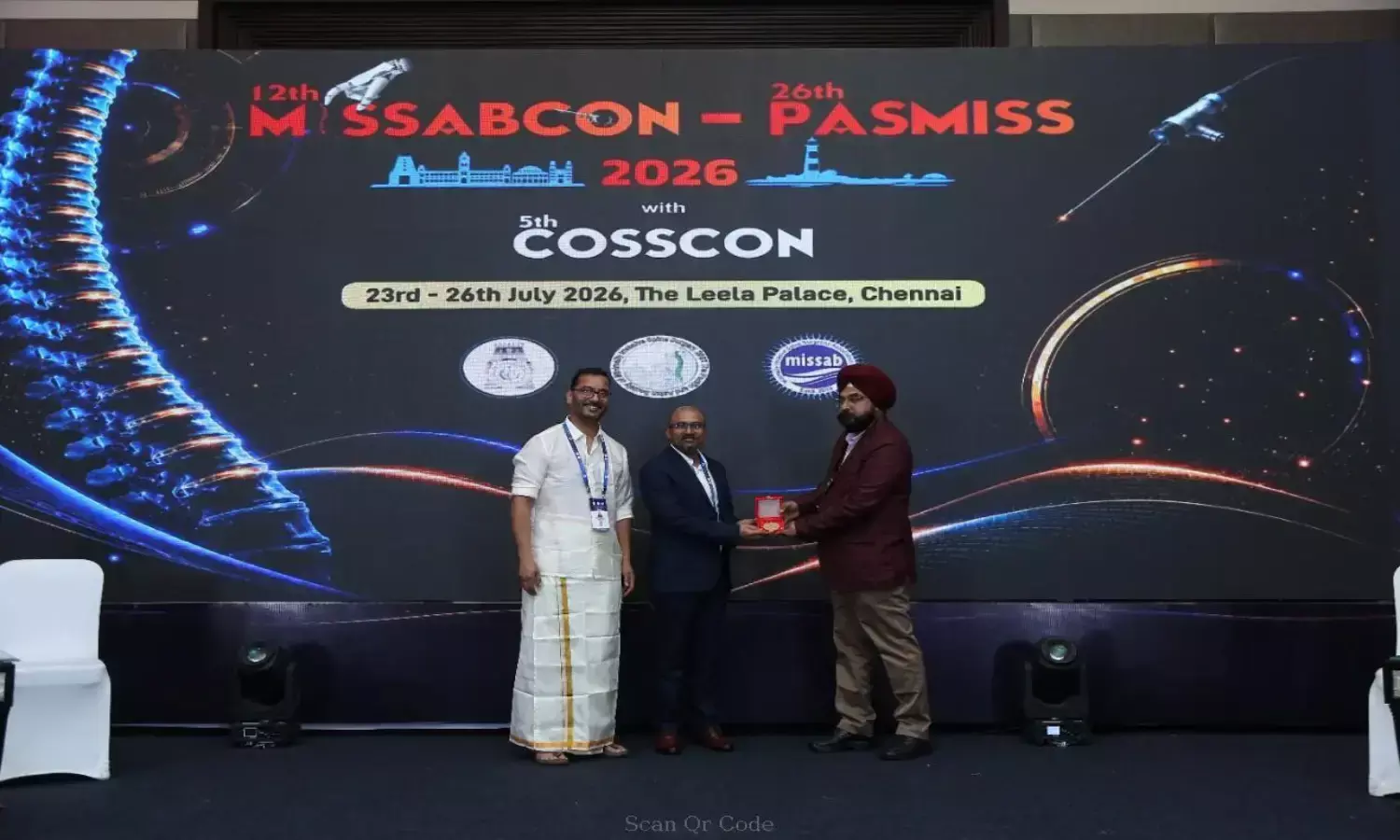
GUNTUR/CHENNAI: An independent research study conducted in Guntur has attracted international scientific recognition due to the study being appreciated by three major professional associations in one of Asia’s most important conferences for minimally invasive spine surgery.
The study made by Dr. Mohana Rao Patibandla, Founder & Chief Neurosurgeon, Dr. Rao’s Hospital – International Institute of Neurosciences (IIN), Guntur, won scientific appreciation by Pacific & Asian Society of Minimally Invasive Spine Surgery (PASMISS), the Minimally Invasive Spine Surgeons Association of Bharat (MISSAB) and Gold medal at COSSCON in their joint annual scientific conference in Chennai.
It must be noted that scientific appreciation has been provided to the original research work conducted by Dr. Rao, as a scientific appreciation is different from life time achievement or service awards. It has been based on an evaluation of Dr. Rao’s scientific work done in the field of minimally invasive neurosurgery on difficult craniovertebral junction disorders.
This study examined a minimally invasive approach for carefully selected patients with difficult craniovertebral junction disorders.
Recognition from three independent scientific bodies during one conference is rare and is an indication that the research is appreciated widely among specialists in the field.
“Scientific recognition from the professional peers is very special since the research is independently judged for the methods, innovations and practical significance of the study,” remarked Dr. Rao. “Every study starts with the problem faced by a patient. We need to carefully analyze the problems and convert clinical experience into scientific information which will help future patients.”
It should be noted that modern advancements in neurosurgery occur thanks to close cooperation between the clinical experience and research. All innovations and surgical techniques need to be carefully analyzed scientifically before they can be applied on a routine basis in clinics.
This recognition emphasizes the increased involvement of specialized health-care facilities beyond metropolitan cities of India. It is a fact that up till now the major centers have dominated medical research, but nowadays regional hospitals make their contributions to science and discuss them in international conferences.
Healthcare experts attribute this change to the increase in availability of advanced surgical techniques and international educational collaborations.
“Patients in these centers receive medical treatment that is becoming more consistent with world-class healthcare,” noted Dr. Rao.
In his speech, Dr. Rao stressed the importance of research as an integral part of the practice, which helps to achieve better results.
“Every challenging procedure offers lessons for us. By reviewing results, doubting the current approach and discussing our research with the scientific community, we contribute to the development of neurosurgery as a field. All research serves only one goal—to enhance the quality of patient care,” he explained.
The conference was attended by the most renowned specialists in neurosurgery, orthopedic spine surgery and the latest research related to minimally invasive spine surgery, navigation, neurophysiology monitoring and other aspects of complex spinal disorders.
The recognition is not only an individual achievement but is a clear indication that excellent clinical research can be conducted outside the traditional centers of academia in India through dedicated neuroscience centers.
In an era where the health sector relies on evidence-based practices, international scientific recognition is not only a means of rewarding excellence but also a way of encouraging further innovation in order to enhance the quality of treatment of patients.
Quote Box Suggestion
“Research is not about collecting awards. It is about providing better solutions for the benefit of patients. International scientific societies’ recognition informs us that our solutions could also benefit others.” – Dr. Rao