
Opinion: Uncounted and Unprotected — India’s seasonal migrants and Digital Census
By Kanak Aggarwal, Amit Kumar
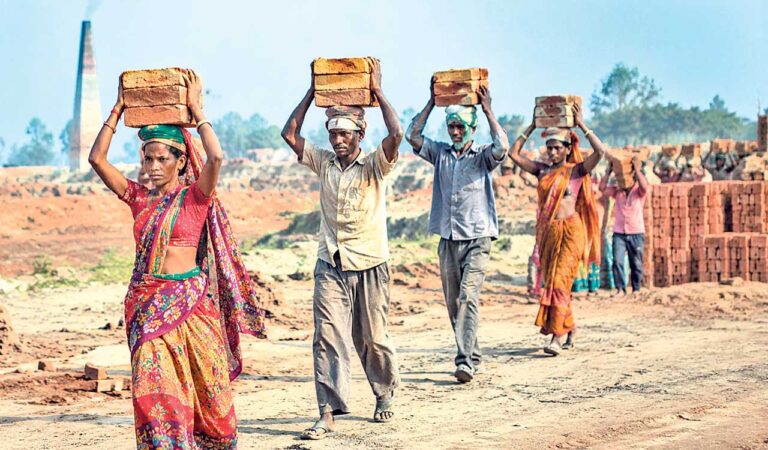
In the villages, we don’t have agricultural land. We work as labourers on other farms and for about four months, we work in brick kilns to supplement our income,” 45-year-old Arjun Mistry told The Migration Story. Mistry is one of millions of who form the invisible backbone of the Indian economy.
With the long-awaited Census 2026-27 underway, an important policy question has gained relevance: can India’s new digital count identify the country’s highly mobile migrant labour force, or will these workers be ignored? Traditionally, census methodologies have favoured sedentary populations and those who move for longer periods.
Statistically Invisible
In particular, short-term and seasonal migrants risk becoming statistically invisible due to stringent requirements, such as a minimum of six consecutive months of residence in the destination area. Caught between their “mobile lives” and rural roots, these migrants are particularly vulnerable to exploitation by contractors. They often lack documentation needed to claim entitlements in cities and prefer to be counted at their places of origin, fearing the loss of land, caste-based identity or other benefits.
The Periodic Labour Force Survey (PLFS) 2020–21 estimated India’s overall migration rate at 28.9%. However, recent estimates of the total number of migrants remain unavailable.
Unlike permanent migration, which often involves a long-term change of residence due to marriage or relocation, seasonal migration is defined as a temporary, uninterrupted absence from the village for 60 days or more but less than a year, with a clear intention to return home. These workers are primarily absorbed into informal sectors, including , , brick kilns, mining, manufacturing, and domestic work. Despite their essential contribution, they remain “internal aliens,” moving between two worlds but finding security and social ties only in the villages they are forced to leave.
Livelihood Strategy
For most workers, migration, particularly seasonal, is a livelihood strategy for survival rather than a professional choice. Push factors in rural regions include chronic poverty, landlessness, and seasonal unemployment during lean agricultural cycles, which drive workers toward distant States.
Extreme weather events, such as droughts, sudden floods and crop failures, often trigger fresh waves of distress migration. Household debt adds to the pressures. Conversely, pull factors include a steady demand for labour in industrial clusters and wages higher than those available in their home villages.
The reasons for migration also differ significantly by gender. Among women, marriage accounts for 86.8% of migration, while among men, the search for better employment constitutes the highest share at 22.8%. To address information gaps, the National Statistics Office (NSO)’s new Survey on Migration for July 2026–June 2027 could help inform more targeted interventions in housing and social security.
A digital census that overlooks seasonal migrants risks deepening their exclusion from welfare, labour protections and the rights of citizenship
The Indian economy relies heavily on internal migrants, who are estimated to contribute nearly 10% to the GDP through their participation in agriculture, manufacturing, and service sectors (ILO, 2020). Yet, despite this contribution, seasonal migrants face structural exclusion in several critical domains. In employment, a staggering 80% of informal workers, including , lack written contracts, weakening their bargaining power.
Furthermore, the Economic Survey 2019 revealed that one in three workers did not receive the minimum wages required to meet basic needs. Historically, food security has also been compromised because local databases failed to recognise home-state identification, leading to severe nutritional vulnerability.
The psychological toll of this transient existence is profound. Workers face persistent uncertainty over job and income, alongside social isolation from familiar community networks. An indication of the scale of this crisis comes from a 2025 study of 234 unskilled migrant labourers in Delhi and Kanpur. The study found that 47.9% of participants showed elevated symptoms of common mental health problems. Women reported significantly greater distress than men due to the double burden of manual labour and domestic care work in hostile environments.
One of the most distressing consequences of seasonal migration is the disruption of children’s education: a phenomenon of “mobile childhoods” meeting “immobile schools”. Children accompanying parents struggle with learning gaps and drop out of formal education. A survey at urban worksites across major destination cities revealed that only 17.18% of migrant children had access to education, while more than 40% had never been enrolled in school.
Government Intervention
Introduced in 2019, the One Nation One Ration Card (ONORC) scheme is a critical government intervention. Its nationwide rollout was completed in June 2022, enabling subsidised to be accessed across all 36 States and Union Territories. For decades, the Public Distribution System (PDS) was tied to a fixed “place of usual residence,” meaning workers such as Arjun Mistry could lose access to subsidised food the moment they crossed State borders.
ONORC allows beneficiaries to claim their foodgrains from any Fair Price Shop in the country. This initiative is complemented by schemes such as Ujjwala 2.0, which now allows migrants to get LPG connections through self-declaration as “proof of address,” removing the need for a local ration card. These schemes provide a nutritional safety net for migrant workers and reduce their reliance on high-cost open-market food. However, implementation is often hindered by biometric authentication failures and poor internet connectivity at remote worksites. Furthermore, many migrants still lack the Universally Valid Shramik Card needed to link their identities across state systems.
Kerala’s “guest worker” model offers a proactive blueprint, including Apna Ghar (subsidised hostels) and Aawaz (health insurance). Educational initiatives such as Roshni have enrolled thousands of migrant children in government schools.
The Union Budget 2026-27 includes provisions for rural livelihoods but lacks a dedicated financial provision specifically for seasonal migrants. The absence of targeted funding makes it difficult to assess welfare outcomes for this mobile population. Addressing these gaps requires extending ONORC’s portability principle to healthcare and education through the e-Shram portal; replicating Kerala-style and Migrant Resource Centres (MRCs) across major destination clusters; making written contracts in multiple languages and digital wage records compulsory to prevent wage theft; and placing counsellors or trained peer-support workers within MRCs to mitigate mental health risks.
Seasonal migrant workers are not merely “factors of production” to be moved across a map to satisfy the demands of industry. They are citizens whose rights to food, health, and dignity are often compromised by the very act of moving in search of work. A holistic approach that integrates work, housing, legal aid, mental health, and overall well-being is required. Restoring dignity to the is not just a labour issue; it is a prerequisite for India’s journey toward becoming a truly developed and inclusive nation.
(Kanak Aggarwal is a bachelor’s student and Amit Kumar is Assistant Professor, Department of Economics & Fellow at Centre for Social and Policy Research, Christ University, Delhi NCR)