
One card, local prices abroad: the startup trying to end the “tourist price”
Ask a family just back from Europe what the holiday really cost and watch them do the sums again. The flights and the hotel were paid for months ago, that part they remember. What they don’t remember agreeing to is the rest of it. An espresso on the main square at twice the price the locals pay two streets over. A museum ticket here, a taxi there that somehow took the long way round, a massage after six hours on cobblestones. It adds up, and nobody budgets for it. A US startup called Tourist.com has decided that this, the small daily spending of a trip, is the problem worth solving.
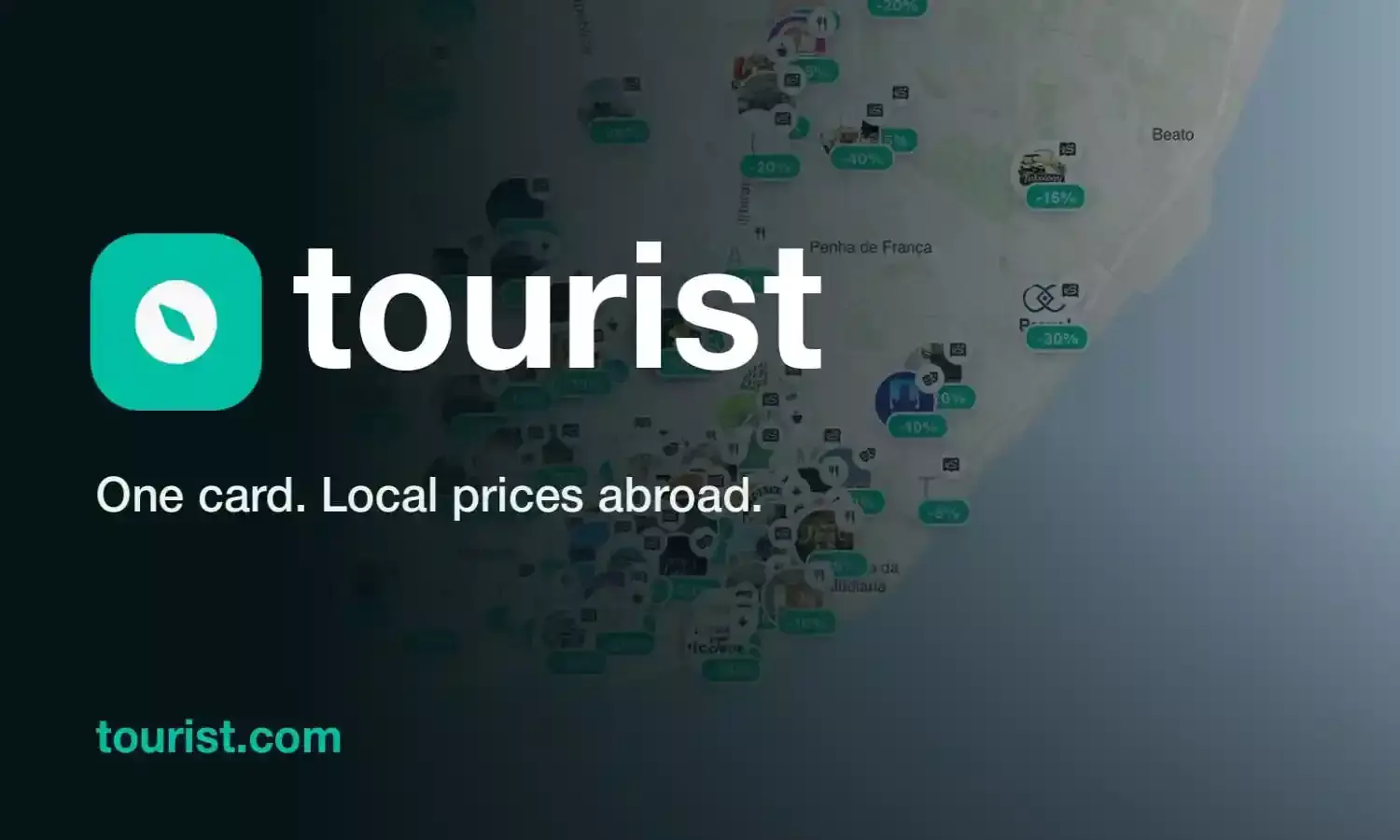
The company, run by Delaware-registered Tourist Inc., gives a traveller one Tourist ID. Show it, on the free app or on a physical card, at any of the 55,000-odd partner businesses now on the network, from restaurants and cafés to hotels, tour operators, wellness studios, shops and attractions, and the business applies a discount it set itself. No voucher. No booking screen. The price simply drops at the counter.
“Most travellers pay the tourist price without ever realising there was another one,” says Michael Litovchenko, the founder of Tourist Inc. “Locals know where to go and roughly what it should cost. We want the visitor to get the local price too, and we want the business, not some platform, to be the one deciding what that price is.”
The business pays nothing, the traveller pays a little
What makes the model unusual is who pays. A hotel or a tour operator listed on a big booking site hands over a commission on every reservation, and 15 to 25 percent is not unusual. Tourist.com asks them for nothing at all. There is no listing fee and no commission, and the partner’s only obligation is to offer members a discount of its choosing.
Travellers, meanwhile, can join free and will usually see offers in the 5 to 15 percent range. A paid tier, Tourist Plus, costs $39.99 a year and opens up deeper discounts, in some cases as much as 60 percent, which partners reserve for subscribers.
“For a small restaurant, 10 percent off for a guest who is already standing at the door is a far better deal than 20 percent to a booking site,” Litovchenko says. “Once owners understood that, most of them said yes within a day.”
Fifty-five thousand partners, no advertising
The partner count is the figure the company likes to lead with, and it came quickly: roughly nine months from launch, according to Tourist Inc., without a paid campaign. The founder’s explanation is the name. Tourist.com is what the industry calls an exact-match domain, a single generic word that describes the category, and the company says a café owner or a small hotel tends to recognise it, and trust it, on the first email. In an industry where getting a small business to reply at all is the hard part, that recognition did much of the selling.
The site exists in six languages, each on its own country domain, and the Tourist name is a registered trademark in both the European Union and the United Kingdom, something the company went to some trouble to secure.
What this means if you’re flying out of Delhi or Mumbai
With the rupee where it is against the euro and the dollar, ten percent off a week of meals, taxis and entry tickets is not pocket change; on a typical ten-day trip it can be worth more than the gap between two hotel rates. There is also the convenience of it being one ID rather than a drawer full of city passes. The card that got a discount in Lisbon on Tuesday gets one in Bangkok the following week, and nothing needs to be bought again in between.
Having spent the first year recruiting businesses, Tourist Inc. now says the job is to recruit travellers. On the list: tie-ups with travel platforms and hotel groups that could fold the membership into their own packages, a programme for travel creators, and a referral scheme that rewards members for bringing their friends along.
The service is available at and as an app for iOS and Android.