
Nvidia Board Rules Out Jensen Huang’s Return As CEO
Nvidia’s board has no plans to bring back co-founder Jensen Huang as chief executive, despite his reported willingness to return to the top position. Interim CEO Colette Kress has made it clear that the board has accepted his resignation and intends to move forward with its leadership transition.
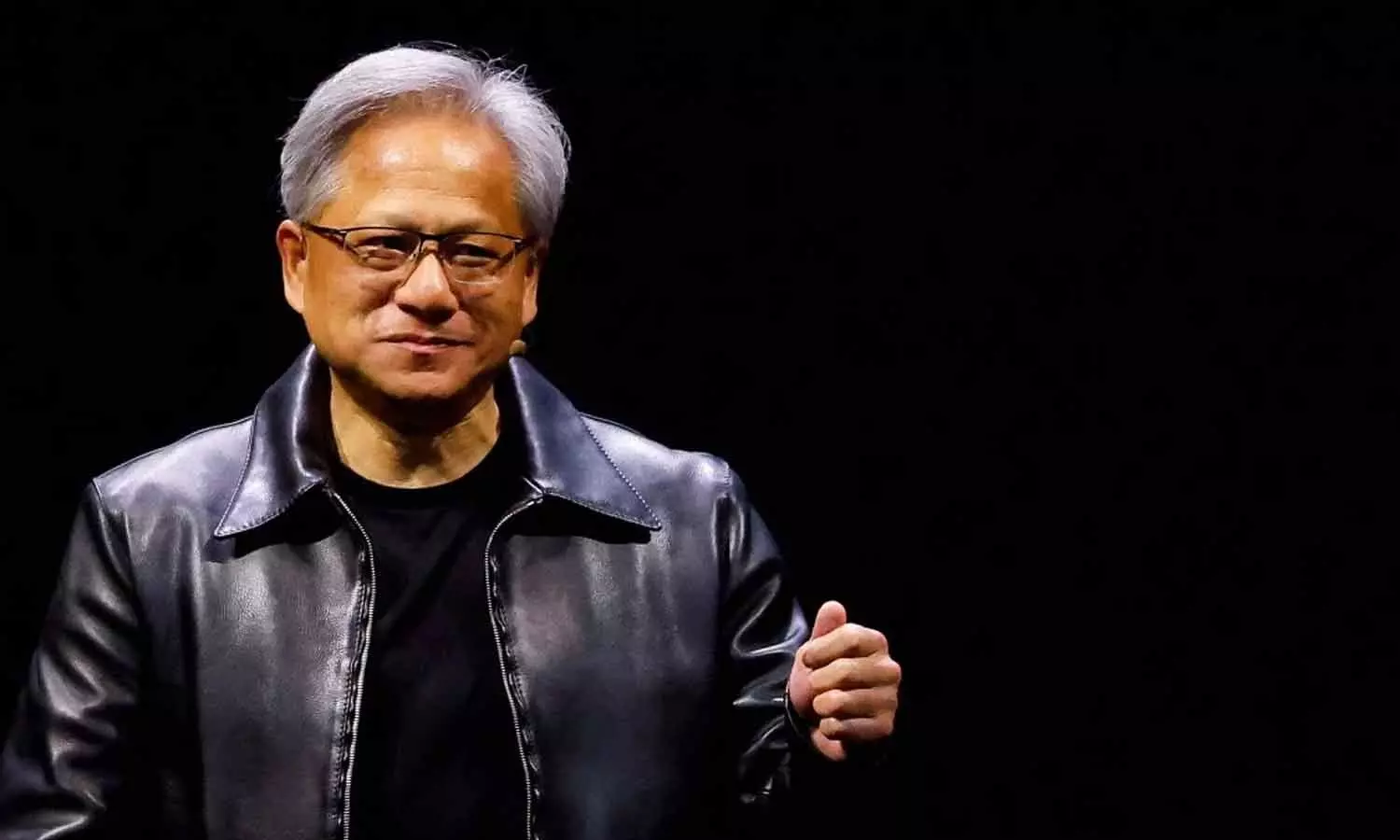
Speaking to CNBC’s Jim Carter after the company’s latest earnings announcement, Kress said the board had already made its decision regarding Huang’s future at the company.
“Jensen resigned from his position with NVIDIA, and the board accepted his resignation,” Kress said. “The board has determined that they will not reinstate Jensen. And that is our statement and what the board has decided to do.”
Her remarks come amid speculation surrounding Huang’s possible comeback. The Nvidia co-founder had reportedly indicated that he was prepared to return to the CEO position at the company he helped build.
Why did Jensen Huang leave Nvidia?
Huang stepped down as Nvidia’s president, CEO and board member with immediate effect, bringing his 33-year tenure as chief executive to an end. According to the company’s Form 8-K filing, the board accepted his resignation and confirmed the leadership changes on November 11.
Kress, who previously served as Nvidia’s chief financial officer, continues in that role while taking charge as interim CEO. The board is reportedly considering both internal and external candidates to find a permanent successor. Nvidia has also appointed Harvey C. Jones as its first-ever board chair.
The leadership change followed reports published by The New York Times alleging that Huang had an affair with an executive who reports to him. The reports emerged shortly before his resignation was announced.
Nvidia shifts focus to business growth
Addressing concerns about the leadership change, Kress said the company was more interested in maintaining its business momentum than revisiting the decision.
“We wanna think about right now growing our business. We wanna grow in terms of everything that we need to do with our employees, our customers, our shareholders, and that is where we are gonna focus moving forward,” she said.
Her comments followed stronger-than-expected quarterly results. Nvidia also raised its fiscal 2028 revenue growth forecast to 75 per cent, up from its earlier estimate of 70 per cent, offering investors some reassurance about its business outlook.
Customers and employees remain committed
The departure of Huang has raised questions about whether major technology companies could increasingly turn to their own AI chips or competitors such as AMD. However, Kress said Nvidia was continuing to see strong demand for its computing platforms.
“[Hyperscalers] are the ones that are right now feverishly looking for more focus in terms of the compute that we have available,” she said. “This concept that anything is changing in terms of any of our types of customers, that is just not true. They are all continuing to be with us, and we have a very deep breadth of different customers.”
She also shared feedback from customers who had contacted her following the leadership transition.
“I have already had many of these [customers] contacting me and saying, ‘Great to see everything intact. Great to see that there’s more supply. I need more demand.'”
Kress also expressed confidence in Nvidia’s workforce, pointing to the long-standing relationship employees have with the company.
“The company has been built under the perspective that the employees look at Nvidia as their life work, and many of them have been here for many decades, working with us both from a technology standpoint or a business and operations perspective,” she said.
For now, Nvidia appears determined to keep its attention on AI demand, customer relationships and business expansion as it prepares for its next phase without Huang at the helm.