
Jamia Protest Escalates Over Student Union Polls, Detained Protesters’ Release
The protest at Jamia Millia Islamia over demands for student union elections and the release of detained protesters has escalated into a standoff between students and the university administration. With classes shifted online until November 24 and physical classes not expected to resume before January 13, the agitation has disrupted academic activities and raised concerns over students’ representation.
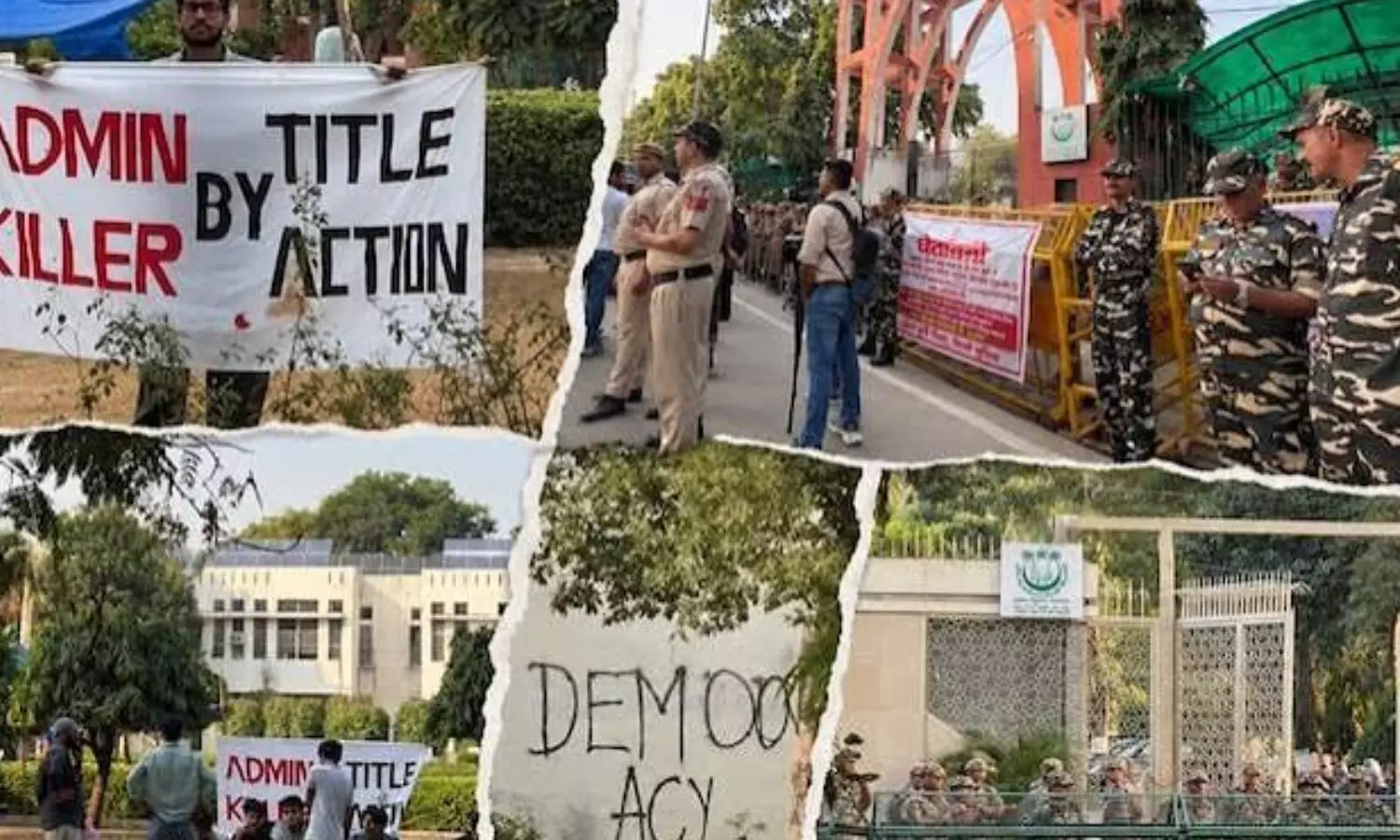
The protest began on October 11, with students demanding the restoration of a student union, elections and the release of those detained during the agitation. Students have also called for the resignation of the university’s proctor, accusing him of failing to act independently.
Students Demand Union Elections After Two Decades
Jamia Millia Islamia has not held student union elections since 2006. Protesters say the absence of an elected student body has deprived them of formal representation in university affairs.
The agitation has included hunger strikes and demonstrations near the statue of Mirza Ghalib. Students are demanding a clear election schedule and an official notification confirming that the process will move forward.
Dispute Over Proposed Agreement Deepens Standoff
The university administration and protesting students attempted to reach an understanding on October 26. A draft committee was formed, with December 20 set as a deadline under the proposed arrangement.
However, students said the agreement did not adequately address their concerns. They want an official assurance that elections will be held by the stipulated deadline without further approval-related delays.
The agreement itself became contentious, with protesters questioning the circumstances under which it was signed. The disagreement has prolonged the standoff, leaving the election process unresolved.
Students Allege Shortages of Food and Basic Supplies
Students at the protest site have reported shortages of food, water, clothing and medicines. They alleged that supplies had become difficult to obtain following the imposition of prohibitory orders under Section 163 of the Bharatiya Nagarik Suraksha Sanhita (BNSS).
Nivelle, a master’s student, said protesters were pooling their resources and raising funds to sustain the agitation.
PhD scholar Lubaib alleged that the university had stopped supplies, while student activist Mantasha Irfan said women at the protest site lacked essential items, including sanitary pads and clothing.
These claims reflect the hardships protesters say they have faced while continuing their sit-in.
Police Deployment and Barricades Around Campus
Barricades and police personnel were visible near several campus entrances, including Gates 7, 8 and 13, as well as the Centenary Gate.
According to protesters, some students, including members of the All India Students’ Association (AISA), were detained after attempting to enter restricted areas.
India Today approached officers leading the deployed Delhi Police units, but they declined to comment, saying they were following instructions and were not authorised to speak.
At the time of reporting, the Delhi Police and Union Home Ministry had not provided a statement addressing the use of Section 163 in the area.
Jamia Shifts Classes and Examinations Online
The university has extended online classes until November 24 and shifted odd-semester examinations to online mode. Physical classes are expected to resume only after January 12, 2027.
The decision has raised concerns among students whose courses require practical training. A first-year food production student said online learning was inadequate for a course that depends heavily on hands-on experience.
Students living in paying guest accommodation and rented rooms have also had to adjust to the disruption.
Administration Defends Its Handling of the Protest
The Jamia administration has defended its efforts to engage with the protesters. A university spokesperson told India Today that senior teachers had met students for several hours to hear their demands.
However, the spokesperson questioned the protesters’ conduct, citing alleged vandalism, agitation and the mocking of professors during the discussions.
The opposing accounts underline the breakdown in trust between the administration and protesters, with both sides differing over the handling of negotiations and the events surrounding the agreement.
AMU and JNU Movements Inspire Protesters
Students have drawn comparisons with Jawaharlal Nehru University (JNU) and Aligarh Muslim University (AMU), where student unions exist. Protesters say AMU’s recent developments have strengthened their demand for elections at Jamia.
Some students have also cited the 2019–20 anti-CAA and NRC protests as an influence on their activism. Umar Khalid and Neha Bora were named by one student as figures who had shaped their resolve.
The demand has also extended beyond Jamia, with protesters voicing support for student unions and elections at IITs and private universities.
Students Allege Marginalisation of Minority Voices
A PhD scholar involved in the agitation told India Today that the movement was also about protecting minority rights. He alleged that the university administration was neglecting the concerns of communities represented at the institution.
The protest includes members of student groups such as AISA and the National Students’ Union of India (NSUI). Students say their demands concern not only elections but also accountability and a formal mechanism to raise grievances.
These allegations reflect the protesters’ stated motivations; the administration’s position remains that it has engaged with students and attempted to address their demands.
Campus Life Disrupted as Tensions Continue
The protest has changed the atmosphere across the university, with fewer students on campus as teaching continues online. Hostel residents marched through the campus with torches on the evening of October 27 in a show of solidarity, according to the report.
The disruption has affected academic routines, particularly for students whose courses depend on practical classes and access to campus facilities.
The Ministry of Education had not issued a statement available to India Today addressing the students’ demands and the impact on their studies at the time of reporting.
Election Timeline Remains the Central Question
The tent near Gate No. 7 remains a visible symbol of the continuing agitation. Students are demanding a credible and time-bound process for restoring their union, while the administration has defended its response to the protest.
With online classes and examinations continuing, the dispute has moved beyond a demand for elections to questions of negotiation, accountability and the return of normal academic life.
For now, a resolution depends on whether students and the administration can agree on clear terms for holding elections and addressing the concerns that have kept the campus in a prolonged standoff.