
How hidden hunger and processed foods are short-changing Telangana’s health
Hyderabad: A strange paradox is unfolding in the dining rooms of households in Telangana! The calorie intake of families in Telangana has increased over the years. And yet, individuals in the family are caught in the grip of a unique nutritional crisis of hidden hunger.
People are eating full meals, yet their bodies are chronically starved of essential micronutrients. The nutritional disconnect is driving micronutrient deficiencies, obesity among the urban population and fuelling lifestyle and metabolic disorders like diabetes and hypertension.
The alarm over hidden hunger was sounded in the recent scientific dietary guidelines released by the Hyderabad-based ICMR-National Institute of Nutrition (ICMR-NIN).
In its comprehensive Dietary Guidelines for Indians, the top nutritional institute from Hyderabad has highlighted that human health depends heavily on a complex combination of vitamins, minerals, and dietary fiber that cannot be artificially met by simply adding or fortifying processed food products.
The Indian dietary guidelines from NIN directly warn against aggressive commercial marketing of Ultra-Processed Foods (UPFs) and High Fat, Sugar, and Salt (HFSS) products.
The guidelines make it clear that enriching or fortifying ultra-processed products like ready-to-eat foods, snacks and refined bakery products, with synthetic vitamins does not make it wholesome or healthy.
Public health experts point out that overcoming the crisis of hidden hunger does not require expensive commercial supplements or packaged ‘health foods’. Instead, the answer lies in looking towards the local and traditional agricultural and culinary biodiversity, which is intrinsic to the Deccan region.
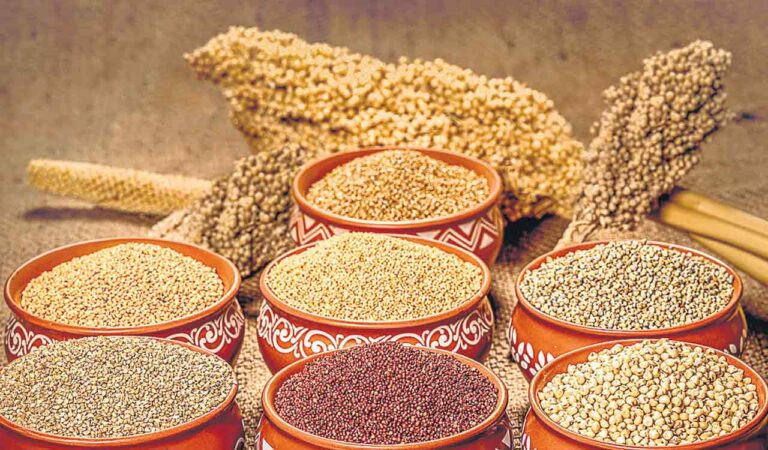
For generations, the regional diet of Telangana relied on nutrient-dense staples that naturally addressed micronutrient gaps. The traditional intake of coarse grains and millets, including jonna (sorghum), sajja (pearl millet), and ragi (finger millet) provided high dietary fiber, low glycemic loads, and essential minerals like calcium and iron.
Such super-foods were good enough to fill the nutritional gaps created by hidden hunger, which modern-day families now struggle to address.
The native green leafy vegetables such as thotakura (amaranth), palakura (spinach), gongura and chukkakura served as powerhouse sources of folate, iron, and beta-carotene.
The traditional pairing of local legumes (pappu variants and horse gram) with whole grains ensured a complete amino acid profile and high-quality vegetable protein without straining metabolic health.
What Indian dietary guidelines suggest to address Hidden Hunger:
- Develop diversity on your plate by sourcing essential macronutrients (energy-providing carbohydrates, proteins, and fats) and micronutrients (vital vitamins and trace minerals) from a minimum of eight distinct food groups.
- Ensure that vegetables, fruits, green leafy vegetables, roots, and tubers make up roughly half of your daily plate composition.
- Consume at least 50 percent of total daily cereal intake as whole, minimally polished grains or millets to secure adequate fiber and trace minerals.
- Avoid commercial protein powders and synthetic amino acid supplements for routine muscle building.
- Restrict total daily salt intake to less than 5 grams to protect against hypertension and kidney burden.
- Maintain regular physical activity and limit non-essential screen time to prevent abdominal obesity and early-onset metabolic disorders.
- Carefully inspect packaged food labels for hidden trans fats, saturated fats, sodium, and added sugars before making purchasing decisions.