
Green Card crackdown major setback for Indian IT giants
The administration of US President Donald Trump has intensified its crackdown on foreign workers. Recently, several leading Indian IT services companies, along with US-based technology firms, were suspended from the Permanent Labour Certification (PERM) programme, a crucial mechanism through which employers sponsor foreign professionals for employment-based Green Cards. The development has raised concerns about the future of Indian technology professionals working in the United States and appears to signal a tougher approach by the Trump administration towards foreign workers.
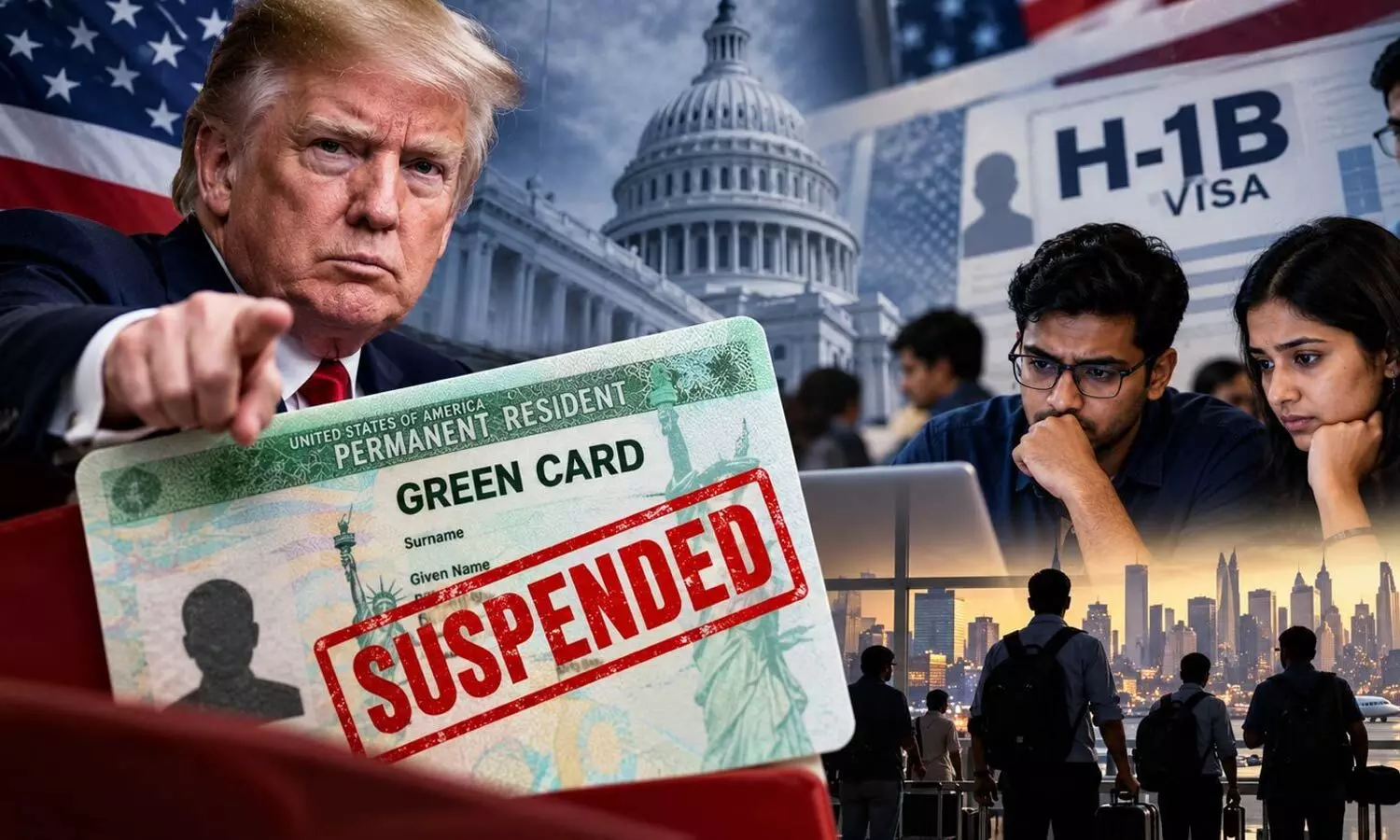
The companies affected include Tata Consultancy Services (TCS), Infosys, Wipro, HCL, Cognizant and Capgemini, along with US-based Microsoft and Adobe. US authorities indicated that the action followed investigations into allegations involving labour law violations, wage irregularities, false applications and the recruitment of foreign workers in place of American employees. The US Department of Labor officials, including Labour Secretary Keith Sonderling, defended such measures as part of the government’s policy of prioritising American workers. Vice President JD Vance also expressed concerns about the alleged misuse of employment-based immigration programmes.
However, allegations against companies must not be treated as proven violations or criminal offences. The fact that an investigation is underway does not establish that the companies concerned have committed wrongdoing. It is essential to distinguish between allegations, investigative findings and final legal determinations.
What Is the PERM Programme?
PERM is a crucial step in the United States’ employment-based immigration system. Under this process, an employer seeking to sponsor a foreign worker for permanent residency generally has to demonstrate that qualified, willing and available American workers cannot be found for the position.
The employer must also establish that hiring the foreign worker will not adversely affect the wages and working conditions of similarly employed American workers.
After obtaining labour certification, the employer may proceed with the next stage of the employment-based immigration process by filing the appropriate immigration petition, subject to applicable rules and requirements. This pathway is particularly important for many Indian IT professionals who initially work in the United States on temporary employment visas and subsequently seek permanent residency. Consequently, suspending a company from the PERM programme could disrupt its ability to initiate or advance relevant labour certification applications.
Why are Indian IT companies being targeted?
The Trump administration argues that certain companies rely excessively on foreign workers, potentially reducing employment opportunities for American workers. The government has focused on concerns such as recruiting foreign professionals at lower wages, alleged irregularities in immigration applications and continuing permanent residency sponsorship for foreign employees even when American workers have reportedly been laid off.
These measures can be viewed within the broader policy framework of prioritising American workers and tightening the enforcement of immigration regulations. Indian IT companies operate through a business model that involves recruiting skilled professionals across international markets and delivering services in multiple countries. They support American businesses in areas such as software development, consulting, digital transformation and cloud computing. Indians constitute a significant proportion of those benefiting from skilled-worker visas and employment-based green cards in the United States. Nevertheless, it is essential to distinguish between lawful international recruitment and unlawful labour practices. Therefore, allegations must be examined on the basis of evidence and legal standards rather than through generalisations about nationality or the outsourcing industry.
How will Indian professionals be affected?
The suspension could create uncertainty among Indian employees who are waiting for their employers to initiate or advance their green card applications. Delays could affect their long-term career plans, family stability and decisions about whether to remain in the United States or explore opportunities in other countries.
Technology companies could also face challenges in recruitment, employee retention and workforce planning. While cooperating with investigations, they may need to review immigration-related documentation, wage policies, recruitment procedures and compliance with applicable labour laws. However, the severity of the impact cannot be assessed accurately until clear information becomes available regarding the number of affected applications, the duration and legal scope of the suspensions, and the outcomes of the investigations.
The policy challenge facing Washington and New Delhi
This development highlights the growing tension between enforcing immigration regulations and meeting the demand for skilled professionals in a globally connected economy.
Protecting domestic employment, ensuring fair wages and preventing labour abuses are legitimate objectives for the United States. At the same time, a competitive technology-driven economy requires specialised skills, international collaboration and predictable immigration policies.
The issue is particularly important for India. The United States is one of the largest international markets for Indian IT and professional services. The Indian government and industry bodies must therefore closely monitor developments and seek clarity regarding the situation of affected employees. It is essential to ensure that Indian professionals working legally in the United States do not suffer unfairly. The affected companies may seek administrative remedies under applicable laws or challenge government actions before the courts. However, the eventual outcome will depend on the evidence gathered during investigations, the relevant legal provisions and decisions made by the competent authorities.
Justice and transparency matter
The Trump administration’s action sends a clear signal that employment-based immigration programmes may face increasingly stringent scrutiny. However, the success of such a policy should not be judged merely by the number of companies suspended. The more important questions are whether the measures effectively prevent genuine violations, protect workers’ rights and provide opportunities for fair and impartial proceedings.
For thousands of Indian technology professionals working in the United States, the central question is no longer simply whether they can secure employment. It is also whether the pathway from employment to permanent residency will remain reliable, transparent and predictable. The developments will test how the US government balances its objective of prioritising domestic workers with the realities of a technology sector that depends on talent and expertise from across the world.
Ultimately, measures introduced in the name of protecting domestic employment must not undermine fairness, transparency or the rights of foreign professionals who work lawfully. If America wants the skills and innovation of Indian professionals, it must also ensure that its immigration system operates through clear rules, due process and equal treatment under the law.