
Google’s Project Suncatcher achieves first AI response from space
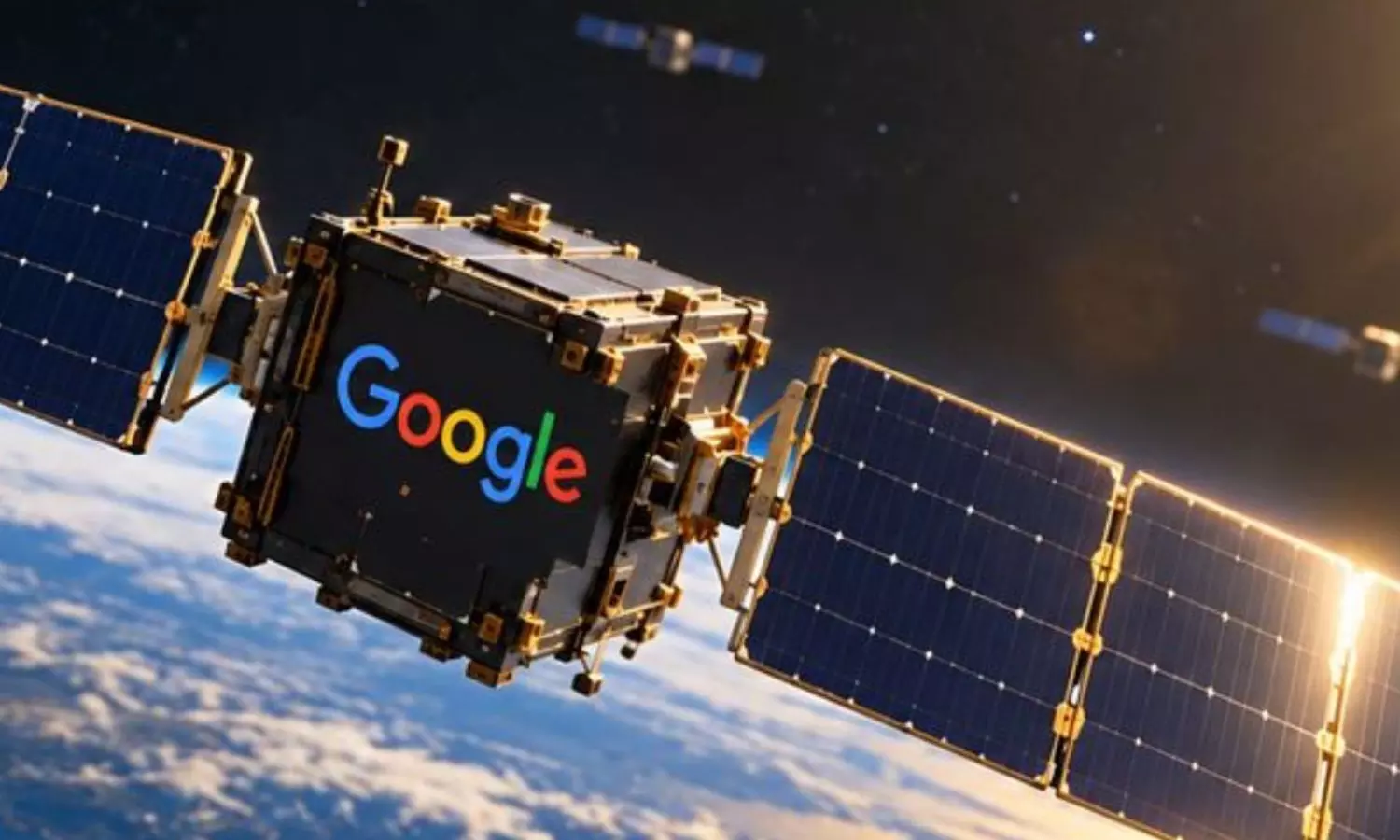
Google has reached an important milestone in its ambitious plan to take artificial intelligence computing beyond Earth. The company has successfully generated its first AI response using a data centre-class Tensor Processing Unit (TPU) operating in orbit as part of its Project Suncatcher initiative.
Google CEO Sundar Pichai shared the development on X (formerly Twitter), describing it as a significant moment for the project. “A ‘hello world’ milestone for Project Suncatcher ”.
He further explained how the team managed to run an AI prompt using hardware installed on a satellite in space. “After launching our prototype satellite a few weeks ago, we’ve now successfully sent a command up to orbit, booted up the TPU, ran the prompt, and received our first complete response back on earth – a haiku!,” Pichai added.
For those unfamiliar, Project Suncatcher is Google’s long-term research initiative exploring the possibility of building AI data centres in space. The concept involves connecting solar-powered satellites equipped with Google’s custom-designed TPUs. By using solar energy directly in orbit, Google hopes to support growing AI computing requirements while reducing dependence on land and electricity resources on Earth.
Google tests AI computing capabilities in orbit
Google launched its prototype satellite on October 1, carrying four TPUs to test whether its AI hardware could function reliably in space. The initial experiment focused on checking whether the chips could power on, process an AI prompt and successfully send the generated response back to Earth.
“The initial goal was to see if our chips could turn on, process a prompt, and transmit a response back to Earth,” the company said in an X post.
The latest experiment successfully demonstrated this capability. Google sent a prompt to its onboard Gemma 4 open model, asking it to create a haiku about space. The satellite transmitted the generated poem back to Earth during a ground-station pass over Svalbard, Norway.
The haiku read:
· Blue marble below
· Data streams in silent grace
· Starlight feeds my core.
What comes next for Project Suncatcher?
According to Google, the team has also experimented with space-themed limericks and prompts designed to report the technical status of the satellite’s systems.
The next phase will involve testing how TPUs perform under extreme temperatures and radiation exposure in orbit. These experiments will help determine whether Google’s AI chips can reliably handle computing workloads in the challenging space environment.
If the upcoming tests are successful, Google plans to move towards its next major milestone: launching two interconnected satellites in 2027.
The company believes this achievement brings its ambitious vision of space-based AI computing a step closer to reality. While considerable research and testing remain, the successful first response demonstrates that running AI workloads in orbit could eventually become possible.
Google described the development as an important achievement, adding: “Our chips have officially earned their space wings- an important achievement on the long road ahead for this cosmic moonshot.”