
Editorial: Indian women excel at Asian Games
A key takeaway from India’s report card at the just-concluded Asian Games in Japan’s Aichi-Nagoya has been the standout performance of its women’s contingent. Overall, India stood fourth, after China, Japan and South Korea, with an impressive medal tally of 85—21 gold, 27 silver and 37 bronze. Of the 21 gold medals, 11 came from women’s events and three from mixed ones. Together, 234 women were in the 495-strong squad that participated in the What makes the success of Indian women special is that they have overcome patriarchal prejudices at home and outside and fought several odds, including inadequate training facilities, to earn a place in the field and set new standards. Some came from extremely poor economic backgrounds, worked their way to the top, often facing bias along the way, and made the country proud with mind-boggling performances. Girls from Mizoram, Jharkhand, Haryana, Uttar Pradesh and Kerala have put up inspiring performances at the competition. This must serve as an eye-opener for the people of Punjab and Haryana, the two States with skewed sex ratios. Savita Punia, the women’s hockey goalkeeper who fought off a penalty stroke in the final against China to help win the gold, is from Sirsa in which in May this year recorded an abysmal sex ratio at birth of 883 girls per 1,000 boys. It’s common knowledge in Haryana that pregnant women travel to Rajasthan to get rid of their female foetuses. The women’s cricket team set the ball rolling by winning India’s first gold.
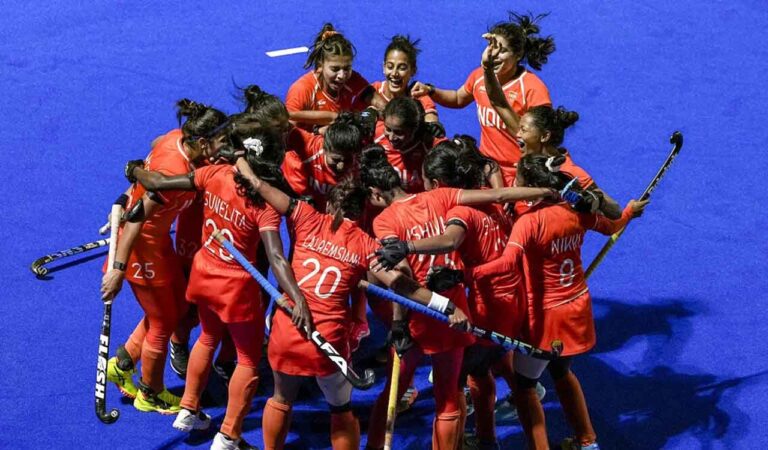
The quartet —Kiran Pahal, Prachi Choudhary, MR Poovamma and Vithya Ramraj — won the gold medal in the 4x400m relay, and the women’s hockey team too struck gold, for the first time in 44 years, earning themselves a spot in the 2028 Olympics. Gold medal-winning teenage archer Kumkum Mohod has emerged as the real star, changing the way Indian recurve will be looked at from now on. Pranavi Urs became the first Indian woman to win an individual Asian Games golf gold. Boxers Lovlina and Parveen Hooda won gold medals. who was hospitalised shortly before the Games after a bout of influenza, became the first Indian woman to win an Asian Games individual trap gold. For Suchika Tariyal, sport had become a response to abuse and trauma as a child. At 36, she stood on the Games podium with a bronze in mixed martial arts (MMA), a sport that was making its debut in Japan. These achievements demonstrate the potential of to become sporting powerhouses. A sustained investment in women’s sport can further boost the medal tally. Behind these success stories were women who endured long waits and ended them, bemoaned their setbacks and returned, overcame illness and injury, and in some cases simply refused to let personal traumas and systemic hurdles halt their journeys.