
BJP’s 50% Formula Changes Delimitation Game, Can Congress Hold INDIA Bloc Togethers
The Union Cabinet, which met here on Friday for over 30 minutes, is learnt to have decided to accept the demand of several Opposition parties to increase the number of Lok Sabha and Assembly constituencies by a flat 50 per cent, instead of basing the exercise on the last Census figures.
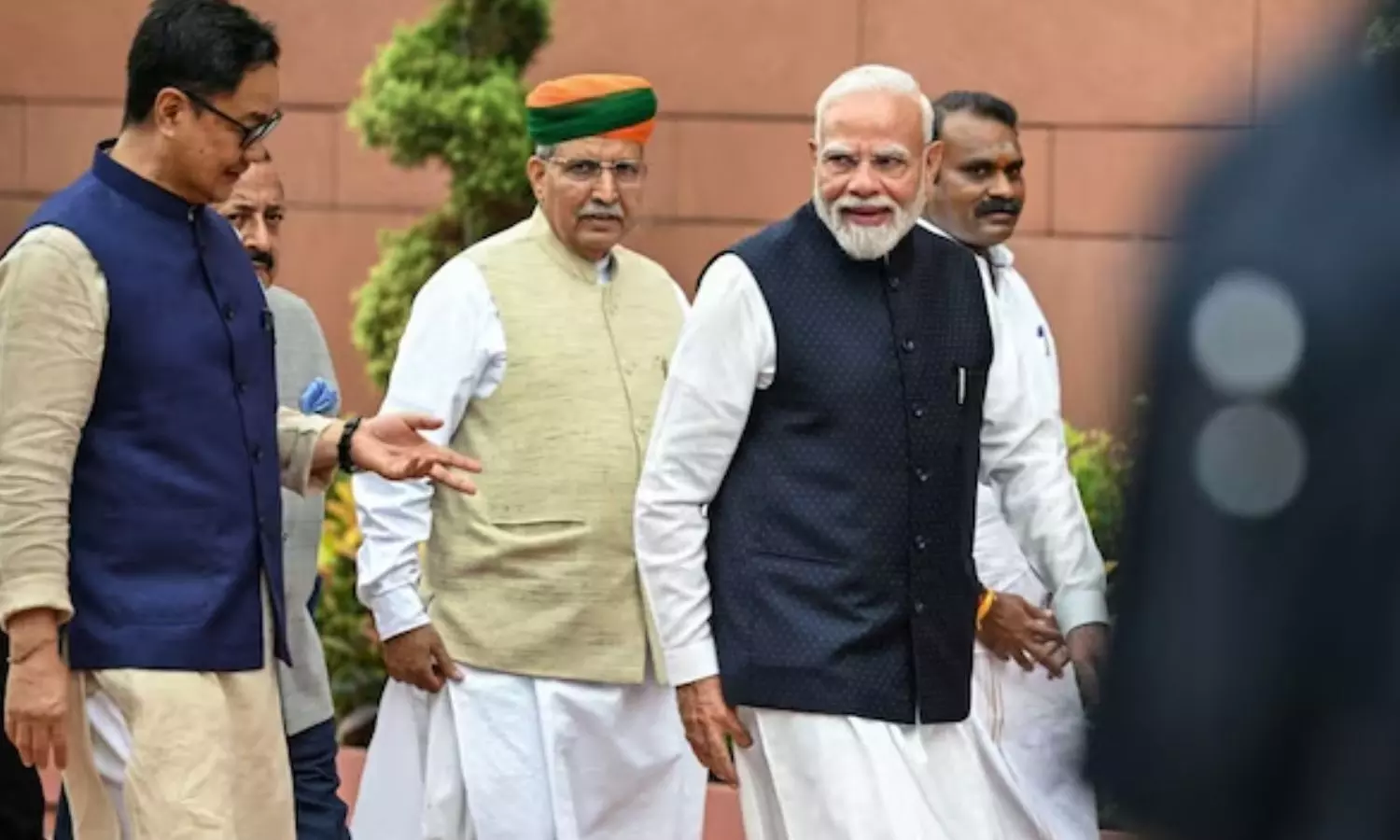
The Cabinet is learnt to have decided to incorporate the proposal into the draft Bill, which is expected to be circulated to all MPs by Friday evening or Saturday morning.
The move is significant as it seeks to address concerns raised by several Opposition parties, particularly those from the southern states, which had opposed the earlier delimitation proposal, arguing that it would penalise them for effectively implementing the government’s family planning programme.
The latest development is likely to bring about a major shift in the positions of several Opposition parties, which had earlier closed ranks in opposing the Bill.
The DMK had put forward two conditions: a 50 per cent increase in the number of seats and no reduction in its share of representation. Both demands are learnt to have been accepted by the government. Tamil Nadu’s share of Lok Sabha seats is, in fact, expected to increase marginally under the proposed arrangement. Even the Shiv Sena (UBT) is likely to soften its stand, as it had made a similar demand.
As the political picture emerges, the AAP, RJD and Samajwadi Party may abstain from voting, while the Congress, which remains committed to its earlier position that there should be no increase in Lok Sabha and Assembly seats until the Census exercise is completed, may vote against the Bill. The possibility of cross-voting within the Congress is also not being ruled out.
The SP, meanwhile, has maintained that the government is committing what could prove to be its biggest political mistake by bringing the Bill back.
Both the Congress and the SP are concerned that delimitation could alter the geographical composition of Lok Sabha and Assembly constituencies, potentially affecting their electoral prospects. They are also opposed to any move that could increase the number of seats without adequately addressing their concerns over women’s representation and the proposed changes in constituency boundaries.
The NCP (Sharad Pawar faction), too, may vote in favour of the Bill if the proposed 50 per cent increase in seats is incorporated into the legislation.
The development has clearly unsettled the Congress, which is now holding a meeting to chalk out its strategy. The meeting is being attended by AICC president Mallikarjun Kharge, Leader of the Opposition Rahul Gandhi, Priyanka Gandhi Vadra, Sonia Gandhi and Jairam Ramesh, among others.
The Congress has also convened a meeting of INDIA bloc constituents on Saturday in an attempt to persuade them to oppose the Bill.
TMC chief Mamata Banerjee and SP chief Akhilesh Yadav are among those expected to attend the meeting. However, the Congress is apprehensive that several INDIA bloc partners may soften their positions when the legislation comes up for consideration in Parliament.
Meanwhile, Parliamentary Affairs Minister Kiren Rijiju urged all MPs to attend the session, participate in the debate and vote according to their respective positions. Describing the discussion as important, he expressed hope that all members would take part in it.
If all MPs attend the session and vote, the government could fall short of around 40 votes. However, if the SP, RJD and AAP abstain, the number of votes required for the Bill to secure the necessary majority would come down to 336. If the DMK also abstains, the required number could further decline to 321.
The NDA has 320 members on its own. With the support of other parties, including the NCP (Sharad Pawar faction), YSRCP, BRS and others, the government is confident of mobilising the numbers required to get the Bill passed.