
Agentic AI Could Boost Banking Efficiency-SBI Chairman
Mumbai: Targeting customer engagement, proactive risk management, and increased employee productivity, the (SBI) proposes to deploy agentic artificial intelligence soon.
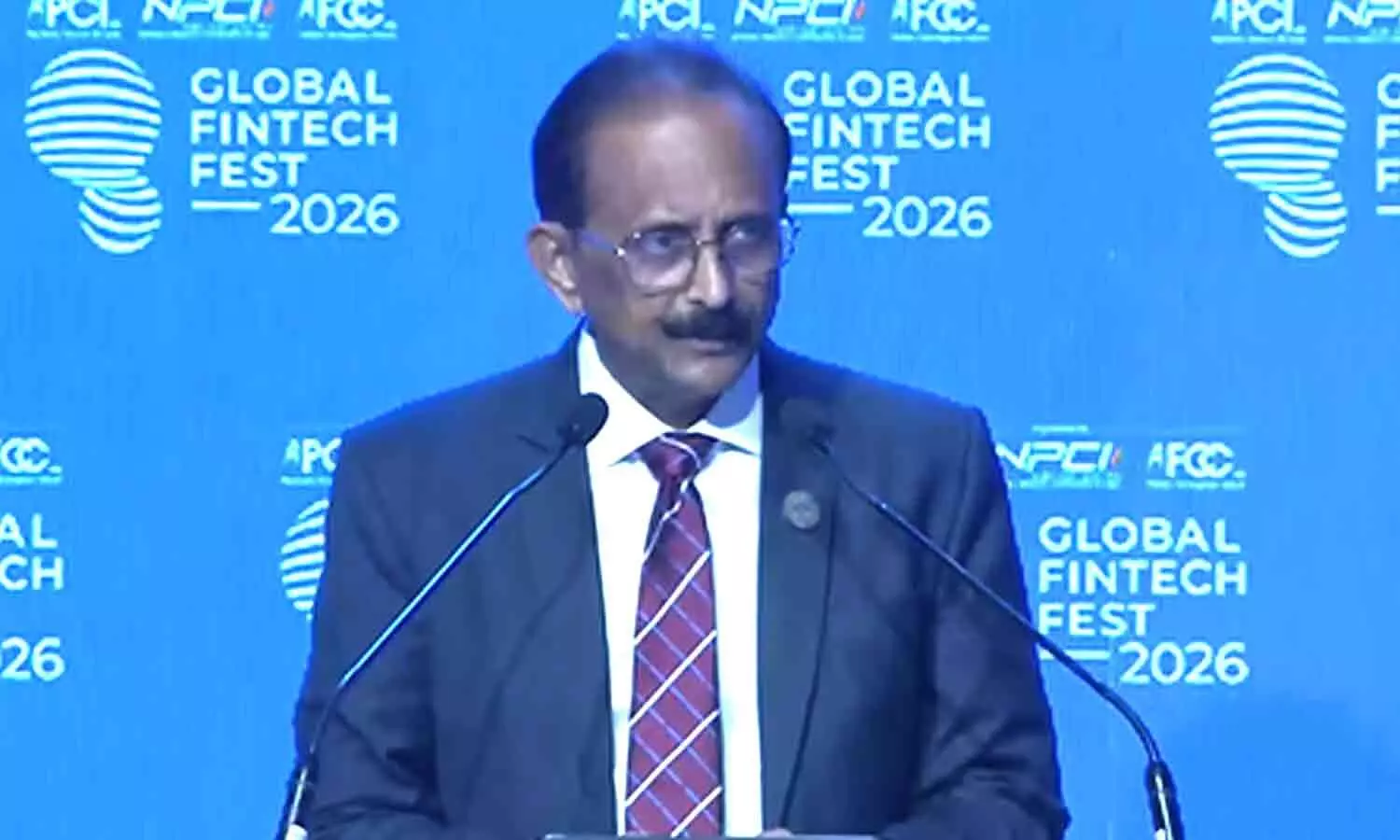
Stating this to the media on the sidelines of the Global Fintech Fest 2026 in Mumbai, the SBI Chairman, , said agentic AI was an emerging technology that can deliver hyper-personalised services to customers and simplify internal operations for staff. It can also avoid systemic risks and bolster institutional safeguards.
He stated, “I think we will be focusing on three major areas in adoption of agentic AI: mainly on customer engagement and hyper-personalisation, improving productivity simplify the process, and on the risk management side, the proactive risk management deployment of agentic AI for that.” When asked regarding the Foreign Currency Non-Resident (Bank) accounts, Setty observed, “I think everybody will be more responsible in lending. So it will take about three to four months for the deployment of the liquidity.”
From Predictive Tools to Autonomous Execution
Earlier, while addressing the gathering at Global Fintech Fest, Setty said that the institution is moving beyond conventional predictive tools toward autonomous technologies capable of taking independent actions. The transition represents a fundamental shift in banking operations, moving the sector from automated recommendations to autonomous execution. “Agentic AI, the next stage, can potentially move from assisting with a task or carrying out a defined set of tasks and beyond on behalf of a customer and in an institution. And how do we respond to changing circumstances with a degree of autonomy? That, to me, is the difference between a tool that we operate and a capability to which we delegate,” Setty said.
He explained that deploying autonomous agents across transaction cycles will strengthen loan appraisals, underwriting, KYC compliance, anti-money laundering checks, and fraud detection. “The real opportunity lies in deploying agents to areas where scale, speed, and judgment can materially strengthen the financial system,” Setty stated. “These are not merely opportunities for automation. At India’s scale, they can improve the quality of decisions, reduce response times, strengthen controls and make the financial system more resilient.”
Operational Safeguards: The ‘Three A’s’ Framework
Addressing operational safeguards, Setty outlined the “three A’s framework: accuracy, accountability, and access without asymmetry,” required to maintain institutional trust at a national scale. “An agent operating in financial services needs to be accurate. There is nothing like 99% accuracy here. You need to be 100% accurate and every time, all the time,” he said.
He added, “The moment AI moves from recommendation to execution, accountability becomes even more important. There must be an audit trail, traceability, and the ability to understand why an important action was taken.”
Evolving Compliance: ‘Know Your Agent’
Setty also highlighted the operational need to expand traditional compliance frameworks to account for autonomous programs entering the financial ecosystem. “Banks have spent decades building robust processes about know your customer. As agents begin to participate in financial transactions, we will increasingly need to think about know your agent,” Setty said.
“Artificial intelligence should always augment human resources,” Setty said. He said the initial fixed costs of deploying agentic AI could be high, but lower incremental costs as adoption expands could create economic efficiencies for banks.
While banks have been using machine learning (ML) models for several years, the next major opportunity lies in deploying AI agents across financial services, Setty said.
Setty also highlighted the role of India’s digital infrastructure in enabling technology adoption. “India has successfully converted digital infrastructure into trust and then converted that trust into scale,” he said.
(with inputs from agencies).