
How AMT Gearboxes Brought Automatic Driving to India’s Entry-Level Hatchbacks
Earlier, automatic transmissions were really reserved to high-end cars, and that’s how the perception around automatic cars being a luxury rather than a necessity, had been shaped up. And a major chunk of that reason why it was such, was because of the price difference between the manual and the automatic variants. Traditionally available automatic transmission such as a torque converter, aren’t really cheap to produce, and hence the price gap didn’t make sense for smaller cars.
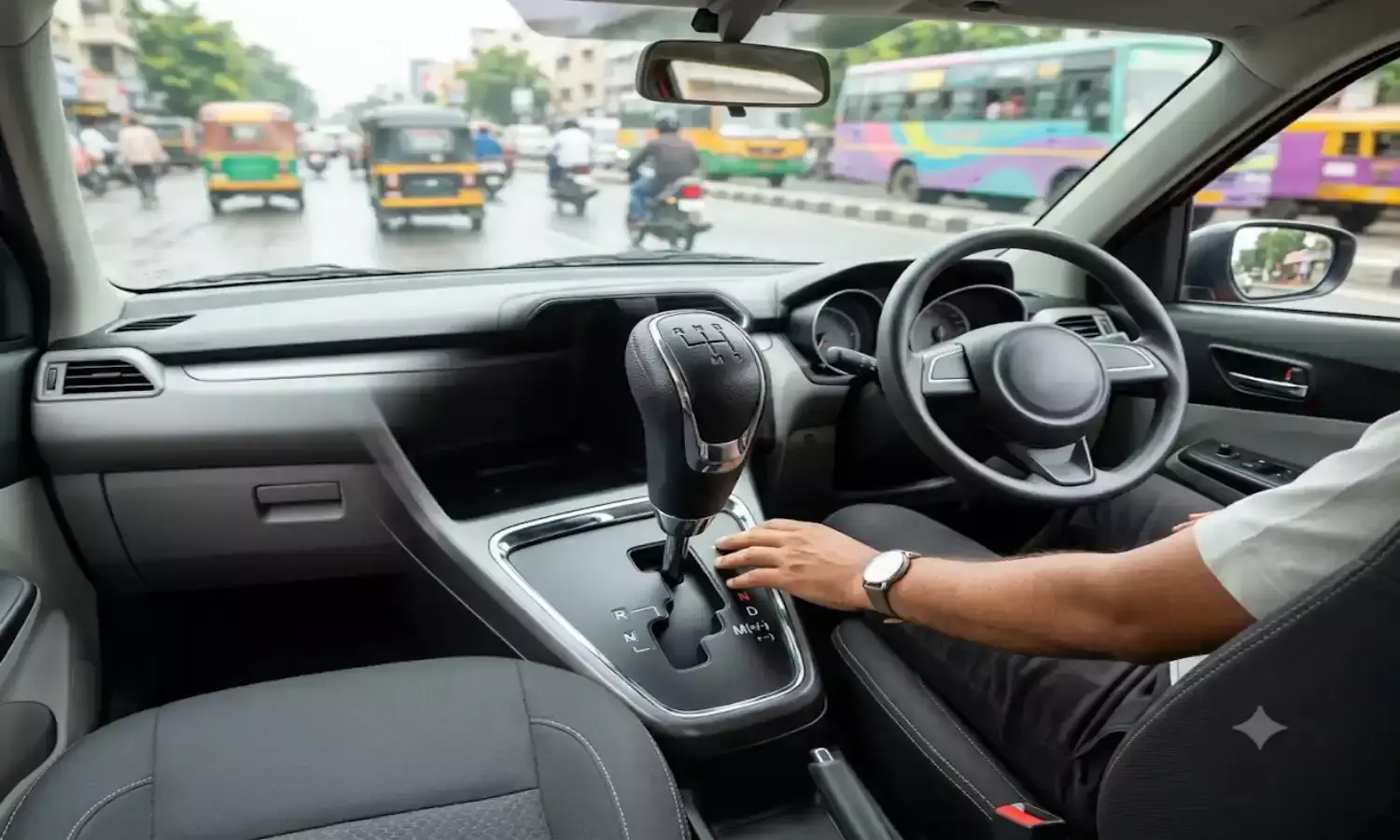
But something happened around the middle of the last decade, that really became the start of democratisation of automatic cars. Maruti Suzuki launched the first-generation Celerio in 2014 with an automated manual transmission (AMT), which the company sold as Auto Gear Shift. Since it was cheaper to manufacture than usual automatic transmission, it really allowed carmakers to slot it in affordable models.
While the model itself didn’t fly off the shelves since the concept was quite new for the time, the technology started to appear in many more cars. If you look at the current Indian car market under Rs 10 lakhs, a major chunk of automatic cars on offer, actually use an AMT transmission, and hence, it really has become the first automatic transmission that many first time car buyers will experience. Let’s break it down.
How an AMT actually works
For a layman, an AMT is essentially very similar to a usual manual gearbox with a clutch, except the fact that sensors, a control unit, and actuators handle the clutch and gear changes instead of the driver. Compared to other automatic transmission options like a CVT, DCT, or a torque converter, an AMT is much lighter and more affordable to make. It usually also returns better fuel economy, more in line with a manual transmission.
The major drawback of an AMT gearbox is that it doesn’t shift as fast or as smoothly as other, more expensive automatic transmissions. Many AMTs usually show a slight pause or forward lurch as the next gear engages, though some drivers do get used to this, and some even learn to ease off the accelerator briefly during upshifts to smooth things out. Moreover, brands have really refined the AMT experience as well over the years. Having said that, we suggest you getting a test drive to understand the transmission’s behaviour before putting the money down.
What to Check When Buying Used
If you are searching for , you wouldn’t really be disappointed, since early AMT hatchbacks have now become reasonably common in the used market, though you might have to trade off a bit in terms of odometer reading apart from age. But with the proper inspection done, that worry is usually erased.
Check for these issues in an AMT. If on a slight gradient, when setting off there is juddering, or delay in response, or a smell of burning from the clutch then this can be seen as an issue. Driving slowly through slow moving traffic for a few minutes should be carried out, and smooth gear changes should be present. It would also be ideal to look at service history, to check for replacements of the clutch, changing of gearbox oil, and any updates to the control unit software.
Clutch life on an AMT depends heavily on how the car was driven, as long periods of creeping on an incline, for example, wear the clutch faster.
Final Thoughts
If you are searching for a pre-worshipped AMT car under a very tight budget, chances are you will land upon a Maruti Suzuki Celerio. The long model history also gives a good deal of owner experience to draw from, especially reading a .
Wrapping up, we would say an AMT is not really meant for everyone. If you spend most of the time on open roads, you may find a manual more convincing, while people hell bent on the smoothest possible shifts may find a torque converter or CVT car more to their liking. For city use on a tight budget, though, the AMT hatchback is a practical middle path, and its arrival changed what buyers expect from a small car.