
Mohammed Shami’s departure from Test cricket: A tragic mishandling of greatness
Published: November 09, 2026 06:17 AM IST
Mohammad Shami announced his retirement from Test cricket exactly 13 years after his debut, realising the national selectors were unlikely to recall him.
He overcame early career setbacks in Uttar Pradesh to establish himself as one of India’s most successful and accurate fast bowlers across all formats.
His phenomenal international record includes stellar performances in ICC World Cups, boasting remarkable strike rates and numerous wicket-taking achievements.
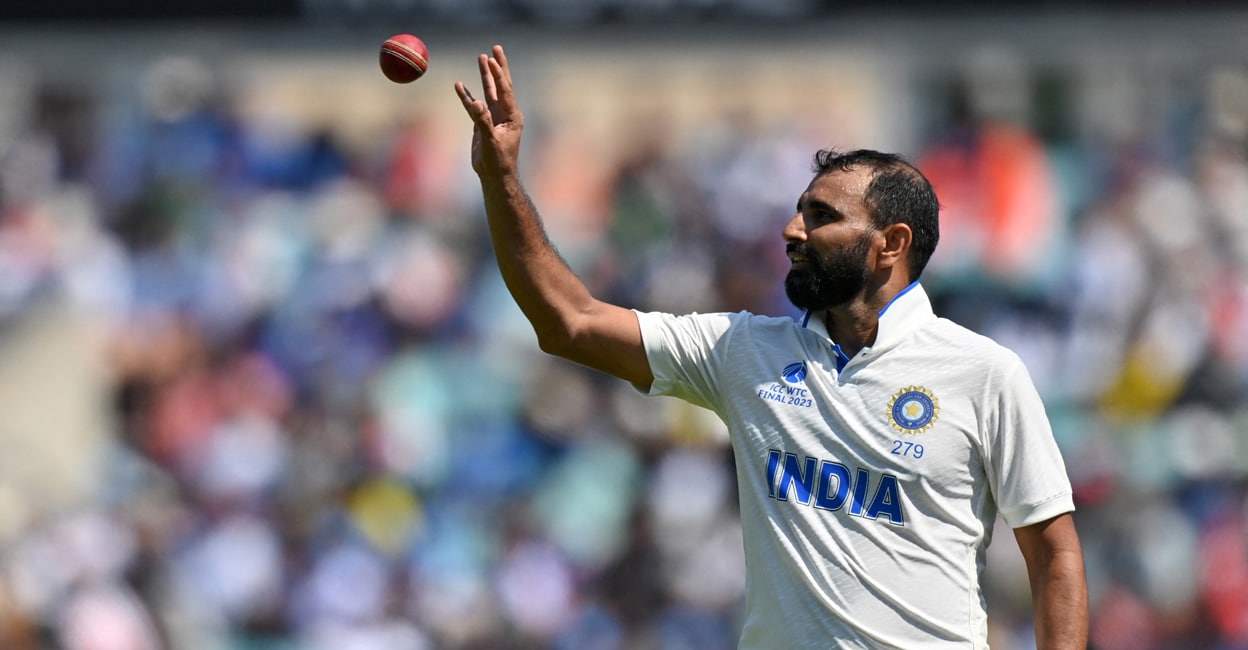
For a fast bowler, Mohammad Shami possessed an excellent sense of timing, especially when it came to making decisions about himself. Only this could explain the manner in which he announced his retirement from Test cricket, exactly 13 years from the day he made his Test debut, on 6 November 2013. This announcement came as a surprise too, since he was bowling with the same zeal and enthusiasm that he showed in his formative years, as could be seen from his tally of 14 wickets from the 3 matches that he turned out to play for West Bengal in the Ranji Trophy. Further, it was only a couple of weeks before that he had stated in an interview that he still retained hope of playing for India. One can only conclude that he finally understood that the selectors were not keen to bring him back to the national side and decided to call it a day.
The story of Shami’s incredible journey from the village of Sahaspur in the Amroha district of eastern Uttar Pradesh (UP) to becoming the leading pace bowler for the country is worth being told again. He was encouraged to take up the game by his father, who, though a farmer by profession, had played cricket at the local level. As there were few coaching facilities in Amroha, his father took him to Moradabad, where he was placed under the tutelage of Badaruddin Sheikh, who trained him for close to a year. Shami worked hard under the guidance of his coach and honed his skills. His coach took Shami for the selection trials for the UP under-19 side the next year, where, despite performing very well, the lad was denied selection due to reasons beyond cricket. At this juncture, a disappointed Badaruddin Sheikh advised Shami to move to Kolkata and continue his career there.
It was not a path of roses for Shami at Kolkata either. After turning out for Dalhousie Club for a season, Shami was fortunate to catch the eye of Debabrata Das, a former Assistant Secretary of the Cricket Association of Bengal (CAB). Das took the youngster under his wing, signing him up for his Town Club, besides providing accommodation at his own residence. This gave Shami the peace of mind to indulge in his favourite activity, which was to keep bowling fast and hit the stumps. The long hours of hard work aimed at rooting out a single stump paid huge dividends in the later years when he evolved into one of the most accurate fast bowlers of his generation, with a penchant for dismissing batsmen by knocking back the wicket.
Shami soon won selection to the West Bengal under-22 side, which helped him move to Mohun Bagan, one of the top clubs in Kolkata. This provided him with the opportunity to bowl at Saurav Ganguly in the nets. The former Indian skipper was so impressed by the young and impressionable fast bowler that he recommended that Shami be selected for the state side for the Ranji Trophy. Ganguly’s recommendation paved the way for Shami’s entry to the state senior side, and he did not let down his backers, turning out with impressive performances on his debut in all formats of the game.
A string of outstanding performances in domestic first-class cricket and while turning out for the India A side helped Shami to gain entry to the national team. He made his debut in One Day Internationals in the series against Pakistan at Delhi in January 2013 and bowled a tight spell in a closely fought, low-scoring match that India won by 10 runs. The entry to the world of Test cricket followed in November 2013, against West Indies in Kolkata, where Shami returned with a bag of 9 wickets, which remains the record for the biggest haul by an Indian bowler on his debut. He did not look back after that.
A peek into the international career of Shami shows that he was one of the best wicket-taking bowlers to turn out for India, both in Tests and ODI’s. His haul of 229 wickets in 64 Test matches places him at the 12th position amongst top wicket-takers for India; amongst the fast bowlers, he is placed at the 6th place behind Kapil Dev (434 wickets), Ishant Sharma and Zaheer Khan (311 each), Javagal Srinath (236) and Jasprit Bumrah (231). However, his strike rate, wherein he took one wicket off only 50.28 balls, is second only to Jasprit Bumrah (42.86), which shows his exemplary wicket-taking prowess at the highest level.
Shami’s record in ODIs, where he took 206 wickets in 108 ODIs, including six 5-wicket hauls, is even more impressive. This has to be viewed against the fact that no other Indian bowler has taken 5 wickets or more in an ODI on more than 3 occasions. Further, his strike rate of 25.85 in ODIs places him at the top in the world amongst bowlers who have taken more than 150 wickets in this format. This again shows his amazing capacity for taking wickets and running through opposing sides in ODI’s.
Hence, it was not surprising that he was the most successful amongst the Indian bowlers in all three editions of the International Cricket Council (ICC) World Cup championship that he played. In the 2015 World Cup in Australia, he picked up 17 wickets, which earned him the nomination to the World ODI XI. In 2019, though he could play only in 4 games, he took 14 wickets, which included a hat-trick against Afghanistan. However, he reserved his best for the championship at home in 2023, where he finished with 24 wickets in 7 games. This included a career-best performance of 7 wickets for 57 runs against New Zealand, which is the best by an Indian bowler in this version. Incidentally, he was kept out of the playing eleven by the team management during the first 4 games of this tournament.
Shami led the Indian bowling attack during the Champions Trophy tournament in 2025, which turned out to be his swan song. He bowled with fire during this tournament and had one 5-wicket haul as well, which made him the highest wicket-taker in the ICC championships.
Though there is a tendency to describe Shami as injury-prone, a look at his career will reveal this is not completely true. He underwent knee surgery following the 2015 World Cup, from which he made a quick and complete recovery. After enjoying huge success in the 2023 World Cup, it was revealed that he was suffering from severe ankle pain, which ultimately led to surgery on his Achilles tendon. He staged a comeback and played for India in the Champions Trophy in 2025. But despite performing consistently well in the domestic circuit, he was not considered by the selectors after 2025.
Though not very tall by the standards of fast bowlers, Shami could generate tremendous pace as he was blessed with a smooth run-up and excellent bowling action. He could consistently bowl at speeds exceeding 140 kms per hour and once even touched 152 kms per hour. He was very accurate and could swing the ball both ways, which made him a difficult customer to handle. He could reverse-swing the ball effectively, besides possessing a very wicked bouncer. On top of all this, he was extremely accurate, thus seldom allowing the batsmen any breathing space. In short, he was a complete package as a fast bowler, which explains his success in both long and short versions of the game.
Looking back, one feels a trifle sad to note that the dream fast bowling combination of Bumrah, Shami and Siraj played together for the country only in 7 Tests, in which they scripted two amazing victories. With a little more care in management, this trio could have played together for many years and brought many more laurels to the nation. There is no point in crying over spilt milk at this stage, but at least in the future, the selectors should ensure that rare talents like Shami are not denied a fair deal.
Well played, Mohammad Shami!