
Editorial: Biofortification, an effective weapon to fight malnutrition
Despite rapid progress in agricultural production over the years, India continues to confront major public health challenges, including malnutrition and micronutrient deficiency, which experts call ‘hidden hunger’. Though the of the 1960s, driven by high-yielding varieties and improved agricultural technologies, helped India move towards foodgrain self-sufficiency, the emphasis on yield often came at the cost of nutritional quality. Public awareness of the importance of micronutrients in the diet also remains inadequate. This is where biofortification can play a significant role in tackling malnutrition. Crop biofortification—the process of enhancing the nutrient content of crops at the cultivation stage—offers a self-sustaining, cost-effective, and long-term solution. It is the process of increasing the nutritional quality of food crops by enhancing their content of micronutrients such as iron, zinc, vitamin A, as well as protein through conventional plant breeding. Under industrial fortification, in which nutrients are added during processing, or supplementation, which involves providing nutrients through pills, biofortification aims at making . Over 60% of Indians depend on cereal-based diets. If staple foods themselves contain iron, zinc or protein, these nutrients can reach rural, low-income households through daily meals without requiring major changes in eating habits. The current NFHS (National Family Health Survey) data shows that nearly 67% of children and more than half of women in India are anaemic, alongside widespread zinc, vitamin A, and protein deficiency. Indian agricultural scientists have already developed and released over 205 biofortified varieties across 15 field crops, including rice, wheat, maize, millet, soybean, and groundnut. They need to be popularised more widely.
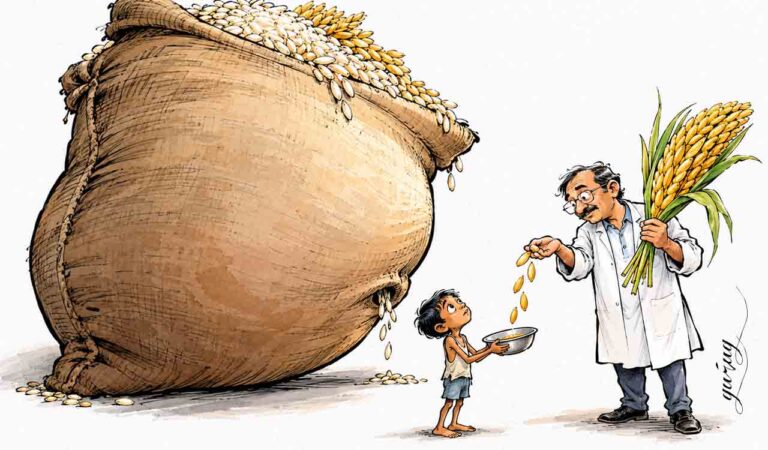
India ranks first globally in crop biofortification research publications. Research has also translated into substantial field-level adoption. However, limited consumer awareness, uneven seed availability, weak market linkages, and insufficient integration into nutrition programmes continue to constrain the reach of biofortified crops. Addressing these barriers requires coordinated action across extension, public health, and food systems. Unlike supplementation and food fortification programmes that require sustained investment, biofortified seeds can be replanted and cultivated repeatedly, making them highly cost-effective. The best way to popularise biofortified varieties is to include them in government welfare programmes such as the Public Distribution System, PM POSHAN (mid-day meals), and Anganwadi supplementary nutrition. By combining scientific crop development with institutional procurement and targeted extension services, biofortification can transform India’s agricultural output from mere tonnage into a sustainable driver of public health and Crop biofortification offers a sustainable, affordable, and agriculture-based solution to India’s twin challenges of malnutrition and hunger. By integrating biofortified crops into farming systems, public nutrition programmes, and consumer markets, India can improve nutritional outcomes, strengthen food security, and move closer to achieving the Sustainable Development Goals related to zero hunger and good health. Success will depend on coordinated efforts involving research, seed distribution, awareness generation, policy support, and effective market development.