
Explainer: Why Marco Rubio is visiting Reliance’s Jamnagar Refinery?
After meetings in Mumbai, India’s financial capital, Rubio is scheduled to visit Jamnagar, where Reliance operates a refinery complex with a combined processing capacity of 1.4 million barrels per day.
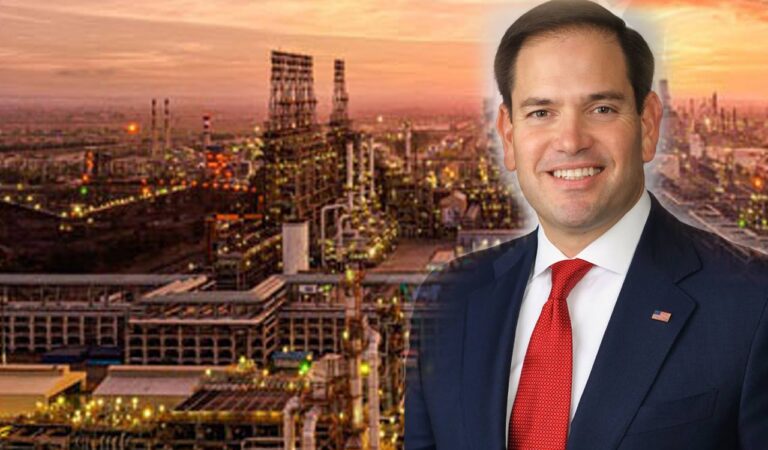
The trip is expected to focus on commercial investment and economic cooperation rather than high-level political engagements in New Delhi.
US Ambassador to India Sergio Gor has described the visit as business-focused, with Rubio expected to meet Reliance officials and discuss opportunities for refining more Venezuelan crude.
Major player in global oil markets
Reliance’s Jamnagar complex consists of two refineries: an original facility commissioned in 1999 and an export-oriented refinery that began operations in 2008. Its ability to process heavy, sulphur-rich crude from different sources makes it a significant supplier of diesel, petrol and aviation fuel to international markets.
The company processed more than 216 varieties of crude oil, according to Reliance. Its refining capacity has also made it an important buyer of Venezuelan crude as the US seeks to redirect global oil flows.
Reliance is estimated to account for 350,000 to 370,000 barrels per day of Venezuelan crude imports in October. Rubio has indicated that Washington wants the company to increase its processing of Venezuelan oil.
The refinery is also important to European energy supplies. Trade data cited in reports showed that Reliance exported 21.66 million tonnes of refined petroleum products from Jamnagar in the first half of 2025. Diesel accounted for 9.81 million tonnes, followed by petrol at 6.14 million tonnes and jet fuel at 2.06 million tonnes.
Europe was the largest destination, accounting for 28% of the company’s refined-product exports during the period. Major buyers include BP, ExxonMobil, Glencore, Vitol and Trafigura.
Russia oil puts Reliance in the spotlight
Reliance has become a key player in the debate over India’s purchases of Russian crude since Moscow launched its full-scale invasion of Ukraine in February 2022. Russia’s share of the company’s crude imports reportedly rose from about 3% before the war to 50% in 2025.
Washington’s efforts to reduce Russia’s oil revenues have therefore placed Reliance under scrutiny.
In August 2025, US President Donald Trump imposed an additional 25% tariff on Indian goods over New Delhi’s purchases of Russian oil. Reliance subsequently reduced its Russian crude imports, although Russian oil continued to account for a substantial share of the crude processed at Jamnagar.
The possibility of further US tariffs had raised concerns for Indian exporters and Reliance, but Trump later suspended the proposed measures.
Rubio has acknowledged that India has diversified its energy sources while continuing to purchase substantial quantities of Russian oil. He has also described India as an important US partner, highlighting the challenge Washington faces in balancing geopolitical pressure with economic cooperation.
The refinery has also drawn attention over European restrictions on petroleum products derived from Russian crude. Critics argue that the rules may leave a loophole for products processed in third countries that also handle Russian oil.
US fuel prices and investment interests
Rubio’s visit comes as the Trump administration faces domestic pressure over inflation and fuel prices ahead of the US midterm elections. Reliance is a major exporter of diesel, a fuel whose rising prices have become a concern for American consumers and policymakers.
The company also has growing investment links with the US. Reliance is backing America First Refining’s proposed refinery at the Port of Brownsville in Texas, a project announced by Trump in March and described as the first major new US refinery in about five decades.
The investment has been cited by the administration as an example of its efforts to attract international capital to the US.
Rubio’s decision to include Jamnagar in his India itinerary underscores the refinery’s importance beyond its industrial scale. Reliance sits at the intersection of US efforts to influence Russian oil revenues, expand Venezuelan crude exports, contain fuel-price pressures and attract foreign investment.
The visit highlights how energy security and commercial interests are becoming central to the broader US-India relationship, even as the two countries continue to navigate disagreements over trade and India’s ties with Russia.