
Rewind: UPI gets a price, and a pause
By Dr Sugandha Huria, Dr Aishwarya Harichandan
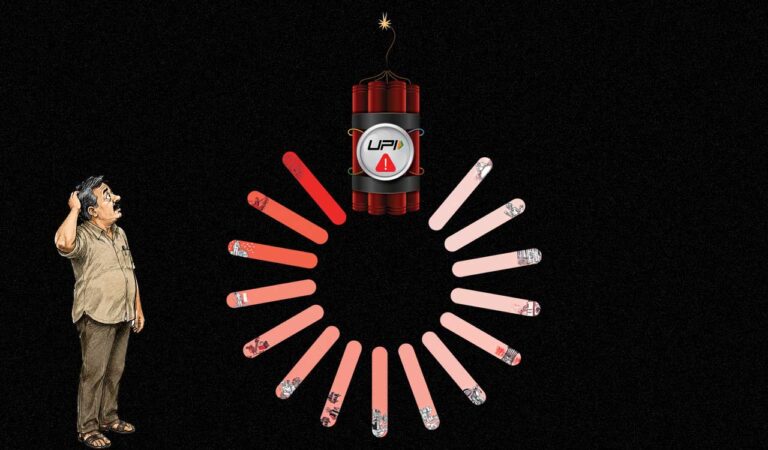
For around a decade, the Unified Payments Interface (UPI) has offered India something that once seemed improbable: a payment system where moving money could feel virtually costless. That arrangement was due to change on October 15, 2026. A Merchant Discount Rate (MDR) of 0.4% was to apply to eligible person-to-merchant UPI transactions above Rs 2,000, capped at Rs 300 for transactions of Rs 75,000 or more.
On October 13, however, the and Services Steering Committee decided to defer implementation until immediately after Diwali, on a date to be notified, citing the festive season. The framework has been deferred, not withdrawn. Consumers will not be charged MDR directly.
The policy is narrower than a blanket charge on UPI. Yet its economic significance may be broader than its coverage suggests. The include larger purchases, for which payment costs can matter to merchants operating on tight margins. In fact, the gap between the proportion of transactions affected and the value flowing through the system deserves attention. Although only 4% of merchant transactions are expected to attract MDR, industry estimates suggest they account for nearly two-thirds to 70% of merchant payment value—a share that requires official verification.
The government says the fee is intended to support sustainability. UPI handled about 24 billion transactions worth $311 billion in August 2026, according to Reuters, and a system of that scale requires steady spending on infrastructure and security. The will be shared among ecosystem participants rather than go to the government as a levy.
Thus, the relevant question is not whether a 0.4% charge is inherently good or bad. It is whether pricing even a small segment of a once-frictionless payment system could reshape payment behaviour, how that cost is distributed, and whether the revenue generated supports a more resilient system without undermining the convenience that drove UPI’s adoption.
Fee with a Shape
A Rs 10,000 purchase attracts an MDR of Rs 40; a Rs 50,000 purchase, Rs 200. At Rs 75,000, the fee reaches its Rs 300 ceiling and stays there, so the effective rate falls as transaction values rise. What matters is the burden on the merchant. For a retailer with an illustrative net profit margin of 4%, a Rs 40 MDR on a Rs 10,000 sale accounts for 10% of its profit. At a 2% margin, it accounts for 20% of the profit, while at a 20% margin, it accounts for just 2%.
From the system’s perspective, the arithmetic works in reverse. Every Rs 1 lakh crore in eligible payments would generate up to Rs 400 crore at 0.4%, before accounting for caps and exemptions. A charge can be nominal for each payer yet significant for those who collect it, and uneven for those who ultimately bear it.
The exemptions have a shape too. receiving up to Rs 1 lakh a month through UPI QR codes remain at zero MDR. The most exposed may therefore be small and mid-sized businesses just above that threshold, particularly those selling higher-value goods on thin margins. Whether purchases bunch just below Rs 2,000 is something the data can reveal.
The relevant comparison is not between a fee and zero cost, but between UPI and its alternatives. Cards carry processing costs; cash entails costs associated with handling, security and reconciliation. The outcome will be decided merchant by merchant, margin by margin. In economics, this is a question of substitution: how responsive are payment choices to changes in their relative costs?
Who Actually Pays?
The MDR is to be imposed on eligible merchants, not directly on consumers. But the formal payer and the ultimate economic need not be the same. The incidence of a charge depends on market conditions: the degree of competition, the ability to adjust prices, bargaining power and the availability of substitutes.
A merchant with loyal customers and limited competition may be able to absorb the cost or incorporate it into broader pricing decisions. A retailer competing with online sellers offering identical products may find it difficult to pass on even a small additional cost.
The GST applies to the MDR as a service charge, rather than to the underlying transaction value. Eligible GST-registered businesses may claim input tax credit, subject to applicable rules and documentation. Consequently, the tax implications will not be identical for all merchants.
Back to Cash?
Not necessarily. When accepting UPI gets costlier, some merchants may look for alternatives, including cards and other digital options, as well as cash. The real question is not whether UPI will lose relevance, but whether MDR shifts the payment mix at the margin, and whether that shift will last.
A transaction moving from does not also automatically imply tax evasion or a shift into the informal economy. However, if shifts reduce the availability of transaction records, the implications for monitoring merit investigation. The point is to measure these effects rather than assign motives to them in advance.
Pause Matters
The framework was due to take effect during a period when payment values are among the highest of the year. That cuts both ways: a small percentage applied to a large transaction base can generate substantial revenue, but the resulting friction for merchants and customers is also most visible during the festive season. Reports link the decision to concerns raised by and payment-industry stakeholders. Neither the original implementation date nor the deferral has been explained in terms of revenue, so motives should not be assumed.
A fee described as nominal was considered significant enough to warrant a deferral. This suggests that a small rate on an individual bill does not necessarily translate into a small overall impact.
The First Six Months
The most valuable outcome may not be the revenue generated from a 0.4% charge, but the evidence on how merchants and consumers respond when a frictionless payment rail acquires a price.
First, policymakers should track transaction volumes by value band, particularly transactions above Rs 2,000 and below the Rs 75,000 cap, while separating exempt categories. Because implementation has been deferred, festive-season data can serve as a baseline. Comparisons with the same weeks a year earlier will be more informative than a simple before-and-after assessment.
Second, substitution should not be measured by examining cash withdrawals, and other digital payment methods together; rather than in isolation.
Third, merchant pricing and margins should be monitored to establish whether businesses absorb the charge, adjust prices or change acceptance practices, especially those just above the small-merchant exemption threshold.
Underlying these questions is a genuine trade-off between an accessible, convenient, and affordable system and an ecosystem with the resources to maintain and expand it. The challenge is to pursue sustainability without overlooking who bears the costs or the incentives that made UPI succeed.
The end of zero MDR need not be the end of . The most consequential question is not what a Rs 10,000 payment costs in MDR, but what the policy reveals about convenience, incentives and the economics of digital payment infrastructure. The festive season pause shows how delicately that balance is being judged.
(Dr Sugandha Huria is Assistant Professor, Great Lakes Institute of Management, Gurgaon and Dr Aishwarya Harichandan is Assistant Professor, Indian Institute of Management Sirmaur, Himachal Pradesh)