
Supreme Court Pulls Up Rahul Gandhi Over Protest March, Seeks Explanation For Conduct
The Supreme Court on Thursday strongly objected to Rahul Gandhi’s conduct during the INDIA bloc’s march to its premises on October 12 and asked the Leader of the Opposition in the Lok Sabha to explain his actions at the next hearing.
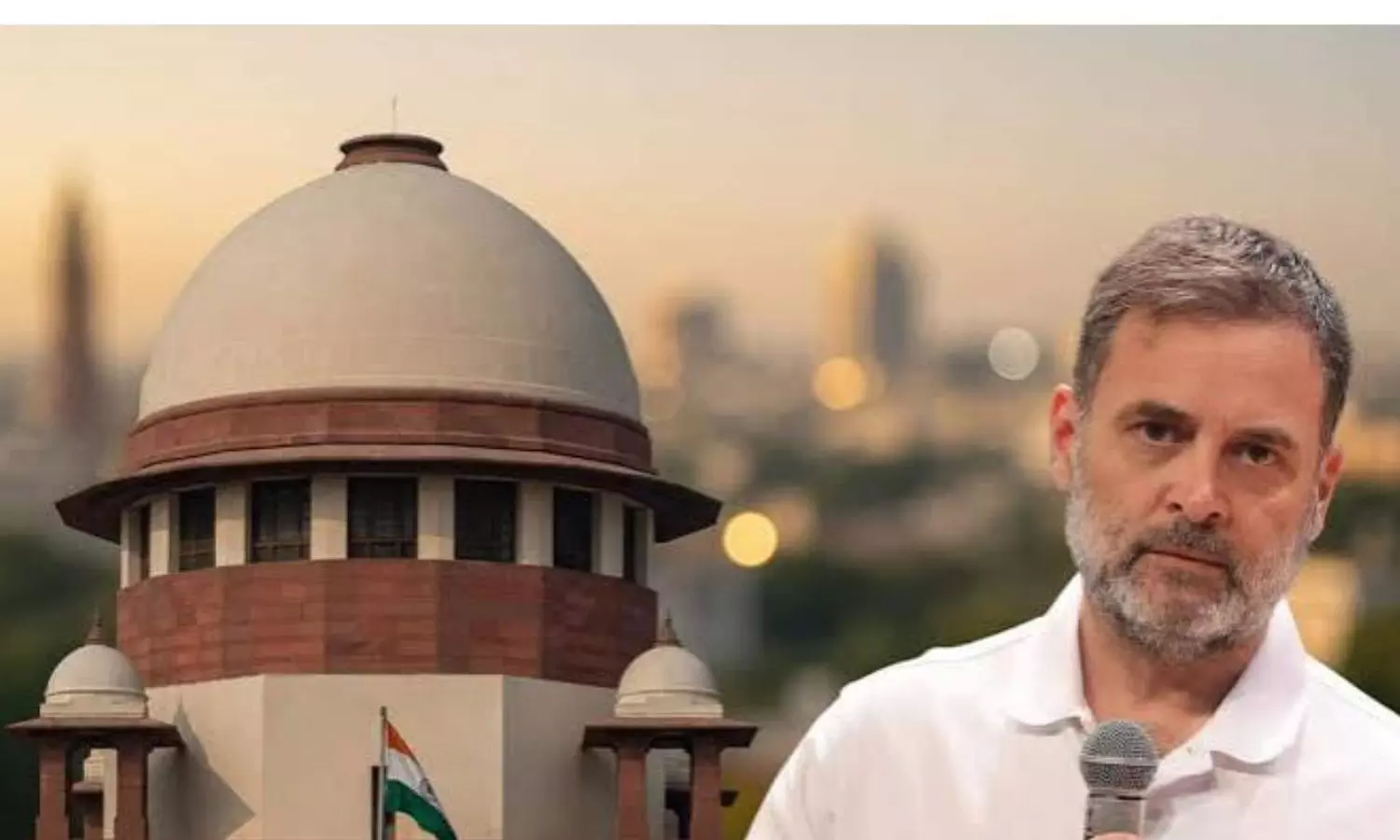
Chief Justice of India (CJI) Surya Kant said that “nobody can browbeat” the judiciary while expressing concern over the protest and the commotion that followed inside the Supreme Court complex.
The court gave notice to the Congress, Rahul Gandhi and other leaders of the INDIA bloc for a petition filed by four lawyers challenging the march. It also individually had written queries from the Election Commission of India (ECI) and Chief Election Commissioner (CEC) on petitions alleging irregularities in the Special Intensive Revision (SIR) of electoral rolls.
Supreme Court Questions Rahul Gandhi’s Conduct
During the hearing, senior advocate Kapil Sibal appeared for Rahul Gandhi when the CJI indicated that the court wanted an explanation from one of the petitioners regarding his conduct.
“Issuing notice does not mean that we are condemning anything. But one objection, before that. We would like to ask one of the petitioners about his conduct on the next date of hearing,” the CJI told Sibal.
Solicitor General Tushar Mehta and senior advocate Gaurav Bhatia had raised concerns about the October 12 march.
Bhatia argued that it was unacceptable for the Supreme Court to be drawn into a political procession. Responding to the concerns, Justice Surya Kant said, “Nobody can browbeat the judiciary.”
The CJI added that the court was aware of developments outside its premises and would not be intimidated by such actions.
Why Did Rahul Gandhi March To The Supreme Court?
Rahul Gandhi and other INDIA bloc leaders marched towards the Supreme Court on October 12 as the Opposition intensified its campaign against CEC Gyanesh Kumar and demanded the scrapping of the SIR exercise.
Rahul later entered the Supreme Court complex to personally submit a joint petition challenging the ECI’s decisions concerning the electoral roll revision. However, with the registry nearing its closing time, the petition was ultimately filed through lawyers.
The episode reportedly led to a large gathering and commotion within the court premises.
The Opposition’s petition sought the disclosure of files, agendas, minutes and objections recorded by Election Commissioners Sukhbir Singh Sandhu and Vivek Joshi in connection with the SIR exercise.
The demand comes amid concerns over the revision process and reports of differences within the Election Commission regarding the exercise.
The march also followed the CJI’s decision to decline an earlier request from Opposition leaders for a meeting. He had advised them to pursue legal remedies instead.
Court Seeks Response On Jantar Mantar’s Denotification
In a separate matter, the Supreme Court sought responses from the Centre and Delhi Police on petitions challenging the decision to remove Jantar Mantar from the list of designated protest sites.
The CJI said the court would examine whether the authorities had properly applied their minds before taking the decision.
“We are issuing notice to the Centre, Delhi Police, seeking their reply. Let them reply. If it doesn’t satisfy, then the law will run its course,” the court said.
The decision to denotify Jantar Mantar came days after protests called by the Cockroach Janta Party (CJP) against the CEC resulted in large-scale detentions and disruption.
Delhi Police subsequently proposed three alternative locations for demonstrations: Ramlila Maidan, Burari Ground and CBD Ground.
During the hearing, senior advocate Mukta Gupta, representing the petitioners, argued that a protest venue should allow demonstrators to make their voices heard. Senior advocate Gopal Sankaranarayanan sought restoration of Jantar Mantar’s status as a designated protest site.
Solicitor General Tushar Mehta defended the decision, stating that it was based on a committee report and was not arbitrary.
Delhi Police Commissioner Apologises In Contempt Case
Separately, Delhi Police Commissioner Anurag Kumar tendered an apology before the Supreme Court in a contempt case concerning restrictions imposed in central Delhi during the October 10 CJP protest.
According to the report, around 23,000 security personnel were deployed across the area ahead of the demonstration. The security arrangements and the closure of gates at 45 metro stations triggered criticism despite the protest having limited impact.
A contempt petition alleged that the police had violated the Supreme Court’s direction against imposing blanket travel restrictions.
In an affidavit, the police commissioner stated that internet services had continued without interruption and that detained protesters were held at temporary facilities, provided meals and released within two to six hours.
The Supreme Court’s notices and observations came as it began examining several connected disputes involving electoral roll revision, protest restrictions and the conduct of demonstrators near the court.