
CJP Gives Delhi Police 24-Hour Deadline To Set Jantar Mantar Protest Date
The Cockroach Janata Party (CJP) on Monday issued a 24-hour ultimatum to Delhi Police, demanding a date for its proposed protest at Jantar Mantar against alleged irregularities in the Special Intensive Revision (SIR) of electoral rolls.
Co-conveners of CJP Ashutosh Ranka and Saurav Dass went to the Parliament Street police station to seek the permission to organise the protest. Ranka said that if the police don’t act within the time frame, the party will decide on its next step.
“Jantar Mantar is the designated protest site and we are here to seek dates on which we can carry out our protest,” Ranka said.
He questioned where the party should demonstrate if permission to protest at the designated site was not granted and asked the police to clarify the next steps within 24 hours.
Why Delhi Police Denied Permission For October 10 Protest
Delhi Police had denied permission for the CJP’s proposed October 10 demonstration at Jantar Mantar, citing short notice, alleged violations during earlier protests and concerns over public safety, traffic management and law and order.
According to the police, the organisers informed authorities about the proposed demonstration on October 7, just three days before the planned event. Police guidelines require applications to be submitted at least 10 days in advance.
Authorities also referred to previous demonstrations by the group, alleging that an earlier protest continued beyond its permitted duration and created law-and-order concerns.
The proposed demonstration was part of the CJP’s campaign demanding the resignation of Chief Election Commissioner Gyanesh Kumar over alleged irregularities in the SIR process.
Detentions Raise Questions Over Supreme Court Directions
The ongoing standoff is being witnessed in the wake of ongoing tension with the protesters in Delhi and the Supreme Court’s recent clarification that peaceful, unarmed protesters could not be detained without following the procedure laid down by law.
The detentions have raised questions on the ground of the implementation of judicial directions regarding peaceful protest.
There have been concerns that the process may inhibit the enjoyment of constitutional rights, as well as that the processes and frames of the order might be too general. In earlier judgments, such as the historic ones in 2012 and 2018, the Supreme Court has warned against unchecked restrictions and prohibitions on demonstrations.
Protesters have alleged that people standing or walking peacefully were detained, including some outside the New Delhi district covered by the original directions.
Around 41,000 Security Personnel Deployed Across Delhi
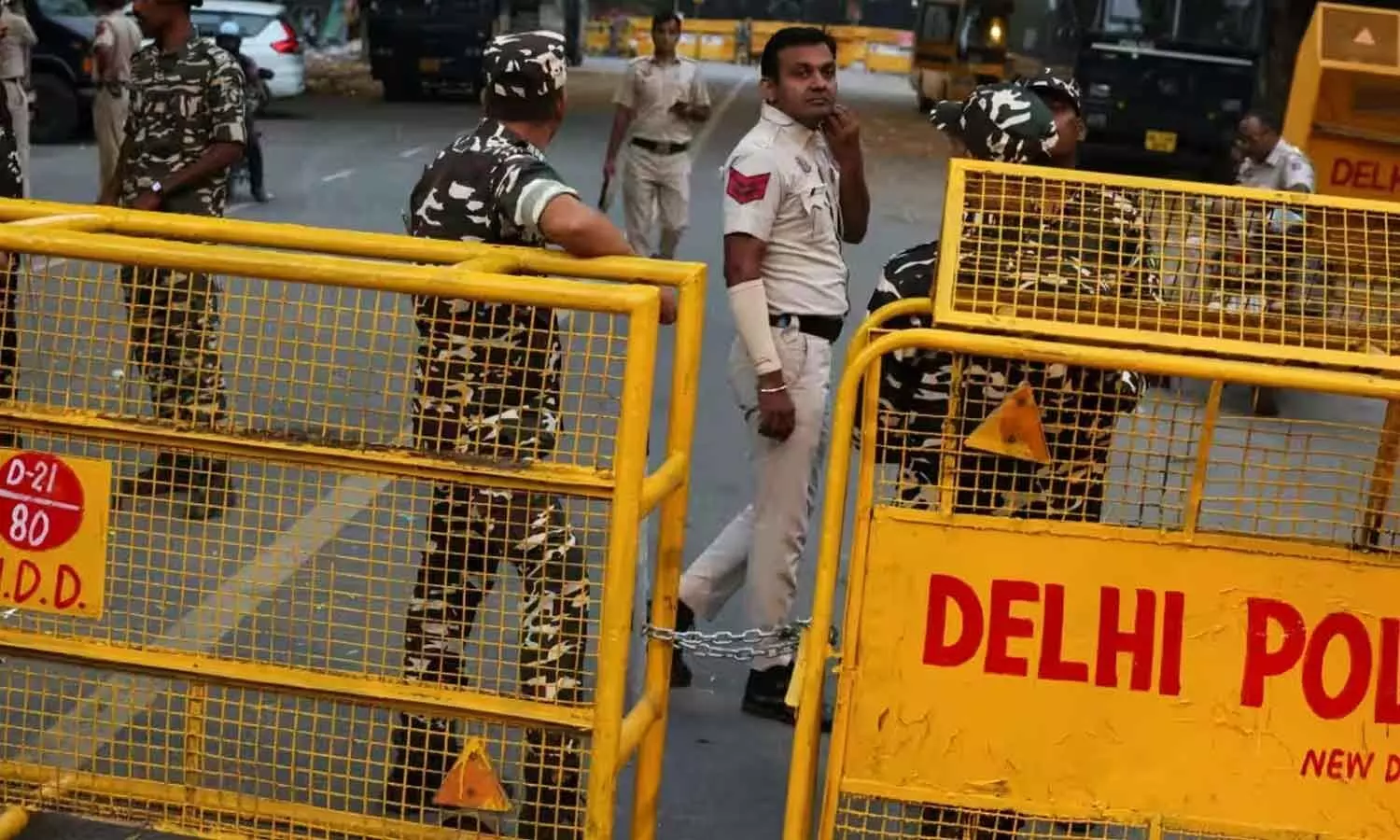
The standoff follows a major security operation ahead of the CJP’s planned October 10 protest. Around 41,000 security personnel were deployed across the national capital as authorities sought to prevent demonstrators from assembling.
CJP leaders Abhijeet Dipke, Ashutosh Ranka and Saurav Dass were among those detained after arriving in Delhi on October 10. According to Hindustan Times, an executive magistrate ordered their release nearly 24 hours later.
Following their release, the party renewed its efforts to secure permission for a demonstration at Jantar Mantar.
Ranka’s 24-hour deadline has now placed the focus on Delhi Police’s response and whether the authorities will provide a fresh date for the protest. The dispute also highlights the continuing tension between security restrictions imposed by the administration and the Opposition’s demand for the right to hold peaceful demonstrations over electoral concerns.