
Starlink vs Jio: Why Elon Musk May Be Racing Against Ambani in India
Elon Musk’s growing frustration over Starlink’s delayed entry into India has drawn attention to a bigger question: could every month of waiting give Mukesh Ambani’s Reliance Jio an advantage in the satellite internet market?
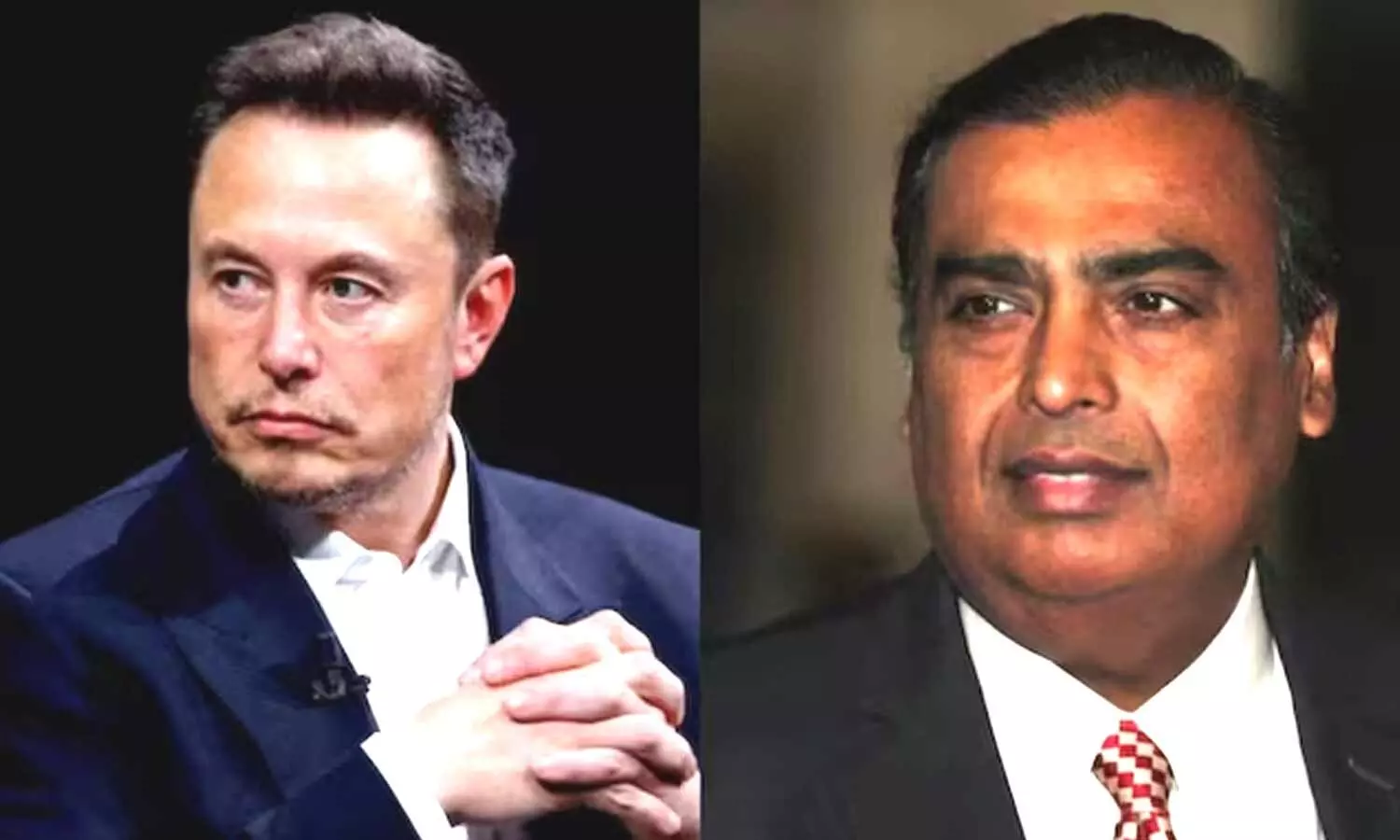
Musk has accused unnamed business interests of attempting to block Starlink to protect their market dominance. He has also questioned Ambani’s influence, asking on X whether the Reliance Industries chairman is the “real boss of India.”
Meanwhile Jio has revealed plans to build a network of 1,600 satellites and 23 ground stations across India. Even though the project is still far from launch it shows that competition is increasing in the country’s satellite connectivity sector.
Why Musk wants Starlink in India quickly
An early launch might help Starlink build up its group of users, learn what people in the area need and create prices that work well before other services get popular. The people who might use it are families, in the countryside, companies, government groups and groups that work in places.
“First-mover advantage is obviously important for any business,” Siddhant Cally, a senior research analyst, told a famous publication. “An early entry allows Starlink to build its customer base, gather market feedback and refine its pricing and go-to-market strategy before scaling up,” he stated.
However, affordability remains a major challenge. Indian consumers already have access to established telecom providers, including Jio and Airtel, making pricing and distribution critical to Starlink’s growth.
Pravin Kaushal, program director for Eastern India at WHEELS Global Foundation, believes delays could also affect Starlink’s ability to secure institutional customers.
“Every month of delay narrows that lead,” he told a famous publication. He explained that defence organisations, state governments and enterprises could be important customers, particularly because established contracts are not easily replaced.
Kaushal also criticised Starlink’s approach to regulatory delays, saying, “Calling a security clearance process ‘a crime against the people of India’ is pressure dressed up as concern for villagers who cannot afford the service anyway,” he said.
Could Jio challenge Starlink?
Jio’s proposed satellite network could become a serious competitor over time. The company already has an extensive telecom infrastructure and a large customer base, potentially allowing it to combine satellite services with existing mobile and fibre connections.
Prabhu Ram, Vice President of the Industry Research Group at CyberMedia Research, told a famous publication that Jio’s plans represent a long-term undertaking.
“The advantage will therefore come less from satellite capacity than from how well each player combines it with terrestrial networks, spectrum and customer relationships,” Ram told a famous publication.
Still, Jio’s announcement does not mean its satellite service is ready for commercial launch. Building and deploying the proposed constellation will take time.
Kaushal summarised the changing competitive landscape by saying, “The strongest thing Starlink could say was that India had no alternative. That is no longer true.”
Are Ambani’s interests behind the delay?
There is no established evidence that Ambani or Jio is responsible for Starlink’s delayed entry. The Ministry of Communications has said security assessments are underway for Starlink, Jio Satellite Communications and Bharti-backed Eutelsat OneWeb, with all three at broadly the same regulatory stage.
Faisal Kawoosa, founder and chief analyst at techARC, stressed the importance of protecting India’s control over its telecommunications infrastructure while developing domestic technology capabilities.
Ultimately, Starlink’s challenge is not just obtaining approval. It must also establish competitive pricing, build customer trust and secure its position before India’s satellite internet market becomes more crowded.