
Nana Patekar dies at 75: A look back at the career of an actor who refused to fit into one mould
Published: October 08, 2026 10:56 AM IST
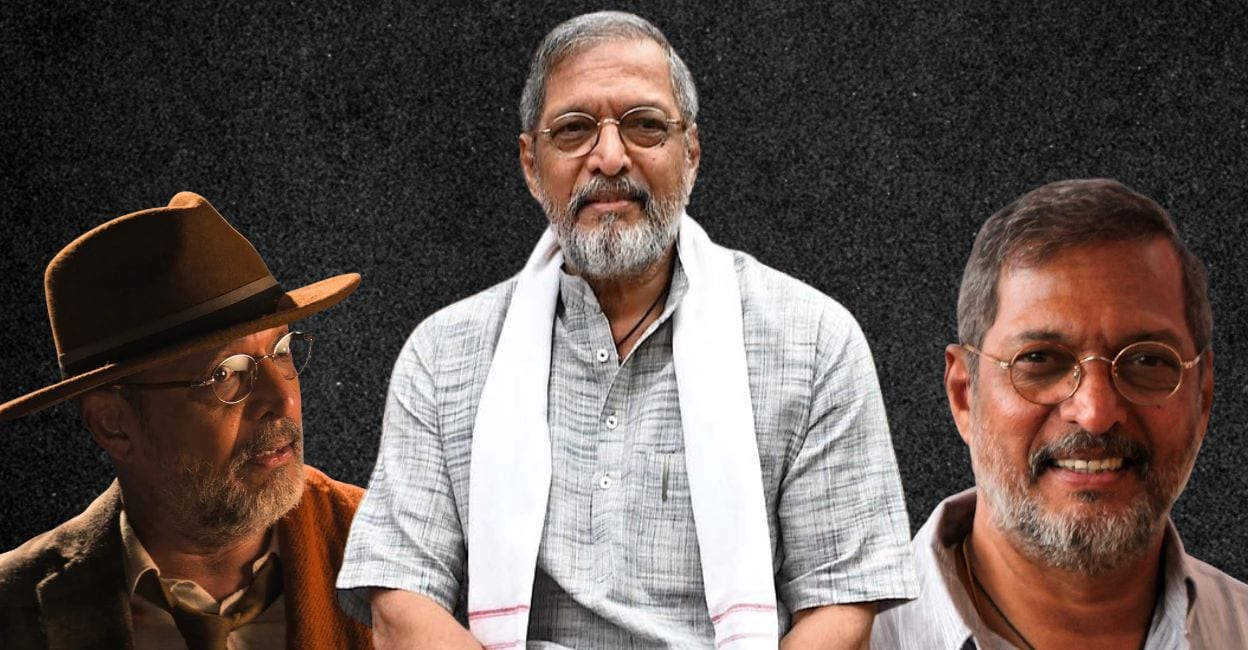
Nana Patekar was one of those actors who could make a serious dialogue sound threatening and an angry outburst sound hilarious. Over a career spanning nearly five decades, he played everything from gangsters and police officers to troubled men and comic characters, building a filmography that was difficult to fit into one category. The veteran actor died in Goa at the age of 75.
For a younger generation, however, Patekar may be remembered as much for the memes as for the films. Several of his dialogues have found a new audience on social media, with ‘Control, Uday, control!’ from ‘Welcome’ being among the most recognisable. His expressions, pauses and distinctive way of delivering a line have made scenes from his films popular reaction material online.
The comic side of Patekar became particularly popular after ‘Welcome’, where he played Uday Shetty, a gangster desperate to get his sister married. It was a very different role from the intense characters that had defined much of his earlier career. His comic timing in the film made Uday one of his most popular characters, and he later appeared in films such as ‘Apna Sapna Money Money’ and ‘Welcome Back’.
But Patekar’s association with cinema began long before he became a comic favourite.
Born Vishwanath Patekar in Murud-Janjira, in Maharashtra’s Raigad district, he studied at Mumbai’s Sir J J Institute of Applied Art. His first stage role came under theatre director Vijaya Mehta. He made his film debut in ‘Gaman’ in 1978 and spent the following decade working in smaller Marathi and Hindi films.
‘Aaj Ki Awaz’ in 1984 was among the early Hindi films that brought him recognition. ‘Ankush’, released two years later, helped establish him further. He was also part of Mira Nair’s Oscar-nominated ‘Salaam Bombay!’ in 1988.
It was ‘Parinda’ in 1989 that brought Patekar his major breakthrough. He played Anna, a crime lord, in the film and won the National Film Award for Best Supporting Actor. The role established him as an actor who could bring considerable intensity to the screen.
He followed it with a series of performances that strengthened that reputation. In ‘Krantiveer’ in 1994, he played a disgraced gambler who eventually rallies ordinary people to fight back. The performance won him the National Film Award for Best Actor, as well as Filmfare and Screen awards. In ‘Agni Sakshi’ in 1996, he won another National Award, this time for Best Supporting Actor.
The same year, he played the deaf father of Manisha Koirala’s character in ‘Khamoshi: The Musical’. His filmography also included ‘Tiranga’, ‘Bhoot’ and ‘Ab Tak Chhappan’. He frequently played police officers and other authority figures, roles that suited his commanding screen presence.
Yet even while these serious performances were becoming a defining part of his career, Patekar did not settle into the conventional image of a Hindi-film hero. Through the 1990s and 2000s, he appeared in smaller films as well as supporting roles in commercial films. He could be the central character in one film and a supporting presence in another.
In 2004, he played his last major leading role in a commercially successful film with ‘Ab Tak Chhappan’, in which he played a police officer. By then, he had already established himself as an actor who could carry a film without necessarily fitting the industry’s idea of a traditional leading man.
Patekar’s career also had an unusual chapter away from films. He was commissioned into the Territorial Army in 1988 with the rank of captain. During the 1999 Kargil conflict, he was posted with the Maratha Light Infantry and held the rank of major. He had risen to lieutenant colonel by the time he left the Army in 2013.
The same year, he received the Padma Shri, India’s fourth-highest civilian honour.
Patekar had spoken about his decision to move from theatre to films in an interview with Aamir Khan. According to him, it was late actor Smita Patil who encouraged him to make the move, telling him that only around a thousand people would see him in theatre while films would take him to a much larger audience.
He also said that he approached scripts by thinking like a common man and asking what an ordinary audience would want to watch. His choices over the years reflected that approach. He moved between serious cinema, commercial films, supporting roles and comedy without allowing one image to define his entire career.
That is perhaps why his work has continued to find different audiences. Someone who discovered him through ‘Parinda’ would have known him as a formidable dramatic actor. Someone who encountered him through ‘Welcome’ might first remember him for Uday Shetty and his increasingly frustrated attempts to control the chaos around him. And for many who came to him through social media, his face and voice arrived first as a meme before they went looking for the film behind it.
Patekar’s final performance came in Vishal Bhardwaj’s ‘O’Romeo’, released in 2026, in which he played a maverick, unpredictable police officer.
For an actor whose career included National Award-winning dramatic performances, comic characters and even a parallel association with the Territorial Army, there was never one easy way to describe Nana Patekar. He was not simply a hero, nor was he simply a character actor. He could be intimidating, vulnerable, angry or funny, sometimes depending entirely on the film.
And years after many of those films were released, the internet found yet another use for his performances. A raised voice, a stare, an exasperated expression and a line such as ‘Control, Uday, control!’ were enough to bring Nana Patekar back into the conversation.