
Opinion: The Russia-Ukraine war—a stalemate that is getting more dangerous
By Brig Advitya Madan
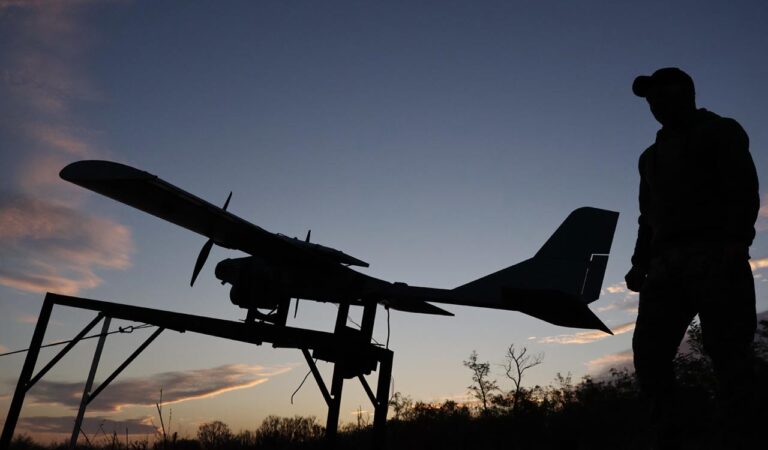
The paradox of the Russia-Ukraine war is becoming harder to ignore: Russia is getting better at striking Ukraine, but not at defeating it. Moscow has expanded its long-range missile and drone arsenal and can increasingly threaten targets deep inside Ukraine. Kyiv, meanwhile, is running short of some of the air-defence interceptors needed to stop these attacks.
Yet Russia’s territorial gains remain limited and costly, while has acquired the ability to strike deep inside Russia. The war is therefore entering a more dangerous form of stalemate, in which industrial capacity, technological adaptation and political endurance may matter as much as battlefield strength.
This creates a narrow window for diplomacy. President Donald Trump has an obvious political incentive to demonstrate before the November midterm elections that he can deliver an agreement. The Black Sea, including the restoration of blocked Russian and Ukrainian exports, provides a plausible starting point. Trump’s criticism of Ukrainian attacks on which he has linked to higher global diesel prices, also indicates his desire to contain the wider economic consequences of the war.
Elusive Settlement
But there is little indication that Washington is preparing to press Kyiv into a settlement as favourable to Moscow as the terms reportedly discussed around last year’s Alaska summit. A limited agreement may be possible; a comprehensive settlement remains much harder.
The battlefield explains why. Neither side believes that it has exhausted its military options. Russia has made territorial gains, but at a high cost. Its net gain this year may be only about 100 sq km, equivalent to roughly 0.017 per cent of Ukraine’s pre-2014 territory. Ukrainian estimates put at around 6,00,000 and claim that Russia is losing approximately 22,000 personnel a month, excluding wounded.
The precise numbers are contested, but the broader trend is significant: Russian losses are running above the current recruitment rate of about 30,000 a month. Kyiv is also apprehensive about additional North Korean reinforcements for Russia.
Changing Geography of War
Russia’s principal advantage lies not in territorial conquest but in its ability to generate long-range firepower. That advantage is changing the geography of the war. The distinction between the front and the rear is steadily disappearing. Areas that were once relatively secure are increasingly exposed to drones and missiles.
With neither side able to secure a decisive breakthrough, the war is becoming a test of who can sustain the fight longer—and at what cost
Along an approximately 80-km-wide zone near the front, soldiers face persistent danger from first-person-view hunter drones. Russian troops have increasingly substituted armoured vehicles with faster, lighter vehicles from which they can dismount quickly when drones are detected. Sometimes they move on foot simply to gain concealment when they hear a drone overhead.
The has made the battlefield both more transparent and more lethal. Ambush drones can remain concealed along predictable routes before attacking without warning. Both sides now operate drones far behind the front to disrupt logistics and supply lines.
Electronic warfare has consequently become central to combat. Russia is attempting to overwhelm Ukrainian communications with dense jamming, while Ukraine remains heavily dependent on satellite connectivity, including Starlink. The contest is no longer simply about destroying the enemy’s weapons; it is increasingly about disrupting the communications and data networks that allow those weapons to find their targets.
Railways illustrate the change. Russia initially concentrated on stationary trains carrying military equipment. Its attacks are increasingly directed at locomotives and railway stations themselves, including facilities near the Polish border. The objective is broader than destroying military cargo. It is to impose friction on the entire Ukrainian logistical system.
Russia’s deep-strike campaign is creating an especially difficult challenge for Ukrainian air defence. that were once predominantly propeller-driven are being supplemented by faster jet-powered versions, including systems using Chinese engines. Machine guns and shoulder-fired missiles are inadequate against large numbers of such targets. Ukrainian F-16s and MiG-29s face ammunition constraints, while small quadcopter interceptors cannot easily catch jet-powered Shaheds.
Armed Challenge
The scale of the challenge could grow rapidly. Russia’s production target for Shahed-type drones is 24,000 in 2026. It is also accelerating ballistic missile production and has the capacity to launch about 100 missiles of different types in a month. Ukraine’s stock of Patriot interceptors is critically low.
Kyiv is attempting to develop a domestic equivalent, but a system capable of providing comparable protection is unlikely to be available for several years. requires the integration of sophisticated radars, data links and guidance systems. The jet-powered drones present a different problem: they are cheaper than missiles but increasingly difficult to intercept.
Yet Russia’s growing advantage in long-range strike capability has not produced a decisive military advantage. Ukraine’s military-industrial complex is expanding rapidly. Its defence companies are producing drones at scale, while Ukraine has developed increasingly sophisticated long-range strike capabilities of its own. The country has learned to combine drones, electronic warfare and intelligence to attack Russian logistics, energy infrastructure and military assets deep inside Russia.
Ukraine has also overcome much of the psychological advantage Russia possessed at the beginning of the invasion. Kyiv no longer appears to fear the in the way it did in the opening months. Four years of war have produced an experienced military, an expanding defence industry and a society that has demonstrated considerable resilience. There remains a degree of normality in Ukrainian life even as petrol stations, factories, roads and railway infrastructure bear the scars of repeated attacks.
But resilience has limits. About 250 Ukrainian locomotives have been destroyed, while petrol stations, lorries and ports are increasingly vulnerable. Agricultural exports remain exposed, with harvests awaiting shipment through vulnerable maritime routes.
Winter will present another test. Kyiv is particularly difficult to protect because central heating plants are concentrated and vulnerable, while local power-generation capacity has been damaged. Some schools are preparing underground classes. Continued displacement has also reduced the tax base and labour force.
The financial equation is therefore becoming as important as the military one. Ukraine’s central-bank reserves stand at about $50 billion, while President has sought $27 billion in additional European assistance. The European Union has agreed to provide $104 billion, subject to reforms demanded of Kyiv.
Ukraine consequently faces a difficult political balancing act: it needs external financing to sustain the war and economy, while its domestic politics must accommodate reforms required by its principal financial supporters. Its 20 largest taxpayers are now reportedly military-technology companies, an indication of how profoundly the war has reshaped the Ukrainian economy.
Steel production and wheat exports have fallen sharply, but Ukraine continues to fight. Russia can increasingly make Ukraine’s rear areas unsafe, while Ukraine can impose costs deep inside Russia. Neither side, however, has found a way to convert these capabilities into decisive political or territorial advantage.
, this is perhaps the most consequential lesson of the war. Modern conflict is becoming a contest not merely between armies but between industrial systems, technological ecosystems and societies capable of absorbing prolonged pressure. Drones can erase the distinction between the front and the rear; electronic warfare can disrupt the networks on which precision weapons depend; and a shortage of a sophisticated interceptor can become as strategically consequential as a shortage of ammunition.
The Russia-Ukraine war is therefore not simply a story of territorial stalemate. It is a test of which side can adapt faster, replace losses more efficiently, and sustain the economic and political burden of war. That is what will ultimately determine whether today’s stalemate becomes a negotiated pause, a frozen conflict or another cycle of escalation.
(The author commanded 15 Punjab in Lebanon under United Nations Flag, commanded 27 Sector as DIG in Churachandpur, and was Brigadier Operational Logistics in HQ Western Command. He is currently an analyst on geopolitics, international and defence affairs)