
Can Student mentors prevent suicides
Various suggestions are being put forward by students and political parties following the recent incident involving Sahil Wakode, who was allegedly caught cheating at IIT Bombay on September 18. Sahil later died by suicide.
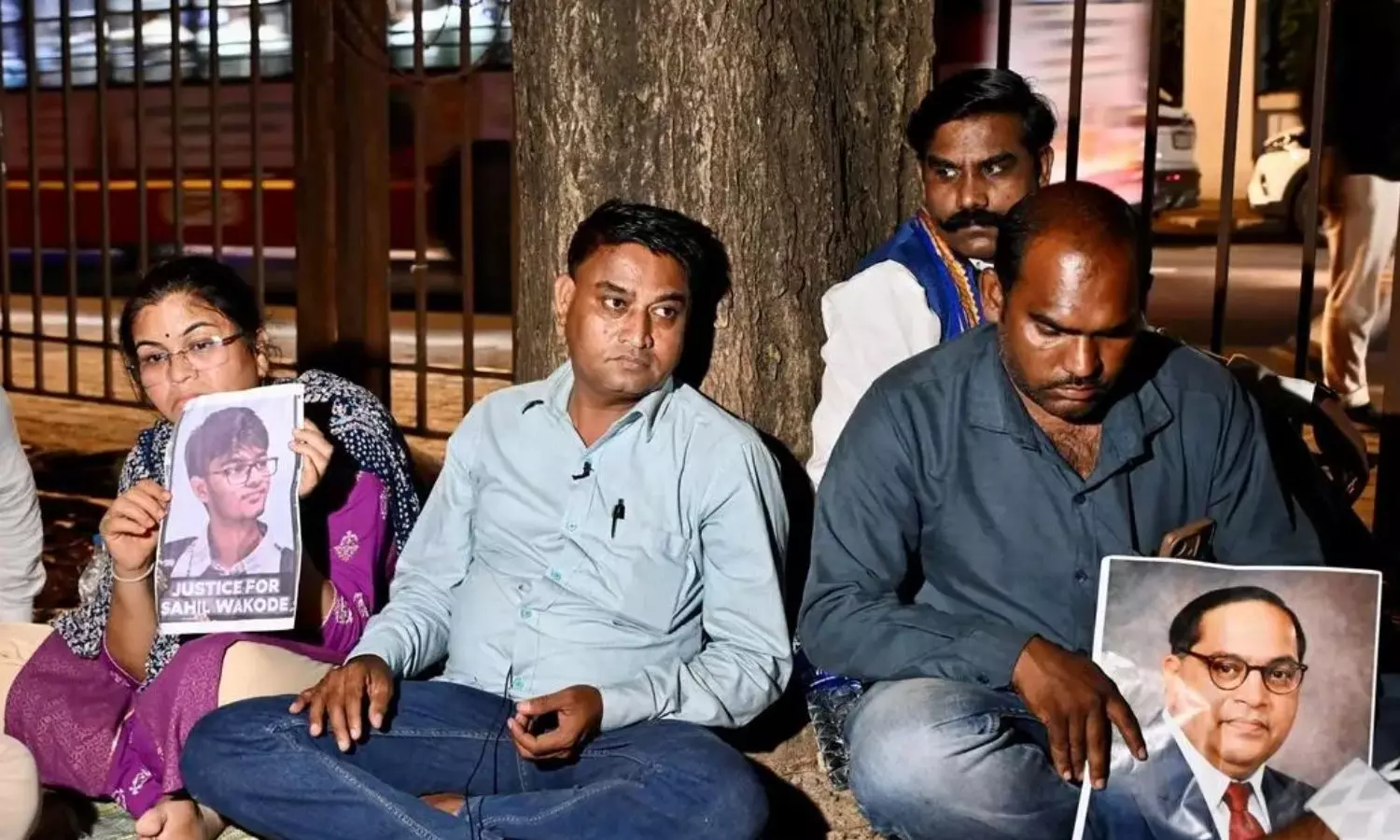
Instead of tightening the education system to ensure that it is free from the menace of cheating, particularly in premier institutions like the IITs, it appears that there is an attempt to suggest that the administration should go soft on cheating.
It is learnt that IIT Bombay is now considering a proposal that a student caught allegedly copying or committing examination malpractice should be allowed to speak to a student mentor before appearing before a disciplinary committee.
There is nothing alien about the concept of a student mentor at IIT Bombay. The institute’s Institute Student Mentorship Programme (ISMP) assigns senior students as mentors to first-year students. The stated purpose is to help newcomers adjust to campus life, deal with academic and personal problems, and navigate their first year away from home. The institute says the proposal could be an extension of the ISMP.
But the big question is: can a student mentor really be helpful in such cases?
ISMP has been successful in peer mentoring in higher education, particularly in promoting academic and social integration, a sense of belonging, adaptation to university life and, in some studies, retention and academic success. However, there is no strong evidence that simply putting one student in front of another automatically prevents a crisis or improves mental health.
What is important is that the education system needs to be designed in such a manner that it teaches students to cope with pressure in top institutions like the IITs and helps them develop the resilience to deal with setbacks, so that suicide is never seen as an option.
Peer mentoring is widely used in several universities, including the University of California, San Diego. Its peer mentors specifically work with students who have violated academic-integrity standards, helping them learn from the experience and understand the consequences of their actions. This is particularly relevant to the IIT Bombay debate because it demonstrates that peer mentoring need not be restricted to helping freshmen adjust to university life. It can also be incorporated into an institution’s academic-integrity framework.
Student mentors can listen to students and encourage them to speak to their parents and faculty, but they cannot be expected to diagnose a mental-health problem. At most, they can flag concerns to faculty or counsellors. The mentor must not become another arm of the disciplinary machinery.
If IIT Bombay wants student mentors to counsel students caught cheating, there must be clear rules about what a mentor can do, what must be reported, and when professional help should take over. Mentors can be good listeners, but they cannot be expected to handle serious student distress on their own.
While being humane and sensitive to individual circumstances and issues, there must also be a clear understanding that discipline cannot be diluted. Unless there are consequences for misconduct, neither indiscipline nor cheating can be effectively deterred. Parents, too, need to take responsibility if a student strays from his or her responsibilities or resorts to a fatal step such as suicide.
The objective should be to ensure that an examination hall does not become a place without rules. Academic integrity is fundamental to an institution such as IIT Bombay. If copying is detected, there has to be due process, and there have to be consequences.
A student who makes a serious mistake should not face humiliation, but neither should the student be allowed to escape the consequences.
The mentor, therefore, should be the person who says: You made a mistake. You will have to face it. But face it without panic, without isolation and without believing that your life has ended.