
Tata’s ‘Ratan’ propelled Group to new heights
New Delhi: Natarajan Chandrasekaran, the first outsider in generations to run Tata Sons and the man credited with stabilising India’s largest conglomerate after a bruising boardroom coup, announced his resignation as chairman, capping a nearly decade-long tenure marked by expansion, turnarounds and, in its final year, an escalating rupture with the group’s controlling charitable trusts.
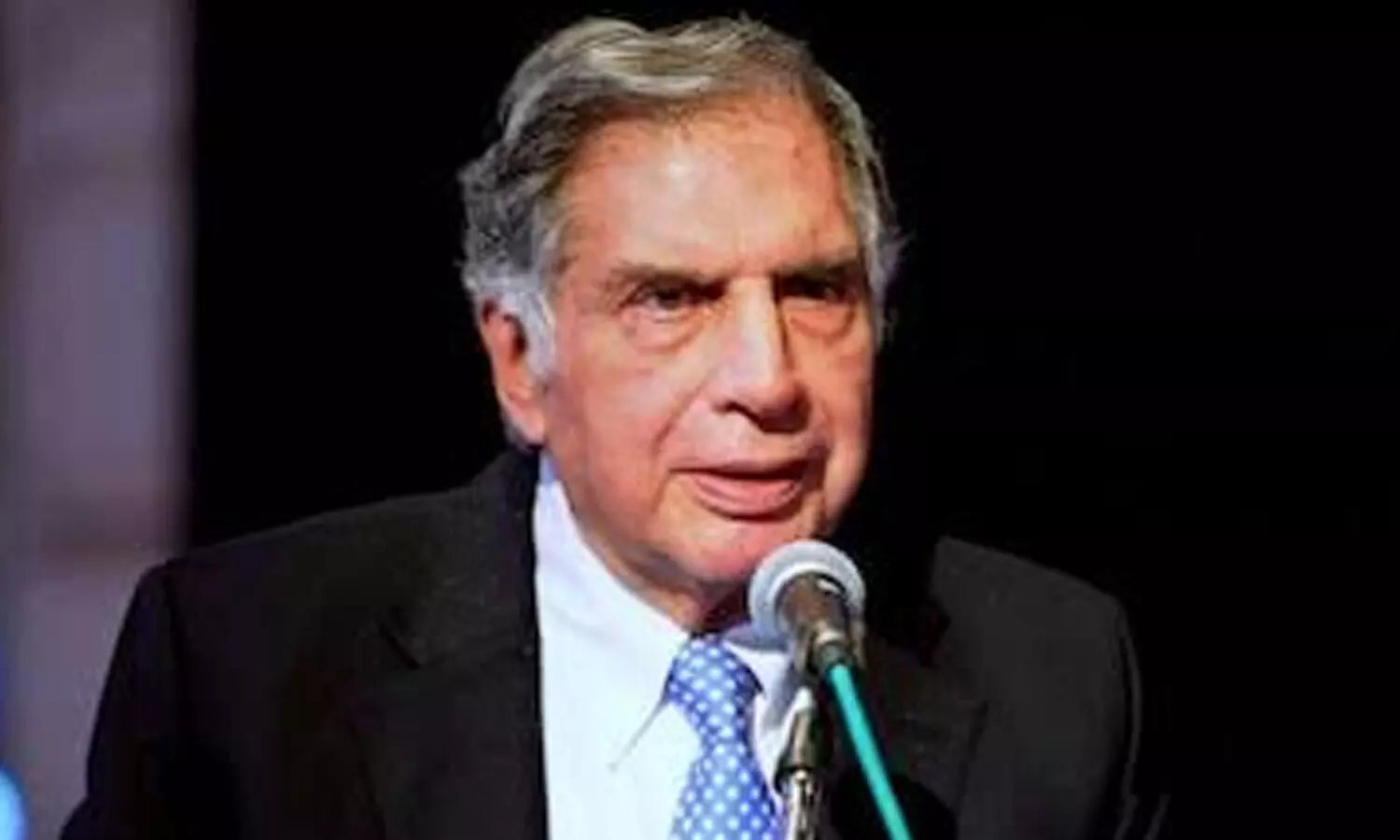
Known widely as ‘Chandra,’ he holds a master’s degree in computer applications and joined the Tata Group in 1987, rising through the ranks at Tata Consultancy Services to become CEO in 2009.
He was born into a South Indian agricultural family and, unlike his predecessors, is not a member of the Parsi community that has historically dominated Tata’s top ranks. Outside the boardroom, he has been described as an avid photographer, a music enthusiast and a passionate long-distance runner who has completed marathons around the world.
Chandrasekaran was named Tata Sons chairman in January 2017, taking charge in February, after the group’s board ousted Cyrus Mistry in a stunning October 2016 boardroom battle that wiped roughly $9 billion off the combined market value of Tata’s listed companies.
His appointment functioned as the equivalent of a group CEO role, and he became the first non-Parsi professional to lead the conglomerate, chosen by Ratan Tata to restore stability after the Mistry fallout.
Under Chandrasekaran, Tata Group underwent a major expansion and diversification. Group revenue nearly doubled, and profit roughly tripled between 2017 and 2026. Aggregate group revenues crossed $180 billion in FY24-25, spread across a portfolio that now spans some 26 companies with a combined market capitalisation of roughly Rs 26 lakh crore as of mid-2026, including unlisted businesses, closer to $360-380 billion, larger than the GDP of Pakistan, Portugal or Greece combined.
He also pushed Tata into businesses beyond its traditional technology, autos and steel strongholds, with big bets in aviation, electronics, semiconductors, batteries and digital commerce. The group bought Air India from the government in 2022 and subsequently consolidated Air India, Vistara, Air India Express and AIX Connect into an airline group with about 300 aircraft, more than 30,000 employees and over 8,300 weekly flights.
Tata Digital acquired majority stakes in BigBasket and 1mg in 2021, while Tata Electronics expanded into semiconductor and electronics manufacturing.
The strategy has involved significant capital expenditure and acquisitions, but not all paid off at the same pace: Tata Digital, built around BigBasket, Tata 1mg, Tata Neu and Croma, posted a nearly Rs 5,000-crore loss in FY26, and Air India reported a loss of Rs 22,238 crore, a reminder that scale-up under Chandrasekaran came with a heavier bill in newer, still-unprofitable businesses even as the legacy core – TCS, Steel, Motors, Titan – kept compounding.
His tenure has also been defined by a broad reshaping of the Tata Group, with a focus on scaling core businesses, simplifying the portfolio and making large bets in emerging sectors such as semiconductors, electronics, aviation and digital businesses.
Tata Coffee was merged with Tata Consumer Products, while Tinplate Company of India, Tata Metaliks and Tata Steel Long Products were folded into Tata Steel. At the same time, the listings of Tata Technologies and Tata Capital have expanded the group’s listed universe and unlocked additional value for shareholders.
His nine-year tenure at the helm was not without its challenges. His tenure began under the shadow of Mistry’s ouster, which triggered years of courtroom warfare that India’s Supreme Court eventually resolved in Tata’s favour. Mistry died in a car accident near Mumbai in September 2022, an event Chandrasekaran publicly mourned.
In June 2025, an Air India Boeing 787 Dreamliner crashed in Ahmedabad shortly after takeoff, killing at least 271 people – one of the deadliest aviation disasters in years.