
Will Abhijeet Dipke Be Arrested If He Proceeds With Tiranga March? What Delhi Police Notice Means
Cockroach Janta Party (CJP) founder Abhijeet Dipke has received a notice from Delhi Police ahead of the party’s proposed ‘Lehra Do Tiranga’ march at Connaught Place, raising questions about whether he could face detention or arrest if he proceeds with the demonstration.
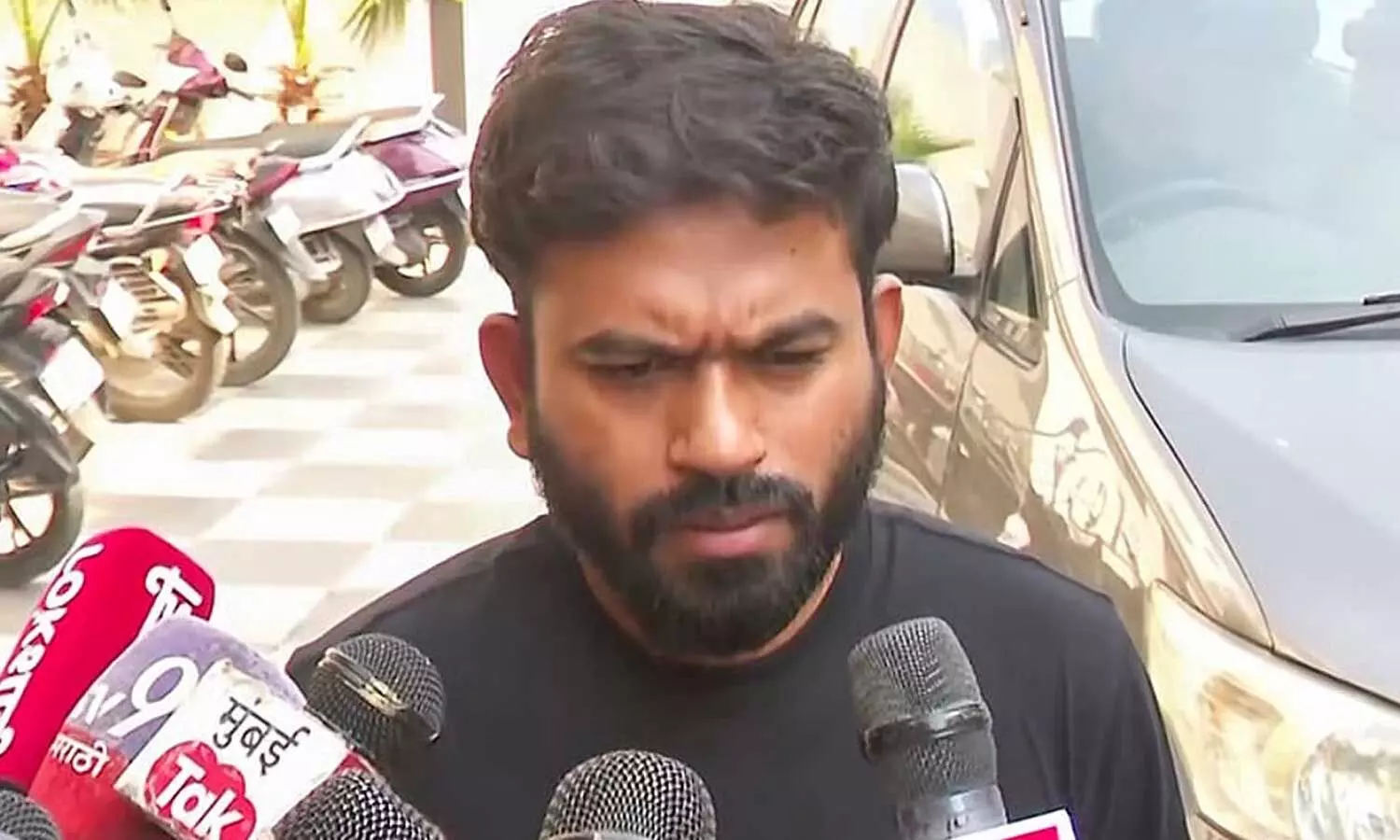
Police personnel visited Dipke’s residence on Friday and served him a notice directing him not to organise the proposed march in central Delhi. Authorities cited the absence of permission, restrictions on public gatherings and concerns over law and order.
The development follows increased security that’s been deployed in the national capital where thousands of police officers and Central Armed Police Forces are on duty ahead of the planned demonstration.
Why Did Delhi Police Serve the Notice?
The march is a part of a campaign by the CJP for the resignation of Chief Election Commissioner Gyanesh Kumar in relation to irregularities in the Special Intensive Revision (SIR) of electoral rolls.
Dipke and others who protested had raised their concerns about the removal of many names from voter registers and a demand for transparency from the Election Commission.
Delhi Police has maintained that the gathering cannot proceed without the required permission. Authorities have also cited prohibitory orders under Section 163 of the Bharatiya Nagarik Suraksha Sanhita (BNSS), which restrict certain assemblies in the affected areas.
Police have expressed concerns that an unauthorised gathering could disrupt public order and affect commercial activity in Connaught Place.
Does the Notice Mean Dipke Will Be Arrested?
The notice does not, by itself, establish that Dipke will automatically be arrested. However, proceeding with a prohibited gathering could allegedly expose him and other participants to legal action, depending on the applicable restrictions and the circumstances.
The possible consequences would depend on the specific terms of the notice, the orders in force and whether police determine that a legal violation has occurred. Any detention or arrest would have to be assessed under the relevant legal provisions.
Authorities have not indicated that arrest is inevitable solely because Dipke received the notice.
Dipke Says He Is Ready to Face Detention
Ahead of the march, Dipke said he was prepared to face detention if necessary to participate in the proposed national-flag demonstration.
He has questioned why a gathering centred on waving the national flag should be restricted and maintained that the planned action was intended to be peaceful.
The CJP’s proposed march also follows the detention and subsequent judicial custody of party leaders Saurav Das and Ashutosh Ranka after an earlier protest-related incident in Delhi.
Security Tightened Across Connaught Place
Delhi Police has intensified security around Connaught Place, Rajiv Chowk, Central Park and nearby areas. Barricades have been erected at several locations, while additional CCTV cameras have been installed to monitor crowd movement.
The New Delhi Municipal Council has also announced the closure of Central Park for Friday and Saturday, citing administrative reasons.
Police have said they may consider allowing a limited group of protesters to wave the national flag at an alternative location, subject to suitable arrangements.
What Happens Next?
The immediate question is whether the CJP will proceed with its planned march despite the police notice and restrictions. If organisers go ahead, authorities could intervene to enforce the orders in place.
The episode has intensified the confrontation between the CJP and Delhi Police as protests over the electoral roll revision continue. Whether the notice leads to further legal action will depend on the organisers’ next steps and the police response.