
Will a Return to Ballot Papers Restore Trust, Transparency and Accountability
Why are the opposition parties insisting on going back to the age of ballot papers? Can polling through ballot papers restore “trust, transparency and accountability”? If so, why did the Congress government led by Rajiv Gandhi introduce a Bill for a constitutional amendment and get it passed by Parliament in 1988?
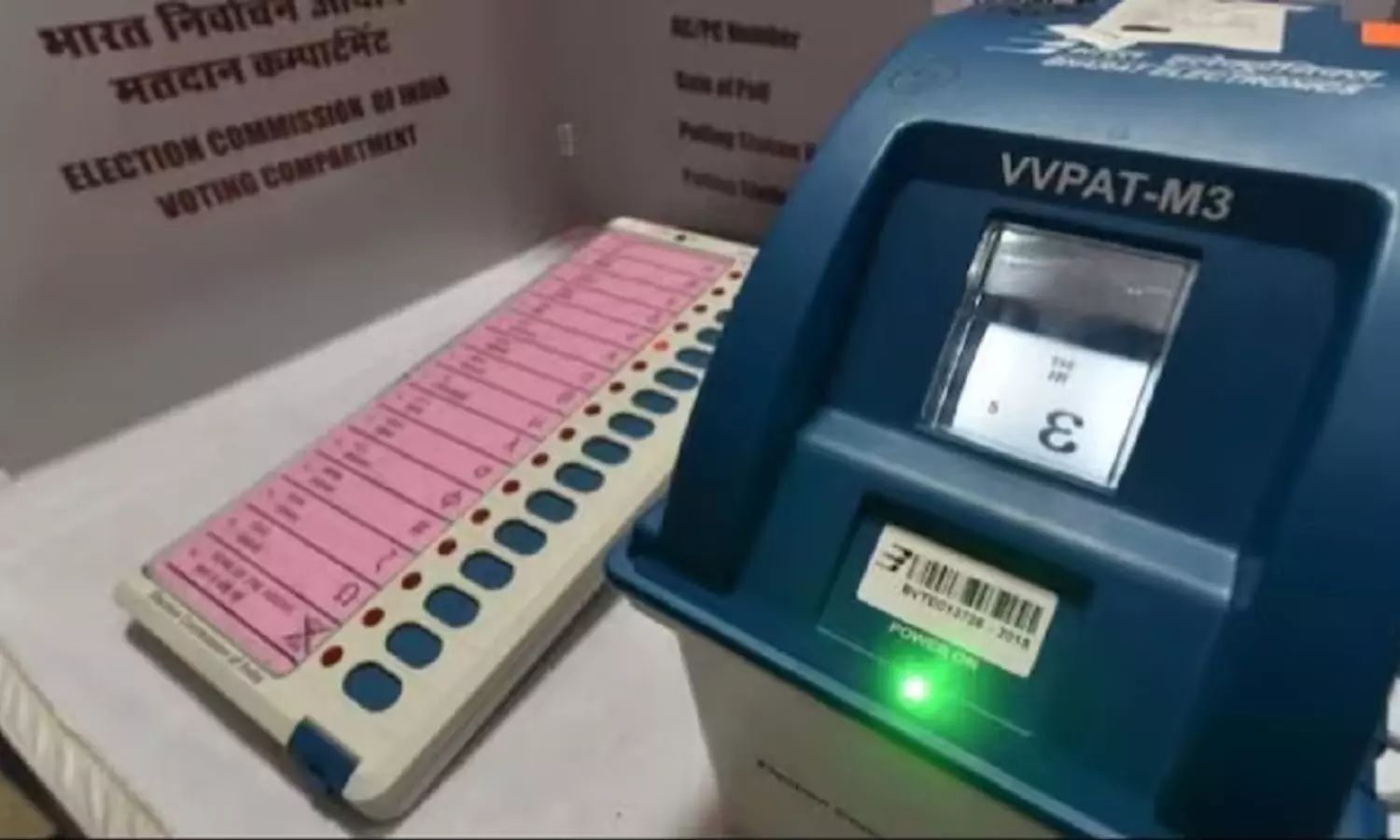
Is it not a fact that the proposal to introduce EVMs was first put before the government in 1977 by the then Chief Election Commissioner (CEC), Sham Lal Shakdher, who had earlier worked in the Lok Sabha Secretariat and had seen the use of electronic voting machines in the Lok Sabha since the late 1950s?
Sham Lal felt that if EVMs were introduced, problems such as individuals resorting to booth capturing, pouring ink into ballot boxes or stuffing them with votes favouring a particular candidate, sometimes at gunpoint, slow counting processes and the use of pre-marked ballot papers could be done away with.
The EVMs were introduced after facing several challenges. They were first introduced on a trial basis in a general election in Kerala in 1982. However, this was struck down by the Supreme Court on the grounds that the use of EVMs did not have the sanction of law.
There were several rounds of discussions and debates. After arriving at a consensus with all opposition parties, Parliament amended the law in December 1988 and incorporated a new Section 61A into the Representation of the People Act, 1951. The amendment came into effect on March 15, 1989.
For the first time, the government successfully used EVMs in 16 Assembly constituencies in Madhya Pradesh, Rajasthan and Delhi in 1998.
Later, in 1999, their use was further expanded to 46 Parliamentary constituencies. After successfully using EVMs in all Assembly constituencies in Tamil Nadu, West Bengal, Kerala and Puducherry, the Election Commission conducted elections to all 543 Lok Sabha seats in 2004 using EVMs, replacing ballot papers.
When opposition parties raised certain issues, including the need for verification of votes cast, VVPAT machines were introduced. They provide a paper trail enabling the voter to verify whether the vote has been recorded for the candidate of their choice.
It is surprising that 22 years later, the INDIA bloc wants the country to go back to the age of ballot papers. The big question is: Can ballot papers assure victory for any political party? The dynamics of elections in India are totally different and depend on several factors.
Local body elections are held through paper ballots. But has there been any occasion when the opposition has swept the polls? Generally, it is the ruling party that wins a majority of elections.
Even in elections for Rajya Sabha members, where lawmakers vote, paper ballots are used, and we have often seen instances of cross-voting despite the respective parties issuing a whip.
In the era of technology, if political parties feel that the electoral process needs changes, they should discuss the issue in Parliament based on research and expert opinions, amend the law if necessary, and move towards technological advancement rather than demanding a return to the age-old practice of ballot papers.
There appears to be no logic in the opposition’s argument that paper ballots can provide the ultimate source of verification.
The Election Commission’s view is that EVMs with VVPAT provide a sufficient audit system. The opposition knows fully well that it is mixing two different issues: “Vote Chori” and the ease and integrity of the polling process.
The opposition is justified in raising issues pertaining to the SIR and the use of Form 6 during the SIR process. There may be several procedural lapses, as pointed out by the opposition, which certainly need to be addressed and answered by the Election Commission of India—not through a press note, but either by convening a meeting with all opposition parties or through a joint press conference by all three Commissioners.
However, the opposition parties need to think in a progressive manner and should not blindly demand that EVMs be scrapped.