
When the farm comes to the city
Mangaluru: Krishi Melas are usually associated with the countryside, where farmers gather to examine new machinery, exchange farming practices, meet traders and interact with agricultural scientists. But a different kind of farm show is taking shape in Mangaluru — one designed not for the traditional farmer alone, but for the growing community of urban cultivators.
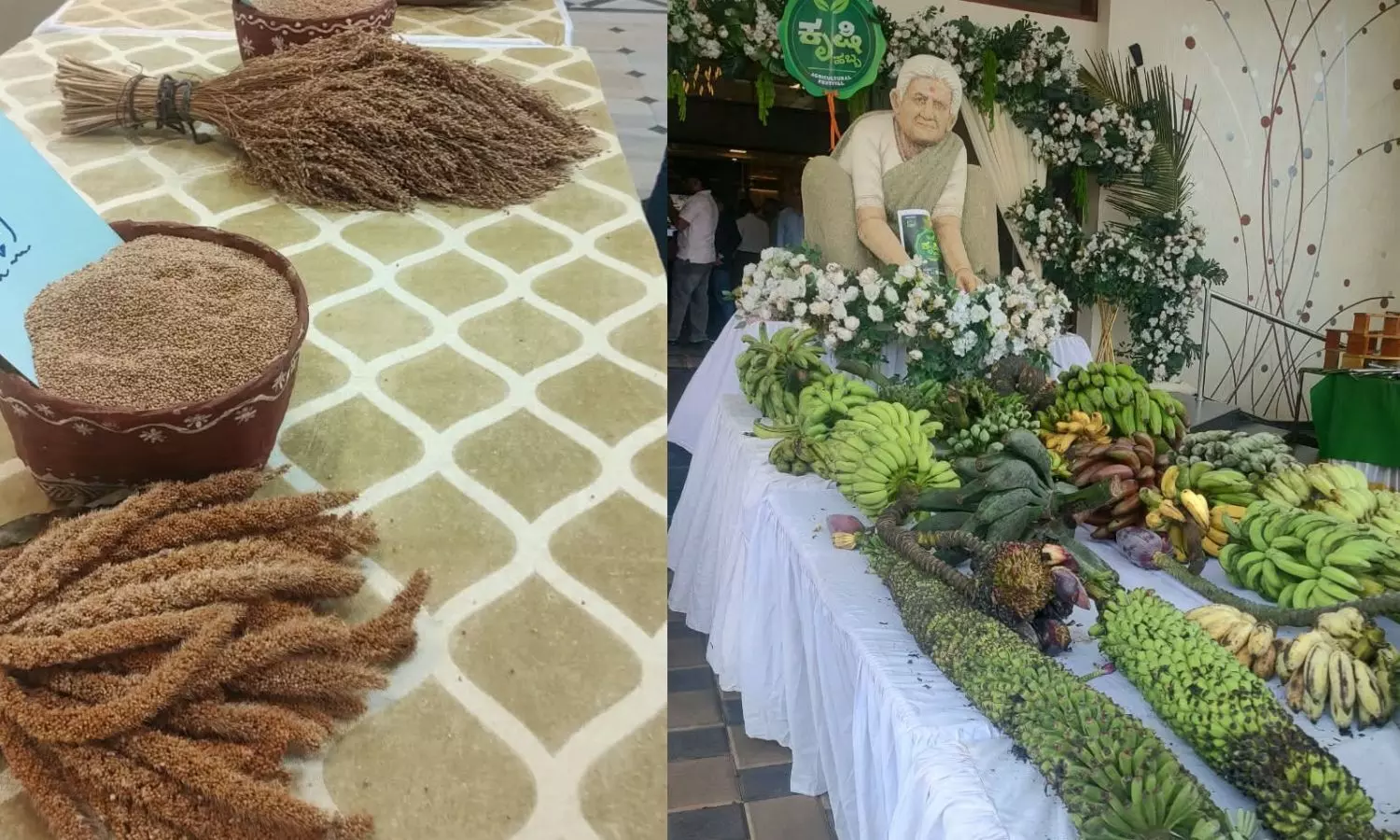
The three-day Krishi Festival, being held at Cordel Ground in Kulshekar from October 2 to 4, brings together urban farmers, terrace gardeners, young agricultural entrepreneurs, nursery operators, beekeepers, food producers and farm equipment manufacturers.
The idea is to take agriculture beyond the boundaries of conventional farmland and demonstrate that a city too can become a space for growing food, creating enterprises and generating livelihoods.
The festival has been organised by the Krishni Seva Foundation, a voluntary organisation, with a range of activities and displays covering agricultural machinery, plants and nurseries, organic farming, fisheries and fish farming, beekeeping, food products and agri-business.
Alvin Mendonsa, an office-bearer of the Krishni Seva Foundation, said the initiative was conceived with young people in mind.
“We are trying to keep our youth within our country by showing them new avenues in farming and agriculture,” Mendonsa said.
He said agriculture today offered opportunities far beyond cultivation. Food production, manufacture and sale of farm implements, agricultural marketing, setting up and maintaining terrace gardens, nursery activities and several allied enterprises could provide avenues for young people to build livelihoods.
The emphasis on urban farming is significant as cities increasingly look at ways of growing food within limited spaces. Terrace gardens, kitchen gardens, nurseries and small-scale food production can bring agricultural activity into residential neighbourhoods while creating demand for a range of related services.
The festival also seeks to connect these different activities. Farmers’ markets, an agri-business expo and training sessions conducted by government departments and institutions are part of the programme.
For visitors, the event offers an opportunity to see agriculture not merely as cultivation, but as an ecosystem involving technology, food, marketing, entrepreneurship and services.
For the organisers, the larger objective is to make agriculture relevant to a generation that may have little direct connection with farming. By bringing the farm into the city, they hope to show that the sector can offer young people opportunities at several points along the agricultural value chain.