
What to know about flights after the US nationwide ground stop
Washington: Officials assured passengers that the US airspace was safe and operational after a nationwide ground stop that was initiated out of caution caused massive travel disruptions.
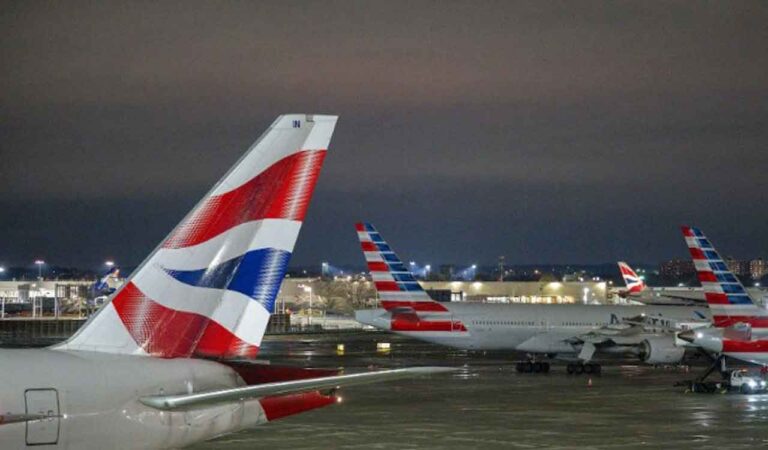
The longest flight stoppage in 25 years lasted more than four hours and ended around 8:15 pm ET Friday, allowing some domestic flights to take off from US airports.
Of the 41,000 flights scheduled Saturday, more than 6,400 had been canceled by Saturday night, according to FlightAware. More than 800 flights scheduled for Sunday were cancelled, it said.
But officials said the air traffic control system was operational and expected airline schedules to fully recover by the end of Sunday, smoothing out ahead of the Thanksgiving travel rush.
Secretary of Homeland Security Markwayne Mullin said there was no indication the failure was related to a cyberattack and no lives were at risk.
Here’s what to know:
Flights have resumed but disruption continues
Federal Aviation Administration Administrator Bryan Bedford said the system was stable Saturday. Several thousand flights were able to fly after the ground stop, but ultimately, some 12,000 scheduled flights were unable to take off Friday, he said.
Officials acknowledged the disruption but said safety was paramount.
Bedford offered an apology for stranded travelers and thanked air traffic controllers, pilots and flight attendants for managing the fallout. He said officials were confident the system is operating safely or else they would keep airplanes on the ground.
Airlines remove change fees for affected passengers
Airlines are obligated to offer free rebooking on another flight or a full refund if a flight is cancelled.
Bedford said the administration was working closely with airlines and said they were waiving all terms and conditions.
Some airlines were allowing passengers to rebook if they had travel scheduled Friday or Saturday. Others extended the offer to people with reservations for Sunday or even Monday.
Bedford advised passengers to contact their airlines.
The system was overloaded while part of it was being upgraded
A contractor was replacing a section of the system’s old and discontinued copper wire with new fiber wire in a remote location Friday afternoon, Secretary of Transportation Sean Duffy said Saturday. That kind of work has been happening across the country and across industries for decades, he said.
But on Friday, the router in that location started overloading the air traffic control system and causing intermittent disruptions to communications and radar feeds. When officials couldn’t quickly locate the cause of the overload, they grounded flights nationwide.
“We did that out of an abundance of caution,” Bedford said. “I’m sorry that we put you through this, but we did it for the right reasons.” Officials stressed that the ground stop was not the result of a system outage or nefarious activity by a foreign actor. Duffy said officials were investigating whether contractor error or a faulty router was the cause.
The air traffic control modernization began last year after Congress approved USD 12.5 billion of funding. Duffy and the White House are pushing for $30 billion more to complete the work. About 70 per cent of copper wire has been switched to fiber already, officials said Saturday.
The Microsoft outage was unrelated to the stoppage
Microsoft said Saturday that services were fully restored after its own massive outage. There was no indication the FAA ground stop was related to the service disruption that took Microsoft services offline Thursday, according to federal officials and a company spokesperson.
Over 430 million people use Microsoft 365 apps, Microsoft said on its website. Users reported Microsoft 365 services including Outlook, Teams and AI assistant Copilot were interrupted.