
Supreme Court Declines Interim Relief Against CEC, Says Media Reports Alone Cannot Form Basis for Order
Bengaluru: The Supreme Court on October 5 declined to pass an interim order seeking the suspension of Chief Election Commissioner Gyanesh Kumar over allegations that decisions concerning the Special Intensive Revision (SIR) of electoral rolls were taken without the concurrence of the other two Election Commissioners.The petitions relied primarily on an investigation published by a media house – The Indian Express. A bench headed by Chief Justice of India Surya Kant, along with Justices Joymalya Bagchi and V. Mohana, issued notices to the Election Commission of India (ECI), the CEC and the other Election Commissioners, observing that an order could not be passed solely on the basis of a newspaper report.
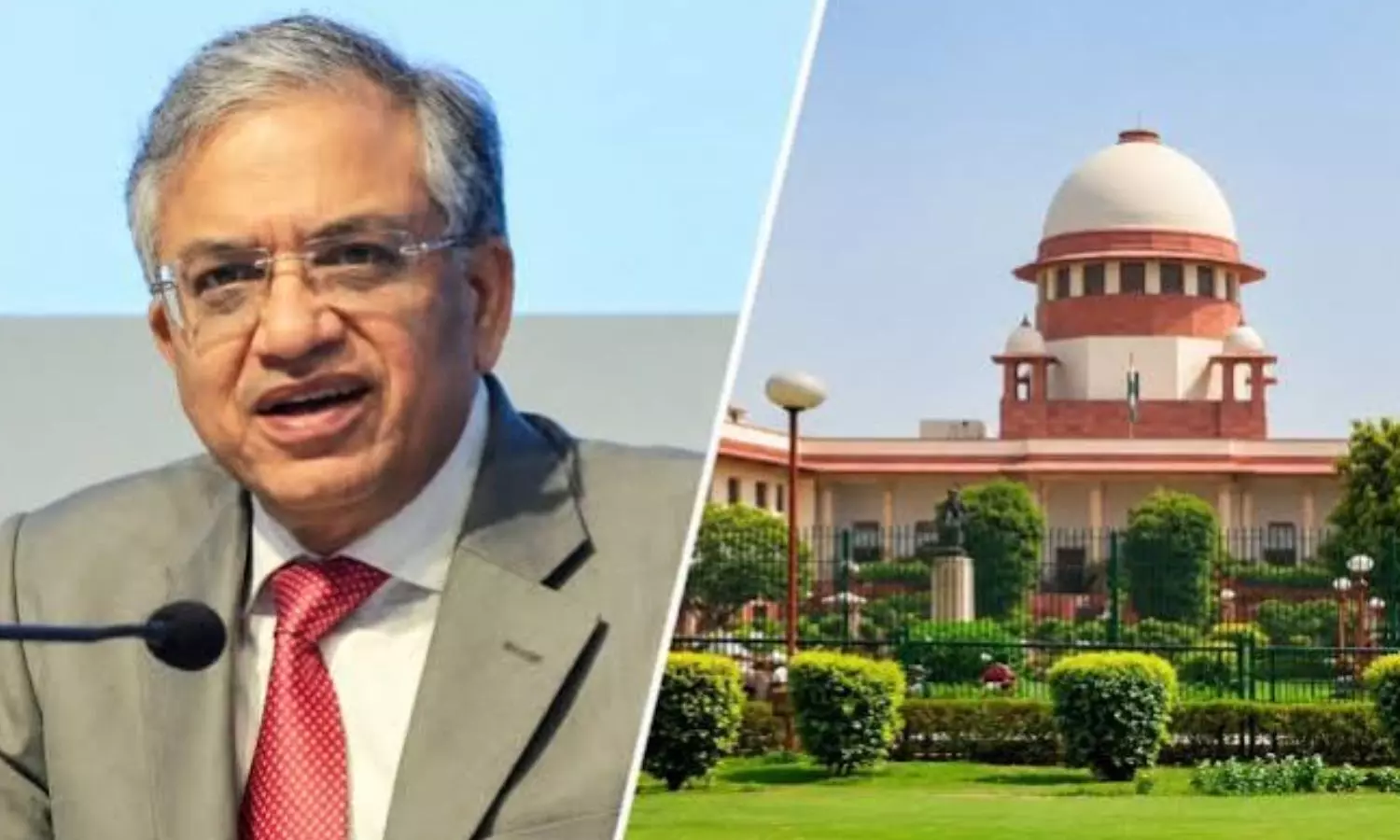
The court emphasised the need to examine authentic records before reaching a conclusion. It observed that a news report could be entirely correct, partially correct or partially incorrect. The bench also raised concerns about suspending the CEC without hearing the Commission, noting the potential impact on the functioning of the constitutional body. However, it indicated that any decision subsequently found to have violated the required decision-making process could be restrained.
The ECI has maintained that differences of opinion during internal deliberations are routine and that final decisions, including those concerning the SIR, were taken unanimously. Separately, the Commission has defended its September 26 press note stating that the declaration attached to Form 6 for the SIR had been upheld by the Supreme Court. The clarification came amid criticism over claims that the ECI had modified Form 6 without legal authority.
The Commission’s position is that requiring a supporting declaration alongside Form 6 is distinct from altering the statutory form prescribed under the Registration of Electors Rules, 1960. Form 6 continues to serve as the prescribed application for inclusion of a name in the electoral roll, while the declaration constitutes additional documentation required in the context of the SIR.
According to the clarification, the Supreme Court’s observations in its Bihar SIR judgment recognised the ECI’s authority to prescribe additional documentation suited to the special revision exercise. Paragraphs 152 and 161 of the judgment have been cited in support of the distinction between the statutory form and supplementary documentation.
The Commission maintains that its press note referred to the declaration accompanying Form 6, not a modification of the form itself, and therefore did not misrepresent the court’s position. The developments highlight the continuing legal scrutiny of the electoral revision process, with the Supreme Court seeking verified records before deciding the allegations against the Commission.