
Rekha Gupta Pledges 14-Organ Donation, Calls for Blood and Organ Donation to Become a People’s Movement
New Delhi: Delhi Chief Minister Rekha Gupta has pledged to donate 14 organs and various tissues after death, marking Prime Minister Narendra Modi’s 76th birthday with a public commitment to organ donation and humanitarian service. Gupta first donated blood at a blood donation camp organised in Delhi and later signed an official pledge to donate her organs for medical and humanitarian purposes.
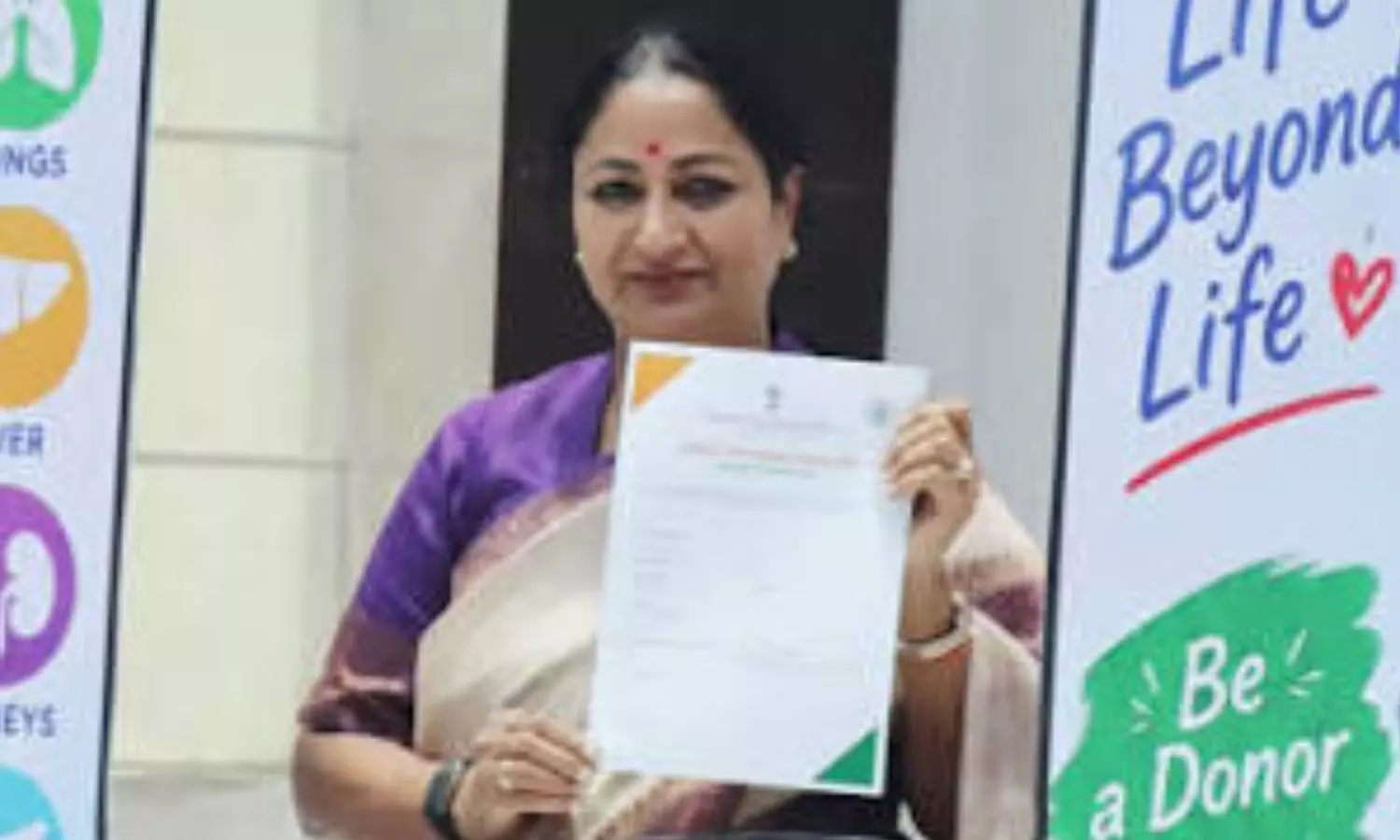
The blood donation drive was organised as part of programmes marking 25 years of Modi’s public service. Inaugurating the camp, Gupta said the initiative had been organised with a target of collecting 2,500 units of blood. Union Minister of State and Delhi BJP president Harsh Malhotra also donated blood at the event along with Delhi government ministers.
As per the official organ donation pledge, Gupta has agreed to donate several vital organs, including her heart, intestines, pancreas, liver, kidneys and lungs, besides different tissues. The pledge covers organs and tissues that can potentially be used for medical purposes and to help patients requiring life-saving transplants.
Sharing her message on X, Gupta said, “Blood donation is not only a means of saving lives, but also a powerful expression of our duty towards humanity and the nation. My heartfelt gratitude to Team Delhi for turning this commitment to service into a people’s movement.”
On the birthday of Hon’ble Prime Minister Shri @narendramodi Ji, launched Delhi’s Online Organ Donation Pledge Campaign and registered my own pledge to donate my organs.
Organ donation carries a profound thought within it. Even after one life’s journey is complete, it can become… pic.twitter.com/3Clqgr03Fi
— Rekha Gupta (@gupta_rekha)
September 17, 2026
Health Minister Dr Pankaj Kumar Singh said organs can be retrieved after a person is declared brainstem dead or dead under applicable medical protocols, with the process carried out under the supervision of a board of medical experts. Such organs can then be used for transplantation to help patients whose lives depend on receiving a suitable donor organ.
Singh said the Chief Minister’s decision could help dispel misconceptions surrounding organ donation and motivate more people to register as donors. Following the initiative, the Delhi government’s Health Department is planning to accelerate organ donation registration campaigns across the capital, with the aim of bringing a larger number of citizens into the donation programme.
The event was attended by Harsh Malhotra, Cabinet Ministers Ashish Sood and Manjinder Singh Sirsa, Health Minister Dr Pankaj Kumar Singh, Ravindra Indraj, Laxmi Nagar MLA and Chief Whip Abhay Verma, besides other legislators and representatives.
Delhi-NCR already has a substantial medical infrastructure for organ transplantation and is counted among the prominent regions in the country in this field. National health reports and data from the National Organ and Tissue Transplant Organisation (NOTTO) indicate that the region has a significant transplant ecosystem, with major institutions such as AIIMS, RML Hospital and Safdarjung Hospital, along with several private hospitals, carrying out living-donor transplants involving organs such as the liver and kidneys.
At the same time, deceased organ donation remains a major area of concern. Organ donation after brain death or death, commonly referred to as cadaveric donation, continues to lag behind the levels seen in several other parts of the country. Compared with southern states such as Tamil Nadu and Telangana, Delhi has had lower levels of public awareness and registration for deceased organ donation.
Over the past few years, however, several initiatives have been undertaken to improve the situation in the national capital. Leading government and private hospitals, including AIIMS, RML, Safdarjung and Army Hospital, now have the required licences, specialised facilities and medical expertise to undertake complex procedures, including heart and lung transplants.