
Prahaar movie review: Rajkummar Rao shines as Ujjwal Nikam
Hyderabad: The one lingering question that accompanies you throughout and stays with you after Avinash Arun’s 140-minute narration in Prahaar is this: who is the real hero — the predictable Rajkummar Rao, the in-form Jaideep Ahlawat, Lalit Prabhakar, or the wonderfully restrained Sikandar Kher?
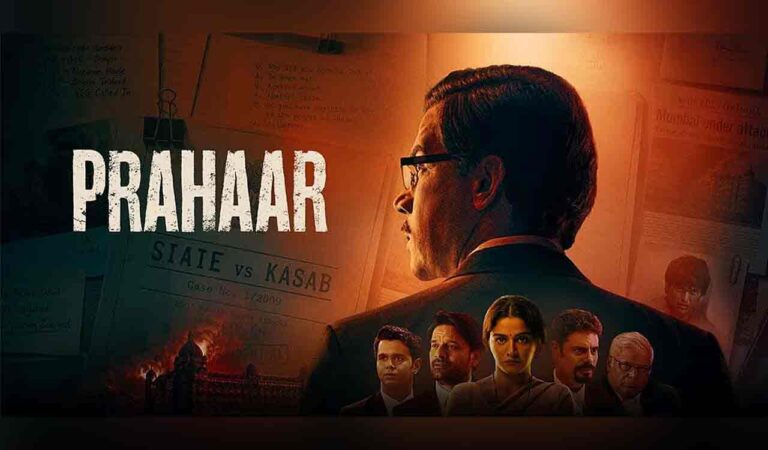
More importantly, is it the reiteration of the system steeped in the rule of law, so well encapsulated by director Avinash Arun? Arguably, a good film is a combination of multiple such factors, and more.
The film is certainly a must-see and clearly demonstrates how, even within the confines of neighbour-bashing, a script can avoid jingoism and testosterone-fuelled dialogue.
Prahaar is only partly about Ujjwal Nikam (Rajkummar Rao) and the Kasab case. Without dwelling on the historical details of that ghastly night of November 26, 2008, the film revisits not only the tragedy suffered by the victims, the bravery of our police and the integrity of our jurisprudence, but also wounds that are more recent, along with questions that demand urgent answers.
Ujjwal Nikam is a fearless and successful public prosecutor chosen to prosecute the sole survivor among the terrorists who planned the attack. The case becomes a harrowing experience and leaves a deeply scarred memory.
The attack takes place while the Nikams are celebrating the wedding of their daughter, Sharvari (Pranali Ghogare). His wife, Jyoti (Wamiqa Gabbi), is a pillar of support for him in his professional life. In contrast, his son, Aniket (Ritvik Sahore), has a troubled relationship with him.
While Ujjwal leads the prosecution, Kasab is defended by lawyer Abbas Kazmi (Sikandar Kher). Notwithstanding a few familiar courtroom quips, false leads, fierce arguments and digs at the media, the film holds its ground. The tight script keeps you constantly engaged.
Importantly, the film highlights how and why the Indian polity continues to believe in and operate within the judicial system. The stark reality that lies between two clichés — “justice delayed is justice denied” and “justice hurried is justice buried” — is explored through a well-crafted courtroom drama.
Written with precision by Dushyant Arora, Sumit Roy and Ishat Tiwari, the dialogues are crisp and balanced. Editor Sri Roy also contributes to the effectiveness of director Avinash Arun’s narration.
Ashish Vidyarthi, as Justice Tahiliyani; Devika Rotawan, as the young witness Komal; and Sebastian D’Souza deliver noteworthy performances. Special mention must be made of Ritvik Sahore as Aniket and the ever-reliable Jaideep Ahlawat.
Lalit Prabhakar is impressive as Ajmal Kasab, although there are moments when he goes overboard. It is genuinely difficult to choose between Sikandar Kher as the defence counsel and Rajkummar Rao, who is brilliant yet, predictably, award-worthy once again. Rao’s sublime understanding of his craft takes control of the narration from the word go. There is only Ujjwal Nikam on screen — no Rajkummar Rao.