
Panchayati Raj Ministry, CESL to expand EV charging infra
New Delhi: In a significant initiative to take India’s clean mobility revolution to the grassroots, the Government of India is set to empower Gram Panchayats across the country by enabling them to develop electric vehicle (EV) charging and battery-swapping infrastructure on Panchayat-owned land.
The initiative is aimed at creating sustainable sources of revenue for rural local bodies while contributing to climate action, reducing carbon emissions and strengthening India’s transition towards cleaner mobility.
The Union Ministry of Panchayati Raj (MoPR) and Convergence Energy Services Limited (CESL), a wholly owned subsidiary of Energy Efficiency Services Limited (EESL) under the Ministry of Power, have joined hands to explore the development of EV charging stations and battery-swapping facilities across Gram, Block and District Panchayats in States throughout the country.
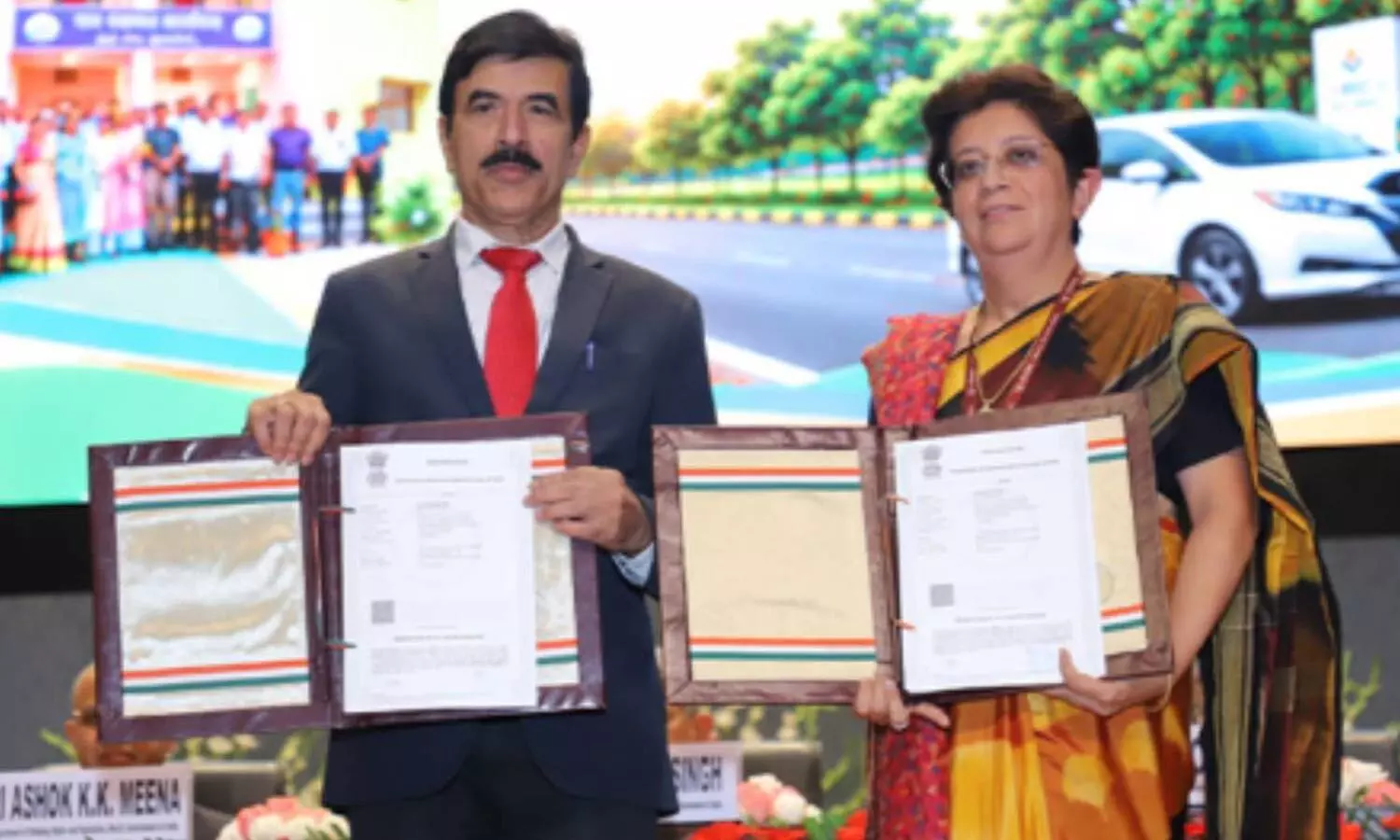
A Memorandum of Understanding (MoU) establishing the framework for this collaboration was exchanged in New Delhi between Mukta Shekhar, Joint Secretary, Ministry of Panchayati Raj, and Akhilesh Kumar Dixit, CEO, CESL.
The partnership marks an important step towards extending India’s electric mobility ecosystem beyond metropolitan cities and urban centres to rural India. By leveraging Panchayat-owned land, including locations along State and National Highways and premises near Gram Panchayat offices, the initiative seeks to create a geographically widespread network of clean mobility infrastructure.
Importantly, the collaboration offers Gram Panchayats an opportunity to convert underutilised public assets into productive economic resources. Revenue generated through the establishment and operation of EV charging and battery-swapping facilities can provide Panchayats with additional Own Source Revenue (OSR), enabling them to support local development activities and strengthen rural infrastructure.
Appreciating CESL’s contribution to the PM e-Bus Sewa initiative, which is supporting the deployment of electric buses in major cities, including Delhi, Surat, Hyderabad and Bengaluru, Mukta Shekhar observed that the new partnership could have far-reaching implications for India’s economic, environmental and strategic priorities. She described the initiative as an important opportunity to transform the role of Gram Panchayats in the country’s clean mobility transition.