
Mamata Banerjee’s Political Journey: From BJP Alliance To Congress Partnership And New Left Outreach
West Bengal politics has took a new turn as Mamata Banerjee’s political alliances over the past three decades. From working with the BJP-led NDA to joining hands with the Congress and later maintaining sharp differences with the Left, the Trinamool Congress (TMC) chief has repeatedly navigated changing political equations at both the state and national levels.
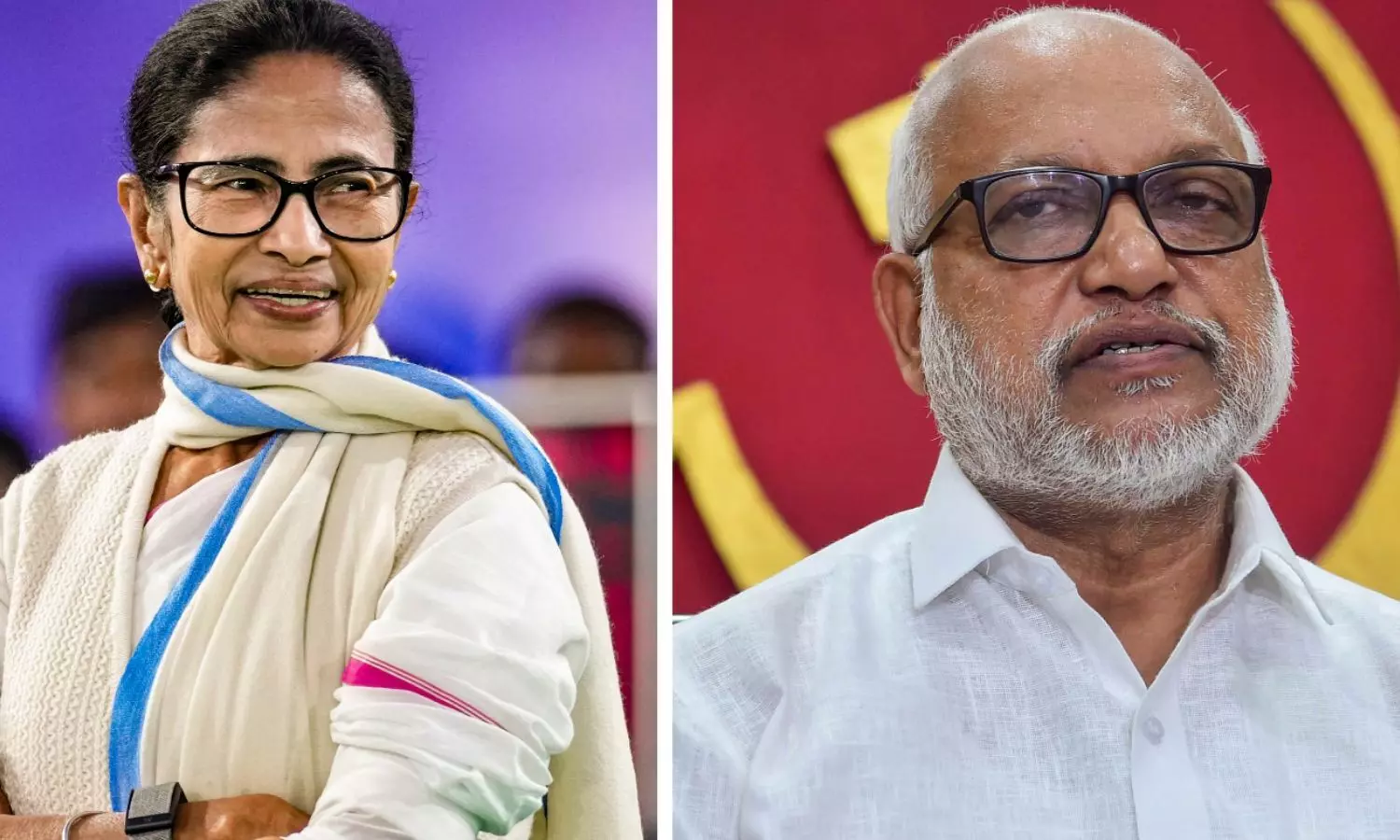
Her recent conversations with CPI(M) general secretary MA Baby have added another development to that political history. The communication has taken place amid opposition parties’ efforts to coordinate over concerns surrounding the Election Commission and the Special Intensive Revision (SIR) of electoral rolls.
From Congress Leader To Formation Of TMC
Mamata Banerjee began her political career in the Congress and emerged as a prominent leader in West Bengal.
In 1998, she broke away from the Congress and founded the Trinamool Congress. The new party gradually established itself as a major political force in Bengal, eventually challenging the long-running rule of the Left Front.
TMC And BJP’s Earlier Alliance
The TMC became part of the BJP-led National Democratic Alliance during the late 1990s and returned to the alliance in the early 2000s.
Banerjee served as a Union minister in the Atal Bihari Vajpayee government. The relationship, however, did not remain permanent, and the TMC later moved away from the BJP.
By 2011, Banerjee had established the TMC as the principal challenger to the CPI(M)-led Left Front in West Bengal.
Congress Partnership During UPA-II
Another major shift came when the TMC joined the Congress-led United Progressive Alliance (UPA) at the Centre.
Banerjee served as a Union minister in the UPA-II government before the TMC eventually withdrew its support in 2012 over disagreements with the Congress-led government.
The political relationship between the two parties subsequently remained complicated, particularly in West Bengal, where the Congress and TMC competed against each other.
TMC And Congress Find Common Ground Again
The political equation between Banerjee and the Congress changed again during the formation of the broader opposition grouping that later became the INDIA bloc.
The two parties were part of the wider opposition effort to coordinate against the BJP at the national level, although differences over seat-sharing and strategy continued, particularly in West Bengal.
More recently, Banerjee’s TMC decided not to contest the October 6 Nandigram Assembly bypoll and announced its support for the Congress candidate there. The development marked another instance of the two parties coordinating electorally in Bengal.
Mamata And The Left: A New Point Of Contact
The latest development involves the Left, which has historically been one of Banerjee’s principal political opponents in West Bengal.
The TMC ended the CPI(M)’s 34-year rule in Bengal in 2011. Since then, relations between the two sides have remained sharply adversarial at the state level.
However, recent developments surrounding the Election Commission have brought the two sides into communication.
CPI(M) general secretary MA Baby wrote to opposition leaders on September 23, seeking broader coordination over the political situation. Banerjee subsequently spoke with Baby as opposition parties discussed a joint response to concerns surrounding the Election Commission.
The communication does not, by itself, amount to an electoral alliance between the TMC and CPI(M). The CPI(M)’s West Bengal leadership continues to maintain political differences with Banerjee and the TMC.
Election Commission Issue Brings Opposition Parties Together
The immediate context for the latest outreach is the controversy surrounding the Election Commission and the SIR exercise.
Banerjee has spoken with Congress and Left leaders as opposition parties prepare for an INDIA bloc meeting in New Delhi on September 30. The meeting is expected to focus on the Election Commission-related developments and the SIR issue.
This has created an unusual situation in Bengal politics, where parties that remain rivals within the state are discussing coordination at the national level.
Alliance Politics Remains Different At State And National Levels
Banerjee’s political journey illustrates the difference between state-level electoral competition and national-level opposition coordination.
The TMC and CPI(M) remain rivals in West Bengal, while the TMC and Congress have their own history of cooperation and competition. At the same time, national political issues can bring these parties into temporary coordination.
Whether the latest conversations between Banerjee and the Left develop into a broader political arrangement remains uncertain. For now, the immediate focus appears to be coordination among opposition parties on issues concerning the Election Commission and the electoral process.
The recent developments therefore represent a new chapter in Banerjee’s long political journey, but they do not by themselves establish a new electoral alliance between the TMC and the Left.