
Indian Medical Parliamentarians’ Forum Holds National Policy Summit on MedTech Access
Vapi, Gujarat, September 22, 2026: The Indian Medical Parliamentarians’ Forum (IMPF) convened the National Policy Summit on MedTech Access on September 22 at Meril Academy, Vapi, under the theme “Swasth Bharat Se Saksham Bharat | Reimagining MedTech Access in India.” The summit brought together Members of Parliament, senior government officials, healthcare institutions, clinical experts and industry stakeholders to deliberate on strengthening India’s medical technology ecosystem and expanding access to quality, advanced and affordable healthcare technologies.
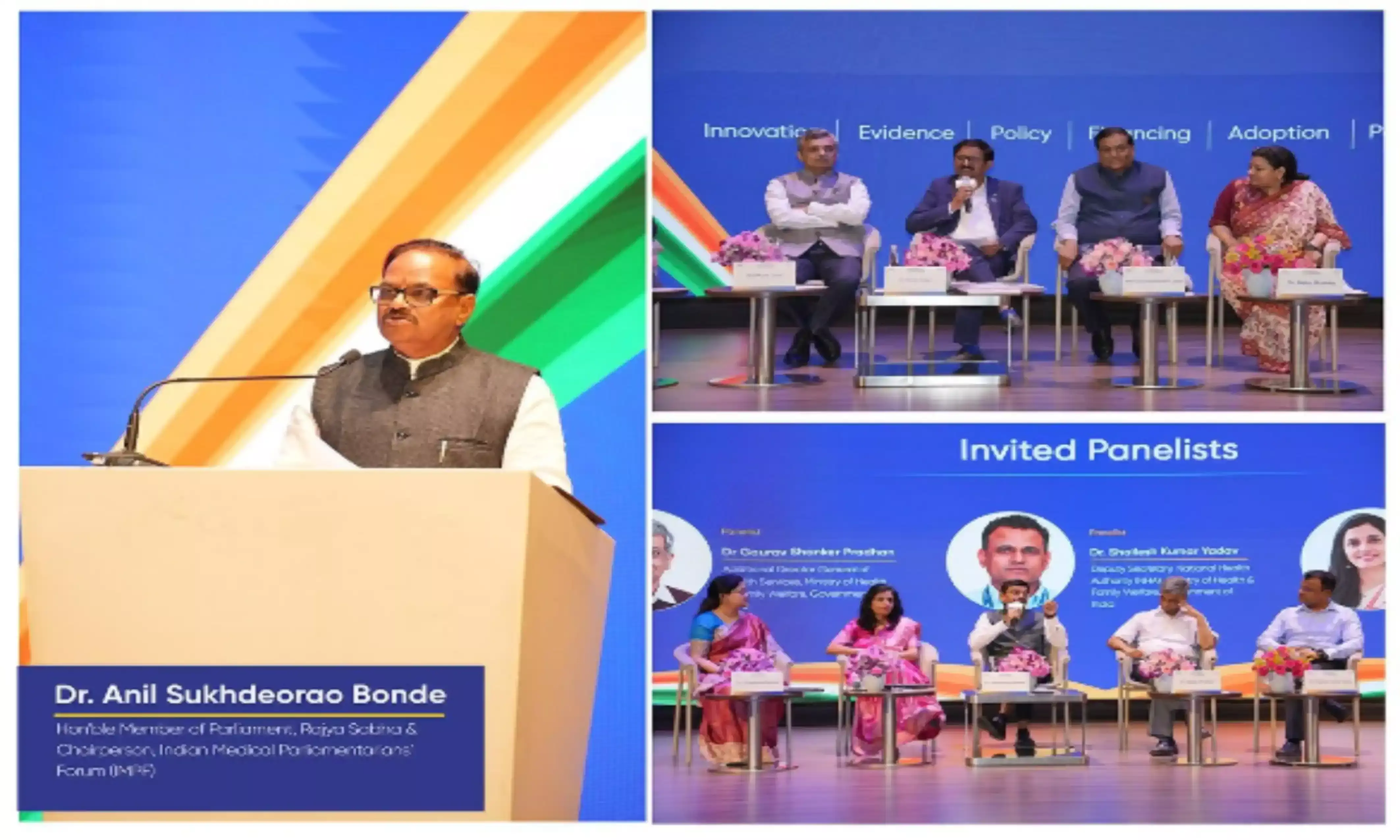
The summit was chaired by Dr Anil Sukhdeorao Bonde, Member of Parliament, Rajya Sabha and Chairperson, IMPF. Senior representatives from the Department of Pharmaceuticals, Department of Health Research, Indian Council of Medical Research (ICMR), Ministry of Health and Family Welfare, National Health Authority (NHA), AIIMS Nagpur and the National Health Systems Resource Centre (NHSRC) participated in the discussions.
The summit featured two panel discussions that brought together policymakers, healthcare experts, academic leaders and industry representatives to advance reform-oriented discussions on India’s medical technology ecosystem and pathways to wider patient access.
The first panel, “Building a Sustainable and Globally Competitive MedTech Ecosystem,”examined the enabling ecosystem required to support indigenous medical technology development and global competitiveness. The discussion covered areas including research and innovation, regulatory and quality frameworks, industry-academia collaboration, domestic manufacturing capabilities, supply-chain resilience, clinical requirements and the creation of an ecosystem that could support Indian MedTech companies in addressing both domestic and global healthcare needs. The panel was chaired by Dr Shivaji Bandappa Kalge, with Shri Manoj Joshi serving as Co-Chair. Dr Vibhav Garg, Moderator, Meril, moderated the discussion, which also featured Prof. (Dr.) Prashant P. Joshi and Dr Neha Dumka as panellists.
The second panel, “Expanding Access to Quality Care through MedTech Innovation,” focused on the factors that determine whether medical technology can translate from innovation into meaningful patient access. The discussion examined clinical evidence, health technology assessment, financing and reimbursement, technology adoption, healthcare workforce capabilities and the challenges of extending advanced technologies across different levels of the health system. The panel was chaired by Dr Jashvantsinh Parmar and moderated by Dr Sharmila Sarkar, with Dr Gaurav Shanker Pradhan, Dr Shailesh Kumar Yadav and Dr Suchita Markan participating as panellists.
Speaking at the summit, Dr Anil Sukhdeorao Bonde, Member of Parliament, Rajya Sabha and Chairperson, IMPF, said, “Innovation without access has limited impact, and access without evidence cannot be sustained. For India to build a globally competitive medical technology ecosystem, we need stronger indigenous research and development, credible clinical evidence, appropriate health technology assessment and sustainable reimbursement mechanisms. Manufacturing must be supported by the right clinical skills, infrastructure and technical ecosystem, particularly as advanced technologies such as robotics become more accessible. Our ultimate objective must be Indian innovation, global-quality technology and affordable access for every patient who needs it.”
Shri Manoj Kumar Joshi, Co-Chair and Secretary, Department of Pharmaceuticals, Ministry of Chemicals and Fertilizers, said, “For India to become self-reliant in medical devices, we need a strong ecosystem built around quality, evidence and credibility. Our regulatory system must evolve to ensure that products developed in India meet globally credible standards. At the same time, we need to strengthen domestic supply chains, engineering capabilities and component manufacturing. Building this ecosystem will not only support healthcare access but also contribute to employment and the country’s overall prosperity.”
Addressing the role of healthcare institutions in advancing medical technology, Dr Prashant P. Joshi said, “Medical institutions should not be limited to validating technologies developed elsewhere; they should help identify unmet clinical needs and work with engineers, researchers and innovators to develop solutions around those needs. We need stronger collaboration between medical and engineering institutions through joint research, academic programmes, fellowships and training. At AIIMS Nagpur, we are exploring such collaborations with institutions such as IIT Bombay. Building this interdisciplinary ecosystem can significantly strengthen India’s medical technology innovation and ultimately improve patient care.”
Highlighting the importance of clinical adoption and capacity building, Dr Gaurav Shanker Pradhan said, “Access to medical technology is not simply about making a device available. A device can create meaningful impact only when healthcare professionals are able to use it safely, confidently and effectively. We need to move from an equipment-centric approach to a technology adoption model, with competency-based training for clinicians, technicians and other healthcare professionals. Digital learning and remote training can also help extend this capacity to underserved and rural areas.”
Dr Shailesh Kumar Yadav, IAS, Joint Director, National Health Authority, stressed the significance of integrating innovation with sustainable financing and reimbursement. He stated, “In order for medical technology to be available to patients, the clinical effectiveness needs to be supported by adequate financing and reimbursement mechanism. For Ayushman Bharat, new innovations have to be backed up with evidence about clinical and economic viability before they can be included into the health benefit package. There has to be an examination of not just the initial cost of the device, but also the total cost of care that includes the cost of treatment, admission, manpower and follow-up.”
Emphasising the need to evaluate technologies within the realities of the health system, Dr Neha Dumka said, “Technology has an important role to play in strengthening primary healthcare, particularly as our disease burden continues to evolve. However, innovation must be assessed not only for its technical capabilities, but also for ease of use, cost-effectiveness, scalability and sustainability within the health system. We need to ensure that technologies can be effectively adopted at different levels of care and ultimately reach the beneficiaries who need them. Strengthening this pathway will be essential for equitable access to quality healthcare.”
Speaking on strengthening healthcare delivery at the grassroots, Dr Jashvantsinh Parmar stated, “To move forward from medical technology innovation to patient utilization of the technology, we first have to identify the problems within the present process. We need to empower the capabilities of the health care workers at the grass roots level, especially those who work in CHCs and Sub-District Hospitals. The technologies can be brought gradually and tested through comparative studies using data. Above all, the acceptance by health care workers and patients is crucial for innovations to succeed.”
Highlighting the potential of Indian medical device manufacturers, Dr Shivaji Kalge said, “The medical device manufacturers from India have become competent enough to develop products which not only meet international standards but are also economical for the Indian consumers. Today we see Indian companies challenging their international counterparts in various fields like ophthalmology and other medical sciences. If this research is continuously improved upon, then there is hope that these devices may be accepted worldwide.”
The summit brought together senior government and institutional leaders from across India’s healthcare ecosystem, including Shri Manoj Kumar Joshi, Secretary, Department of Pharmaceuticals, Ministry of Chemicals and Fertilizers, who served as Co-Chair. The summit also featured Dr Anil Sukhdeorao Bonde, Member of Parliament, Rajya Sabha, Maharashtra.
The meeting was also attended by senior members of Ministry of Health & Family Welfare, Directorate General of Health Services (DGHS), National Health Authority (NHA), important government medical institutions, clinicians, and industrial bodies.
The summit deliberations revealed that there is a need for a holistic approach that would include indigenous innovations, evidence generation, regulatory standards, clinical training, health technology assessment, funding, reimbursement and adoption within organizations. The discussions also emphasized the necessity of linking innovation in medical technologies to requirements of clinicians and patients, especially in underprivileged regions.
About the Indian Medical Parliamentarians Forum (IMPF)
Since its inception in 2006, IMPF has been serving as a non-political platform for Members of Parliament from both the houses of parliament (Lok Sabha & Rajya Sabha), who have their education and experience in the field of medicine and healthcare. Through this forum, evidence-based discussions can be facilitated in relation to the priorities of public health, along with a connection between parliamentarians, the government, professionals and industries related to healthcare.