
IISc report flags serious flaws in Hebbal tunnel project
Bengaluru: The proposed tunnel project between Hebbal Junction and Mekhri Circle may not provide the intended solution to Bengaluru’s traffic congestion, according to a study by the Indian Institute of Science (IISc).
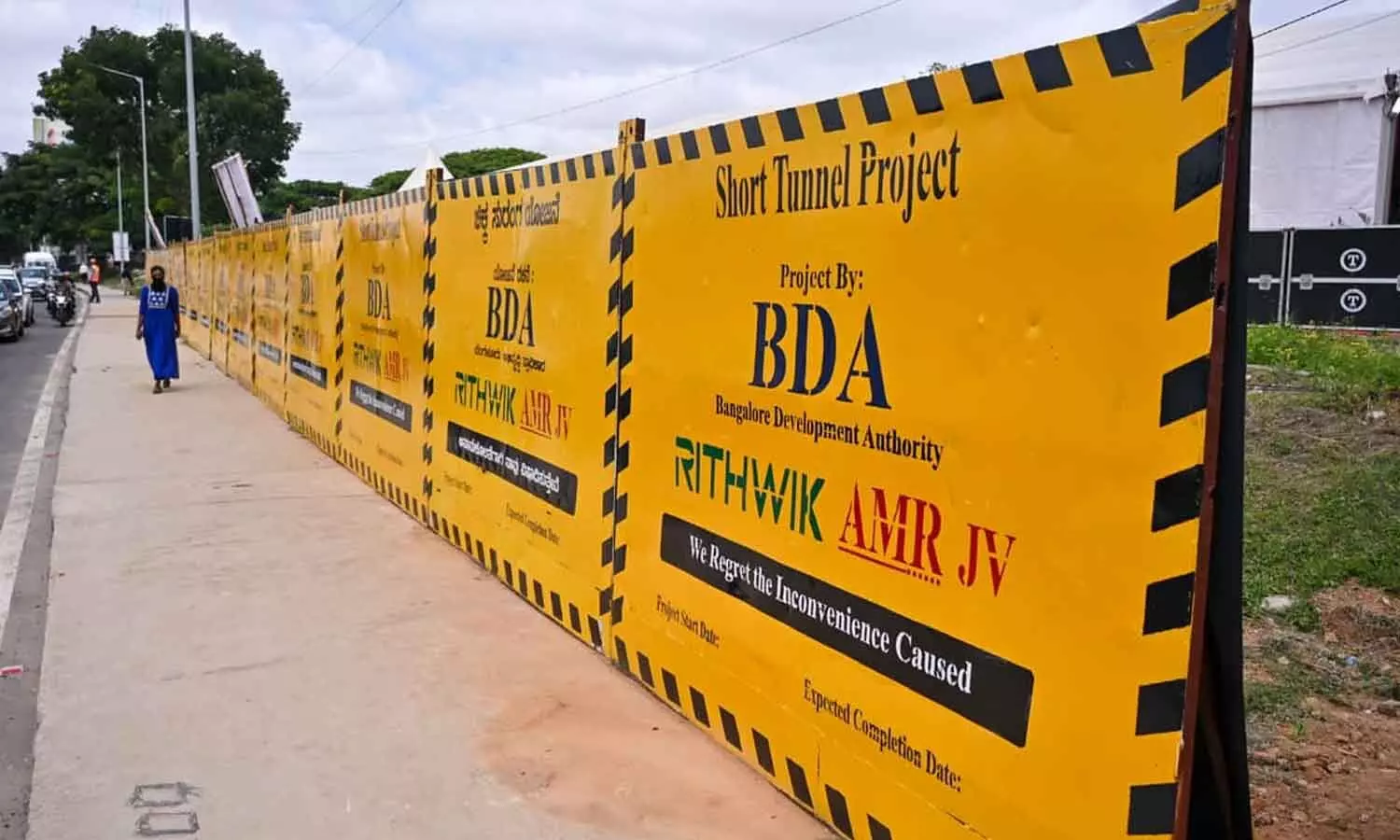
The study by the Infrastructure and Sustainable Transportation (IST) Lab has raised concerns over the project’s traffic impact, cost effectiveness and technical assumptions. It has suggested that strengthening Metro connectivity could be a more suitable and economical option than constructing the proposed tunnel.
According to the study, the short tunnel planned at Hebbal Junction could simply shift traffic towards other roads instead of reducing congestion. Traffic diverted towards the Veterinary Hospital and Esteem Mall areas could create fresh bottlenecks and potentially result in increased congestion up to Mekhri Circle.
The study has been prepared by IISc Civil Engineering professor Ashish Verma. It compares the proposed tunnel with a Metro alternative in terms of cost and passenger-carrying capacity.
The study estimates that the cost per passenger for the proposed tunnel would be around Rs 5.23, compared to just Rs 0.86 per passenger for Metro. Similarly, based on passenger capacity per hour in each direction, the estimated cost per unit of capacity is around Rs 13.74 lakh for the tunnel, while it is approximately Rs 2.26 lakh for Metro. The comparison indicates that the tunnel could be around six times more expensive than Metro in terms of the cost associated with passenger capacity.
The IISc study has also raised questions over the Detailed Project Report (DPR) prepared for the Hebbal tunnel project.
According to the study, certain traffic-capacity figures used in the DPR do not appear to be consistent with the recommendations of the Indian Highway Capacity Manual. The report alleges that lower road-capacity figures were used in relation to the Hebbal flyover, which could have influenced the assessment of the need for the tunnel. The study has also questioned the traffic data used to establish the justification for the project, alleging that the baseline traffic figures were modified or increased.
Sharp curve near Esteem Mall
Another technical concern highlighted in the study relates to a proposed 60-metre-radius curve near the Esteem Mall exit. According to the report, the curve could require vehicles to slow down from around 60 kmph to 40 kmph, potentially resulting in queues and congestion. The study claims that this factor has not been adequately
considered in the DPR.
Flood risk near Hebbal Lake
The study has also flagged the location of the proposed tunnel entrance near Hebbal Lake. The entrance is reportedly planned in a relatively low-lying area, raising concerns about the possibility of flooding during heavy rainfall. The IISc study has questioned whether this risk has been adequately addressed in the DPR.
The findings are likely to add to the debate over the proposed Hebbal tunnel project, particularly at a time when Bengaluru is looking at multiple infrastructure solutions to tackle its worsening traffic congestion.
The IISc assessment has effectively urged the authorities to reconsider the project’s traffic benefits, cost and technical feasibility before proceeding further.