
Goa SIR Row: Bombay HC Says Draft Roll Cannot Be Used To Delete Voters Without Hearing
The Bombay High Court’s Goa bench has questioned the Election Commission of India (ECI) over the deletion of voters’ names during the Special Intensive Revision (SIR), observing that a draft electoral roll cannot by itself be treated as a basis for removing names without following the prescribed legal procedure.
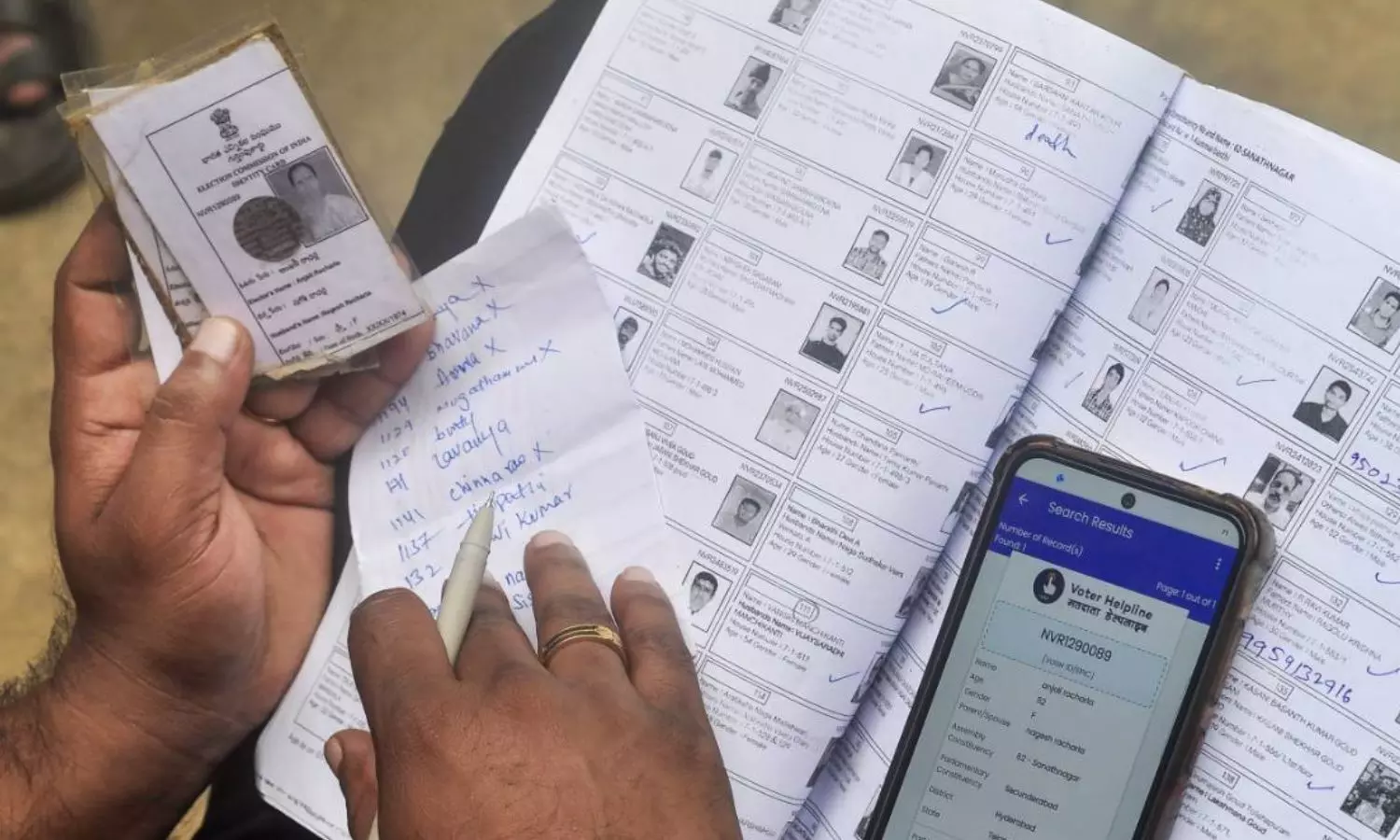
A division bench of Justice Amit S Jamsandekar and Justice Valmiki Menezes expressed concern over the ECI’s explanation that its electoral software left officials with no option but to reject an application.
The observations came while the court was hearing a petition filed by six members of a family from Goa’s Santa Cruz Assembly constituency, whose names were removed from the electoral roll after they shifted to another house within the same constituency.
Family Sought Address Change Through Form 8
The petitioners, led by Paresh Salgaonkar, said they had submitted Form 8 after being instructed by the Booth Level Officer (BLO) to update their residential address.
Form 8 is used by existing electors for purposes including correction of entries and shifting residence. However, while processing the applications, officials reportedly found that the family members’ EPIC details were no longer available in the ERONET system.
ERONET, or the Electoral Registration Officers’ Network, is the ECI’s web-based platform used for processing electoral forms and managing voter-roll information.
According to the petitioners, because the system did not show their EPIC records, officials had only the option to select “reject”. Their names were subsequently treated as deleted, leaving their Form 8 applications unresolved.
Court Questions Why Existing Voters Were Asked To File Form 6
The family was subsequently asked to submit Form 6, which is meant for inclusion of a name in the electoral roll.
The petitioners argued that this requirement was inappropriate because they were already registered voters and were only seeking an address change within the same constituency.
The court questioned the logic behind treating an existing voter as a new elector because of a software-related issue.
The bench observed that statutory forms would lose their purpose if an existing voter could effectively be removed from the rolls and then required to seek fresh inclusion.
HC Questions ECI On Deletions Without Hearing
The judges also questioned the legal basis for deleting a voter’s name without providing an opportunity to be heard.
The bench asked the ECI to identify the provision in law that permitted such deletion without a hearing. It also expressed concern that officials appeared to have relied on the software’s response instead of independently examining the voters’ applications.
The court said administrative technology cannot take precedence over statutory requirements and indicated that election officials must apply their own judgment while dealing with voter applications.
Court Warns Of Wider Impact On Voters
The bench also raised concerns about the potential consequences if similar issues affected voters who had changed residences.
The judges noted that while the case involved only one family, a larger number of voters could potentially face difficulties if applications were rejected because of limitations within the electoral software.
The court stressed that once an existing voter submits a Form 8 application, authorities should independently determine whether the person has actually shifted residence before taking action on the electoral-roll entry.
The observations come amid wider scrutiny of the implementation of the SIR exercise and the role of electoral technology in maintaining and revising voter rolls.