
Crude, Fed verdict, earnings to dictate market direction
Spookedby escalating geopolitical tensions in the Middle East, a sharp surge in crude oil prices, fresh tariff announcements of Trump, concerns over inflation and the domestic economy on the back of El Nino effect, and sustained FII selling; equity benchmarks ended the week sharply lower during the week ended.
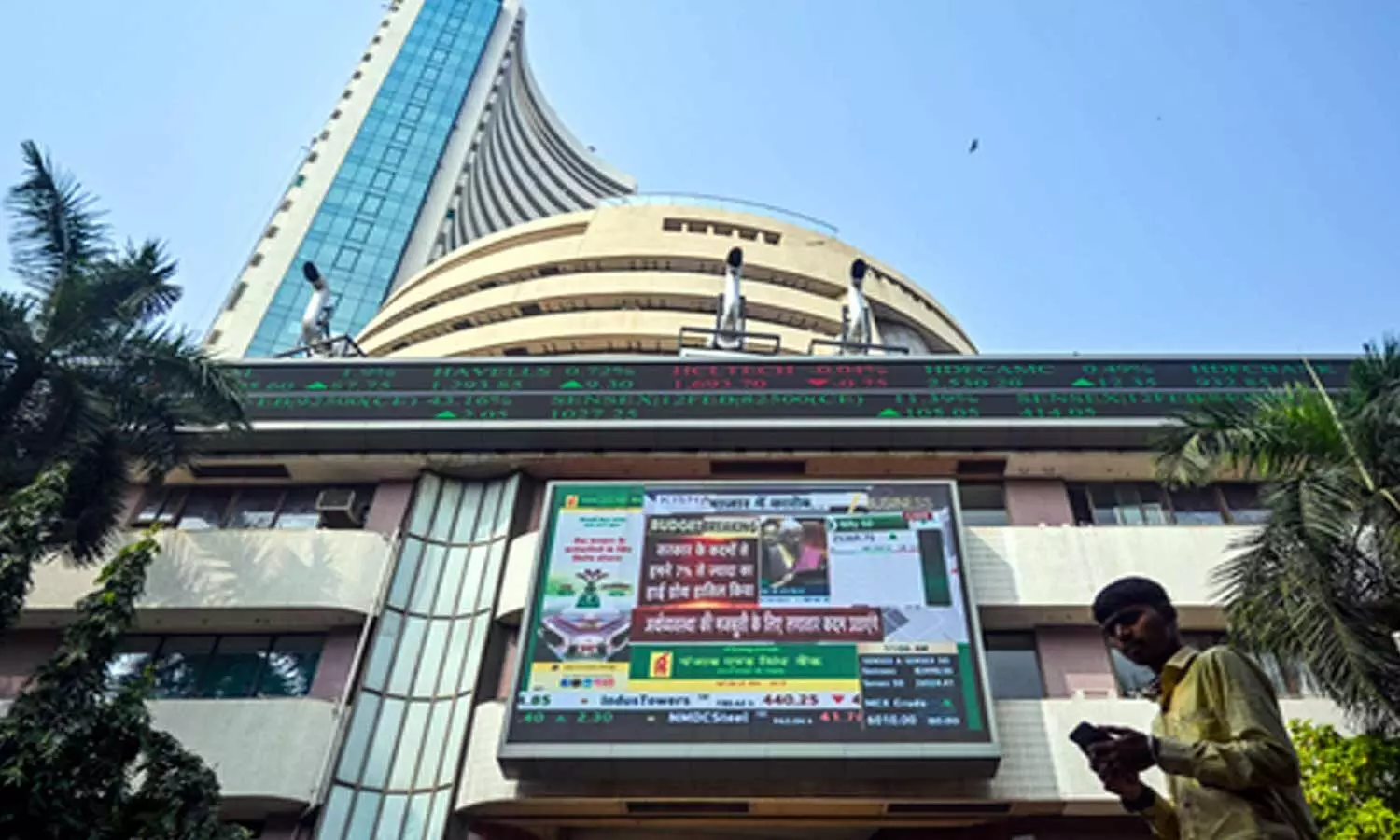
Nifty ended the week at 23,767 level, registering a decline of 2.33 per cent. In five straight sessions of selling, the Sensex erased 2,092 points to end at 76060. In the broader market, both the Nifty Smallcap and Midcap indices fell 2 per cent and 1.2 per cent respectively.
FIIs extended their selling offloading equities worth Rs 7,182.08 crore. In contrast, DIIs extended their buying streak, investing Rs 8,637.58 crore in equities. The Indian rupee extended its losing streak to a fifth consecutive week, depreciating 29 paise to close at 96.57 against the US dollar.
Investor sentiment remained subdued as Brent crude surged above $100 a barrel. Higher crude oil prices do impact corporate earnings by increasing input costs for manufacturers and raising logistics and transportation expenses across sectors.
However, the key factor is whether crude prices remain elevated for a sustained period. Social unrest can disrupt economic activity by affecting consumer confidence, business sentiment and investor behaviour. Over time, it can also influence policy decisions with implications for economic and financial market outcomes.
The protests by the Cockroach Janata Party (CJP) have had a limited, indirect impact on the Indian stock market. With the CJP agitation being withdrawn following recent political developments and talks with the government, systemic market risks have receded.
At stake now is the BJP’s principal poll mascot—Modi’s image. That electoral brand has been the BJP’s single and most effective election-winning USP since 2014. Broader market indices faced intermittent, minor volatility, but quickly absorbed the political developments—including the swift political compromise and subsequent withdrawal of the agitation after the government addressed key demands. El Niño continues to be a big concern for Indian economy.
A poor monsoon can damage the economy in three ways: it affects agricultural output, reducing the sector’s contribution to the economy; it hits rural income, denting aggregate demand; and it threatens to push up food prices, causing inflation. Track developments on this front. Revival of monsoon over broader breadth of the country is important for present. Observers say global funds are trimming Korea, Taiwan AI bets for investing opportunities in Indonesia, India and China. The reshuffle highlights growing caution among investors on the AI trade, which in Asia has been characterized by wild swings in markets such as South Korea and Taiwan.
Concerns around AI spending will face a new test when Meta Platforms Inc., Microsoft Corp., and Apple Inc will report their quarterly earnings in coming week. For now, the persistent worry is whether the AI rally has run too far, too fast remains a key driver. Next week’s U.S. Federal Reserve decision on interest rates will hold the key for near term movement of treasury yields.
Recent economic indicators could push the Fed’s rate-setting body to either hold rates steady or raise them. The prevailing expectation is for a hold given cooler inflation data, but higher oil prices and the simmering US-Iran conflict could push the body the other direction. Domestically, investor sentiment will be guided by the ongoing Q1 FY27 corporate earnings. It would be interesting to observe whether resilient corporate fundamentals can offset ongoing macro uncertainty and persistent international market headwinds.
You’re an investor, not someone who can predict the future. Base your decisions on real facts and analysis rather than risky, speculative forecasts.
FUTURES & OPTIONS / SECTOR WATCH
Ahead of the settlement week, on the back of the escalation of tensions between the US and Iran, derivative segment witnessed sharp stock specific and sector specific movements. Rising crude oil prices raised concerns over inflation and continued selling by FIIs further dampened market sentiment. The Nifty declined by more than 2 per cent on a weekly basis, while the Bank Nifty underperformed, ending the week with a loss of over 3 per cent. In the options segment, strong Call open interest for Nifty was observed at the 24,000 and 24,200 levels while major Put open interest was concentrated at the 23,700 and 23,600 levels. For Bank Nifty, significant Call open interest was seen at 57,000 level whereas notable Put open interest was also placed at the 56,000 level indicates an important level for upcoming sessions. Implied volatility (IV) for Nifty’s call options settled at 12.85 per cent while put options concluded at 13.25 per cent. The India VIX, a key indicator of market volatility concluded the week at 13.47 per cent. The Put-Call Ratio Open Interest (PCR OI) stood at 0.68 for the week. For traders, 23,600 has emerged as the most consequential level for next week. A fall below 23600 might trigger a severe correction, as investors would be running away, putting the Nifty at greater downside risk. On the upside, 24,000 has become the line of polarity. The broader trend is likely to remain weak unless the index reclaims that level. Traders are advised to adopt a sell-on-rise strategy as long as Nifty stays below these levels. Going forward, geopolitical developments will remain the key driver for market direction and traders should closely monitor global events before taking fresh positions. Markets will continue to track upcoming corporate earnings, crude oil prices and defensive allocation strategies.
Stocks looking good are Coforge, Cummins India, Dalmia Bharat, Jindal Steel, Paytm and United Spirits. Stocks looking weak are Adani Energy Solutions, CG Power, Glenmark, MFSL, TI India and SRF.
Observers say global funds are trimming Korea, Taiwan AI bets for investing opportunities in Indonesia, India and China. The reshuffle highlights growing caution among investors on the AI trade, which in Asia has been characterized by wild swings in markets such as South Korea and Taiwan
Mahindra Logistics Limited
Thecompany provides an integrated portfolio of logistics services encompassing warehousing, distribution, full truck load and part truck load transportation, freight-forwarding, and enterprise mobility solutions, delivered through five distinct business lines. The company operates through two primary business segments. The first, Supply Chain Management (SCM), encompasses contract logistics, B2B express, last-mile delivery and freight forwarding businesses. The second, Mobility Services, provides enterprise and on-demand people mobility solutions under the Alyte brand. Operating on shared infrastructure and capabilities, the company serves a diverse customer base across automotive, engineering, consumer goods, pharmaceuticals, telecom, retail and e-commerce sectors. The company operates 20+ Mn sq. ft. of warehousing space across India, supporting scalable, efficient and high-quality storage and distribution solutions; including multi-user, built-to-suit warehouse facilities, network hubs, and cross-docks. In-factory stores and linefeed operations are active across 40+ manufacturing sites. Fleet of 1,400+ eDeL EVs enable Last-Mile Delivery and express network serves over 6,000 locations. The company’s strategic priorities include scaling contract logistics, turning around express operations, strengthening operational excellence, and building differentiated technology capabilities. Focus of MLL remains on building a scalable, asset-right, technology-enabled platform that delivers differentiated customer solutions while improving return profiles. Buy on declines for medium term target of Rs600.